• HOME
  • NEWS
  • EXPLORE
    • CAREER
      • Companies
      • Jobs
    • EVENTS
    • iGEM
      • News
      • Team
    • PHOTOS
    • VIDEO
    • WIKI
  • BLOG
  • COMMUNITY
    • FACEBOOK
    • INSTAGRAM
    • TWITTER
Friday, October 30, 2026
BIOENGINEER.ORG
No Result
View All Result
  • Login
  • HOME
  • NEWS
  • EXPLORE
    • CAREER
      • Companies
      • Jobs
        • Lecturer
        • PhD Studentship
        • Postdoc
        • Research Assistant
    • EVENTS
    • iGEM
      • News
      • Team
    • PHOTOS
    • VIDEO
    • WIKI
  • BLOG
  • COMMUNITY
    • FACEBOOK
    • INSTAGRAM
    • TWITTER
No Result
View All Result
Bioengineer.org
No Result
View All Result
Home NEWS Science News Biology

Pygmy blue whales sing less by day while feeding, study finds

by
October 29, 2026
in Biology
Reading Time: 2 mins read
0
Pygmy blue whales sing less by day while feeding, study finds

Pygmy blue whales sing less by day while feeding, study finds

Share on FacebookShare on TwitterShare on LinkedinShare on RedditShare on Telegram

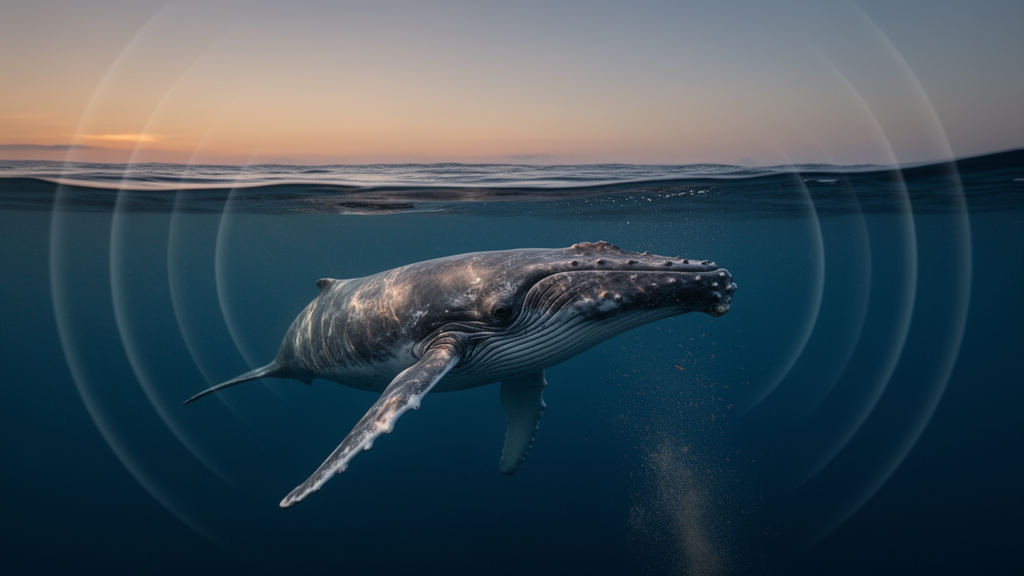
Endangered pygmy blue whales off Western Australia appear to sing less when they are feeding, and the pattern is now being put to work. A new Curtin University-led study, published in Royal Society Open Science, found that the whales generally fed during daylight hours, leaving more time available for singing at night. During the animals’ feeding season in Perth Canyon, more song was recorded at night than during the day for periods of up to three months.

The research examined pygmy blue whale singing and feeding behaviour in offshore waters from the Perth Canyon, along Western Australia’s Midwest coast and further north towards Ningaloo and the Northwest Shelf. The observation that song production rose after dark across these areas suggests that listening for differences in whale song between day and night could provide a way to monitor feeding activity across large stretches of ocean without needing to observe the whales directly.

Lead author Andrew Davenport, a PhD candidate at Curtin’s Centre for Marine Science and Technology, drew a simple comparison to explain the pattern. “Just as we can’t talk while we’re eating, pygmy blue whales appear to have less time available to sing while they’re feeding,” he said. “By listening to when they sing more at night than during the day, we can infer when whales in an area are likely to be feeding.”

For an endangered population that ranges over vast and often remote waters, that inference carries practical weight. Listening to the songs of pygmy blue whales could help researchers identify when the animals are feeding off Western Australia’s coast, improving scientists’ ability to monitor their behaviour and inform conservation efforts. Acoustic monitoring of this kind relies on the trade-off the study documented: hours spent feeding on krill are hours not spent singing, so the daily balance between the two activities leaves a detectable signature in passive acoustic records.

The study was an observational one, and its findings are specific to the pygmy blue whales studied in the waters off Western Australia during their feeding season. The researchers note that the relationship between feeding and singing offers a valuable new way to understand the behaviour of this endangered population. The published paper, titled “Pygmy blue whale feeding drives greater nocturnal than diurnal song production”, appears in Royal Society Open Science, with the article dated 28 October 2026.

Subject of Research: The relationship between feeding timing and song production in pygmy blue whales off Western Australia

Article Title: Don't sing with your mouth full – whale song could reveal when whales are feeding

Article References: Don't sing with your mouth full – whale song could reveal when whales are feeding. Original publication (Bibliographic details unavailable.)

Image Credits: AI Generated

DOI: Not provided

Keywords: pygmy blue whale, whale song, feeding behaviour, Perth Canyon, Western Australia, acoustic monitoring, Royal Society Open Science, Curtin University, conservation, endangered species, nocturnal song, marine science

News Source: Margaret Porter. (October 29, 2026). Pygmy blue whales sing less by day while feeding, study finds. Scienmag.


Tags: acoustic monitoringConservationCurtin Universityendangered speciesfeeding behaviourmarine sciencenocturnal songPerth Canyonpygmy blue whaleRoyal Society Open ScienceWestern Australiawhale song
Share12Tweet7Share2ShareShareShare1

Related Posts

Implanted heart monitors track baboon heart rates and rank-linked activity

Implanted heart monitors track baboon heart rates and rank-linked activity

October 30, 2026
Inflammatory stimulation reshapes microglial vesicle miRNA cargo and modestly alters recipient cells

Inflammatory stimulation reshapes microglial vesicle miRNA cargo and modestly alters recipient cells

October 30, 2026

Slovenia Rewrites Its Curriculum to Teach Evolution Earlier and More Completely

October 30, 2026

Ancestral genistein diet shifts quail body weight across three generations

October 30, 2026

POPULAR NEWS

  • Coronary calcium on lung scans may flag heart risk in pulmonary embolism patients

    Coronary calcium on lung scans may flag heart risk in pulmonary embolism patients

    29 shares
    Share 12 Tweet 7
  • Gold nanoparticles turn blue in the presence of milk fatty acids, pointing toward low-cost fat sensing

    29 shares
    Share 12 Tweet 7
  • Caper Flower Extract Shows Antioxidant and Vibrio-Killing Power in Lab Tests

    29 shares
    Share 12 Tweet 7
  • Cold agglutinin disease: rare anemia gets first approved drug as treatment map redrawn

    29 shares
    Share 12 Tweet 7

About

We bring you the latest biotechnology news from best research centers and universities around the world. Check our website.

Follow us

Recent News

Green energy trade could anchor a new international role for the renminbi

Wood Smoke Particles Trigger Asthma-Like Airway Disease in Mice Through a Sprouty2-Dependent Pathway

Ultra-Processed Foods May Reshape Gut Microbes and Fuel Colon Cancer Risk

Subscribe to Blog via Email

Enter your email address to subscribe to this blog and receive notifications of new posts by email.

Join 87 other subscribers
  • Contact Us

Bioengineer.org © Copyright 2023 All Rights Reserved.

Welcome Back!

Login to your account below

Forgotten Password?

Retrieve your password

Please enter your username or email address to reset your password.

Log In
No Result
View All Result
  • Homepages
    • Home Page 1
    • Home Page 2
  • News
  • National
  • Business
  • Health
  • Lifestyle
  • Science

Bioengineer.org © Copyright 2023 All Rights Reserved.