


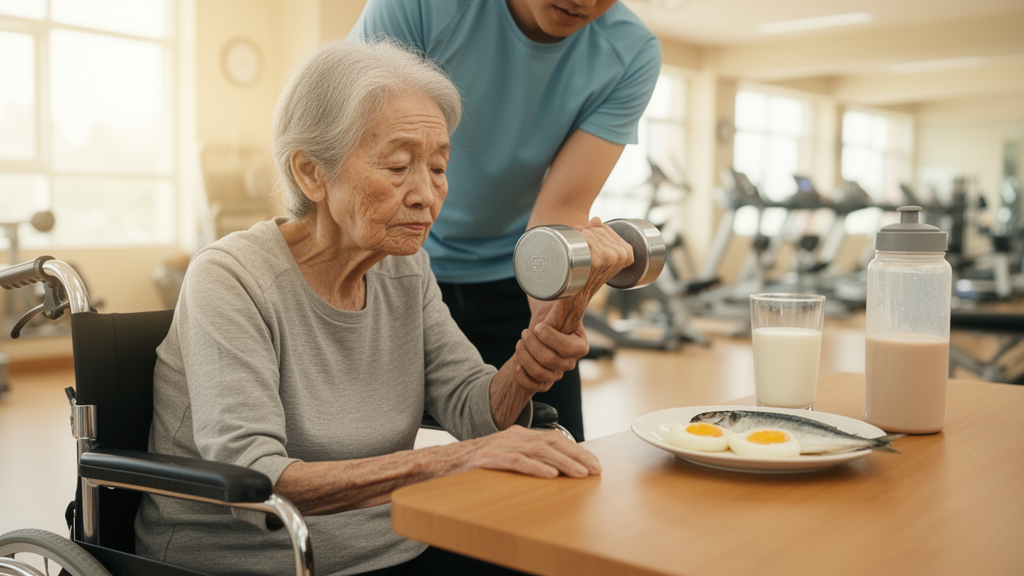
A twelve-week randomized controlled trial has shown that combining dietary counselling with daily whey protein supplementation substantially improved protein quantity, distribution, and quality in frail community-dwelling older adults undergoing resistance training. The study, published in BMC Nutrition, enrolled 295 frail older adults with a mean age of 73.9 years, of whom 69% were female, and compared resistance training alone against resistance training plus a structured protein intervention.
The intervention group received dietary counselling together with a daily 20-gram whey protein supplement, with the explicit goal of reaching a protein intake of 1.2 to 1.5 grams per kilogram of body weight per day. Dietary intake was assessed using three-day dietary records, and protein quality was evaluated with a meal protein quality score per eating occasion, where a score above 100 indicates adequate protein quality. Between-group effects were analyzed with linear mixed models at a significance threshold of p < 0.05.
The results were striking. At follow-up, protein intake was significantly higher in the intervention group than in the control group, with an adjusted between-group difference of 29.1 grams per day (p < 0.001). Importantly, this increase was distributed across the entire day rather than concentrated in a single meal. Between-group differences at follow-up were observed at every eating occasion: 9.1 grams per day at breakfast, 2.4 grams at the first snack, 5.2 grams at lunch, 2.3 grams at the second snack, 3.2 grams at dinner, and 7.4 grams at the evening snack, all with p-values of 0.028 or lower.
This pattern matters because protein distribution across meals is considered relevant for older adults, whose meals are often skewed toward dinner while breakfast, lunch, and snacks remain protein-poor. The trial’s authors concluded that the intervention improved protein quantity and quality especially at these typically protein-poor eating occasions, namely breakfast, lunch, and the evening snack.
Protein quality also improved markedly. At follow-up, overall protein quality was significantly higher in the intervention group than in the control group, with a difference of 33.8 points on the meal protein quality score (p < 0.001), and the improvement was significant at all individual eating occasions (all p ≤ 0.005).
The source analysis identified where the extra protein came from. The differences in protein intake were primarily attributable to protein supplements, eggs, cheese, and milk products.
The intervention also had knock-on effects on overall diet. Energy intake was significantly higher in the protein intervention group than in the control group, with a between-group difference of 208.9 kilocalories per day (p < 0.001), and fat intake was higher by 7.3 grams per day (p = 0.022). No significant between-group difference was observed for carbohydrate intake, meaning the additional calories came largely from protein- and fat-containing foods rather than from sugars or starches.
The study was a secondary analysis within a randomized controlled trial registered as NL-OMON54919, registered on 9 February 2021 at the ICTRP Search Portal. The published version is shared early as peer-reviewed, accepted research carrying a permanent DOI, subject to further editorial edits before the final Version of Record. As a secondary analysis of a trial population of frail, predominantly female, community-dwelling older adults, the findings speak specifically to this group during resistance training and demonstrate that a practical combination of counselling and supplementation can shift not only how much protein older adults eat, but when and in what quality they eat it across the whole day.
Subject of Research: A protein intervention combining dietary counselling and whey supplementation during resistance training in frail community-dwelling older adults
Article Title: Protein distribution, quantity and quality is optimized by protein intervention in frail community-dwelling older adults during resistance training: a randomized controlled trial
Article References: Biersteker, E. J. M., van den Helder, J., Benali, M., Tieland, M., Weijs, P. J. M., & Schoufour, J. D. (2026). Protein distribution, quantity and quality is optimized by protein intervention in frail community-dwelling older adults during resistance training: a randomized controlled trial. BMC Nutrition. https://doi.org/10.1186/s40795-026-01511-0
Image Credits: AI Generated
DOI: 10.1186/s40795-026-01511-0
Keywords: protein intake, protein quality, older adults, frailty, resistance training, randomized controlled trial, whey supplementation, dietary counselling, meal distribution, community-dwelling, Protein, distribution
News Source: Daisy Hatcher. (October 30, 2026). Protein Intervention Boosts Intake and Quality in Frail Older Adults During Resistance Training. Scienmag.



