• HOME
  • NEWS
  • EXPLORE
    • CAREER
      • Companies
      • Jobs
    • EVENTS
    • iGEM
      • News
      • Team
    • PHOTOS
    • VIDEO
    • WIKI
  • BLOG
  • COMMUNITY
    • FACEBOOK
    • INSTAGRAM
    • TWITTER
Monday, May 11, 2026
BIOENGINEER.ORG
No Result
View All Result
  • Login
  • HOME
  • NEWS
  • EXPLORE
    • CAREER
      • Companies
      • Jobs
        • Lecturer
        • PhD Studentship
        • Postdoc
        • Research Assistant
    • EVENTS
    • iGEM
      • News
      • Team
    • PHOTOS
    • VIDEO
    • WIKI
  • BLOG
  • COMMUNITY
    • FACEBOOK
    • INSTAGRAM
    • TWITTER
  • HOME
  • NEWS
  • EXPLORE
    • CAREER
      • Companies
      • Jobs
        • Lecturer
        • PhD Studentship
        • Postdoc
        • Research Assistant
    • EVENTS
    • iGEM
      • News
      • Team
    • PHOTOS
    • VIDEO
    • WIKI
  • BLOG
  • COMMUNITY
    • FACEBOOK
    • INSTAGRAM
    • TWITTER
No Result
View All Result
Bioengineer.org
No Result
View All Result
Home NEWS Science News Health

Protection by the malaria vaccine: not only a matter of quantity but also of quality

Bioengineer by Bioengineer
May 15, 2019
in Health
Reading Time: 3 mins read
0
IMAGE
Share on FacebookShare on TwitterShare on LinkedinShare on RedditShare on Telegram

A study shows for the first time that the higher the avidity of antibodies induced by the RTS,S vaccine, the greater the protection
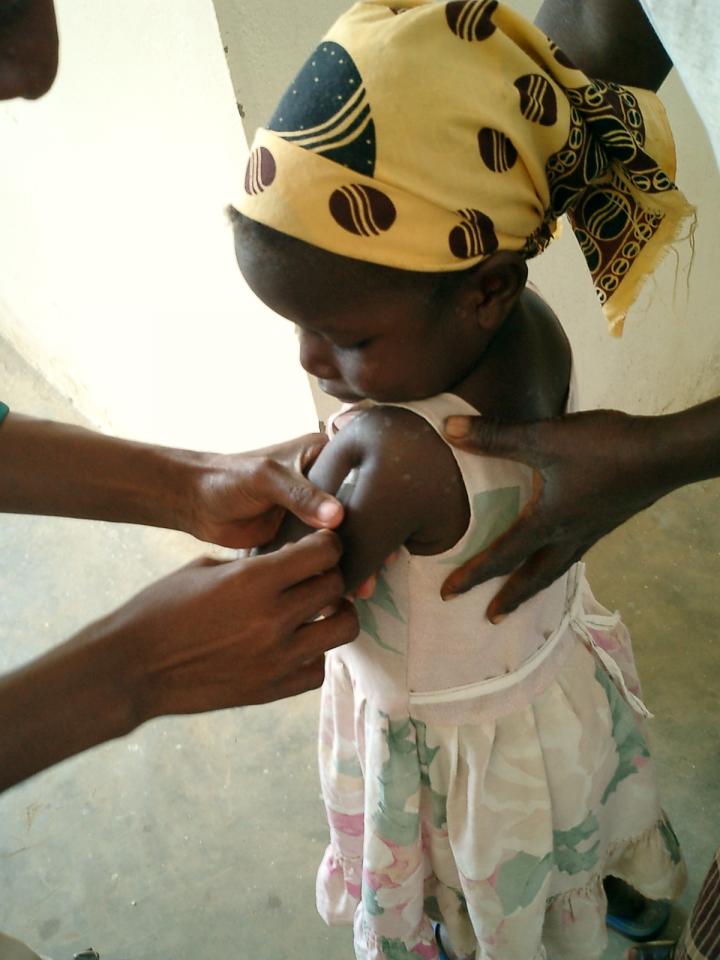
IMAGE

Credit: ISGlobal

The quantity and quality of antibodies recognising the end region of the malaria parasite’s CSP protein is a good marker of protection by the RTS,S/AS01E vaccine, shows a study led by the Barcelona Institute for Global Health (ISGlobal) – an institution supported by “la Caixa”- in collaboration with the Bagamoyo Research and Training Centre, Ifakara Health Institute, Tanzania, the Kintampo Health Research Centre, Ghana, the Institut de Recherche en Sciences de la Santé in Nanoro, Burkina Faso, and the Swiss Tropical and Public Health Institute, Switzerland, among others. The study, published in Nature Communications, provides valuable information for guiding the design of future, more effective vaccines.

Most vaccines contain inactivated pathogens or pathogen fragments against which the body produces protective antibodies – ideally, a complete and long-lasting protection. This is not the case for RTS,S, which has the merit of being the first vaccine approved for large-scale pilot studies in Africa, but that protects only partially and for a limited amount of time. Over the last years, ISGlobal researcher Carlota Dobaño and her group have tried to understand why, and identify markers related to vaccine protection.

The RTS,S vaccine contains a fragment of the Plasmodium falciparum CSP protein, that goes from the central part, rich in amino acid repeats (NANP region) to the end (called the C-terminal end). In this study, Dobaño and her team focused on measuring not only the quantity of antibodies against the NANP and C-terminal regions, but also their avidity (i.e. the strength with which they bind to their ligand). To do so, they analysed samples from over 1,000 infants (between 6 and 12 weeks of age) and children (5 to 17 months-old), vaccinated or not during the RTS,S phase 3 clinical trial in an area with low malaria transmission (Bagomoyo in Tanzania) and two areas with high malaria transmission (Nanoro in Burkina Faso and Kintampo in Ghana).

The results show for the first time that vaccination not only induces a strong increase in the amount of antibodies against both CSP regions, but also in their avidity. This increase is stronger in children than in infants, which could explain why the former are better protected by the vaccine. “We see that, in terms of protection, the avidity of C-terminal antibodies is more important than the quantity, while for NANP antibodies quantity is more important than quality,” explains Dobaño. The results also indicate that when a child has already been exposed to malaria (and therefore has anti-CSP antibodies), the protective effect of the vaccine is lower. “This suggests that the vaccine will better protect children who have been less exposed to the parasite, for example those living in low-transmission areas,” adds Dobaño.

The research team stresses the need to understand the mechanisms underlying the partial protection conferred by RTS,S, in order to guide the design of new and better vaccines.

###

Media Contact
Adelaida Sarukhan
[email protected]

Related Journal Article

http://dx.doi.org/10.1038/s41467-019-10195-z

Tags: Disease in the Developing WorldImmunology/Allergies/AsthmaInfectious/Emerging DiseasesMedicine/HealthParasitologyPublic HealthVaccines
Share12Tweet8Share2ShareShareShare2

Related Posts

NELA, P-POSSUM, Muscle Index Predict Elderly Surgery Risk

May 11, 2026

Pramipexole Bioequivalence Tested in Fasting vs. Fed Volunteers

May 11, 2026

New JACIE IEC Certification Pathway Expands Opportunities for Centers Beyond Transplant

May 11, 2026

Mapping Skin Lesions in Lupus Types Explored

May 11, 2026
Please login to join discussion

POPULAR NEWS

  • Research Indicates Potential Connection Between Prenatal Medication Exposure and Elevated Autism Risk

    840 shares
    Share 336 Tweet 210
  • New Study Reveals Plants Can Detect the Sound of Rain

    728 shares
    Share 290 Tweet 182
  • Salmonella Haem Blocks Macrophages, Boosts Infection

    62 shares
    Share 25 Tweet 16
  • Breastmilk Balances E. coli and Beneficial Bacteria in Infant Gut Microbiomes

    57 shares
    Share 23 Tweet 14

About

We bring you the latest biotechnology news from best research centers and universities around the world. Check our website.

Follow us

Recent News

Charting a Path to Safer and More Transparent AI in Protein Design

Breast Cancer Cells That Slowly Tick Could Unlock Secrets to Late Relapse

NELA, P-POSSUM, Muscle Index Predict Elderly Surgery Risk

Subscribe to Blog via Email

Enter your email address to subscribe to this blog and receive notifications of new posts by email.

Join 82 other subscribers
  • Contact Us

Bioengineer.org © Copyright 2023 All Rights Reserved.

Welcome Back!

Login to your account below

Forgotten Password?

Retrieve your password

Please enter your username or email address to reset your password.

Log In
No Result
View All Result
  • Homepages
    • Home Page 1
    • Home Page 2
  • News
  • National
  • Business
  • Health
  • Lifestyle
  • Science

Bioengineer.org © Copyright 2023 All Rights Reserved.