Credit: Daniel Hanoch
In what has the potential to significantly change how Corona patients are being treated and the severity of the disease, research spearheaded at Jerusalem’s Hebrew University gathered early clinical evidence demonstrating the efficacy of an existing drug in treating COVID-19.
The study was presented at the recent SPARK Conference on Generic Drug Repurposing for COVID-19 by Professor Yaakov Nahmias, Director of the Center for Bioengineering at Hebrew University. Nahmias applied a well-established existing drug to address the buildup of fats in human lung cells caused by the SARS-CoV-2 virus. Initial lab-based results and new data from 1,500 Israel-based Corona patients have been extremely promising and clinical studies are scheduled to begin this week at Barzilai Hospital in Ashkelon, Israel, joining other clinical centers across the United States, South America and Europe.
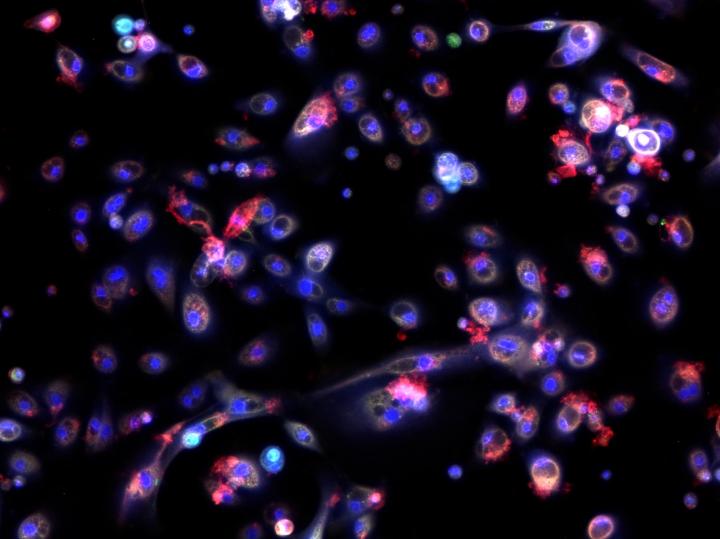
The study began in July 2020 when Professor Nahmias demonstrated that the SARS-CoV-2 virus was inhibiting the effective breakdown of fat within the lungs. His research then identified the efficacy of Fenofibrate (Tricor), an FDA approved drug that has been on the market since 1975 to address this deficiency in Corona patients. The drug is traditionally designed to address high levels of triglycerides (fats) in the blood. When applied to Corona patients, the study proposes that it will stop the progression of the disease.
“We knew that the system we had developed for Tissue Dynamics provided us with a unique vantage point to understand how the virus operates in the lungs,” Professor Nahmias explained. After discovering the efficacy of the drug in the lab-setting, Professor Nahmias, together with Professor Oren Shiboleth of Ichilov Medical Center in Tel Aviv and Dr. Sigal Shafram-Tikva at Hadassah Medical Center in Jerusalem, worked to gather data from 1,500 Corona patients who were on a regiment of drugs designed to reduce the fatty buildup in lung cells.
The results were abundantly clear. Patients who were taking the drugs to speed up the breakdown of fats were recovering from the Corona-caused lung infections in a matter of days. The evidence even showed that there was zero mortality among these patients.
“We showed that the human lungs responded to the SARS-CoV-2 virus by completely changing their metabolism, causing a major buildup of fats in lung cells. Our findings show that this unhealthy fat buildup is a critical factor in COVID-19 patient’s deterioration. Patients taking fibrates that work directly to breakdown fats recovered fast from the disease, while those taking medications that build fats like thiazolidinediones, showed greater lung damage and mortality,” Professor Nahmias explains.
According to the research team, applying the use of this established drug, which is widely available, inexpensive and has a proven safety record, could alter the effects of COVID-19 from a devastating disease to a far more manageable form of a respiratory cold.
In the coming days, the team will begin an investigator-led Phase 3a clinical study, with financial support from Abbott. Taking place at Barzilai Hospital in Ashkelon, this phase will be led by Professor Shlomo Maayan, Director of the Department of Infectious Diseases.
Other clinical studies intended to corroborate Professor Nahmias’s findings are also taking place in the US, Europe and South America. “Even as we see the introduction of numerous vaccines intended to reduce the transmission of the disease and protect vulnerable populations, this drug can help the direct treatment of the virus and reduce its severity and mortality. We hope to see the first results of the clinical phase of this study in the coming months,” Professor Maayan said.
###
Media Contact
Yaakov Nahmias
[email protected]