• HOME
  • NEWS
  • EXPLORE
    • CAREER
      • Companies
      • Jobs
    • EVENTS
    • iGEM
      • News
      • Team
    • PHOTOS
    • VIDEO
    • WIKI
  • BLOG
  • COMMUNITY
    • FACEBOOK
    • INSTAGRAM
    • TWITTER
Wednesday, July 8, 2026
BIOENGINEER.ORG
No Result
View All Result
  • Login
  • HOME
  • NEWS
  • EXPLORE
    • CAREER
      • Companies
      • Jobs
        • Lecturer
        • PhD Studentship
        • Postdoc
        • Research Assistant
    • EVENTS
    • iGEM
      • News
      • Team
    • PHOTOS
    • VIDEO
    • WIKI
  • BLOG
  • COMMUNITY
    • FACEBOOK
    • INSTAGRAM
    • TWITTER
  • HOME
  • NEWS
  • EXPLORE
    • CAREER
      • Companies
      • Jobs
        • Lecturer
        • PhD Studentship
        • Postdoc
        • Research Assistant
    • EVENTS
    • iGEM
      • News
      • Team
    • PHOTOS
    • VIDEO
    • WIKI
  • BLOG
  • COMMUNITY
    • FACEBOOK
    • INSTAGRAM
    • TWITTER
No Result
View All Result
Bioengineer.org
No Result
View All Result
Home NEWS Science News Biology

Princeton researchers identify factors essential for chronic hepatitis B infection

Bioengineer by Bioengineer
March 9, 2020
in Biology
Reading Time: 2 mins read
0
IMAGE
Share on FacebookShare on TwitterShare on LinkedinShare on RedditShare on Telegram

Virus uses these factors to establish itself permanently in the liver
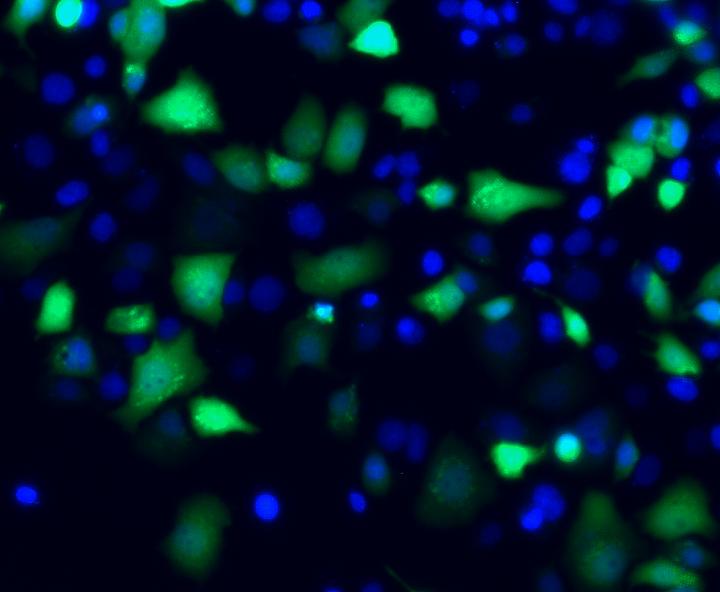
IMAGE

Credit: Image courtesy of Lei Wei and Alexander Ploss, Princeton University


Researchers at Princeton University have identified a set of human proteins that the hepatitis B virus (HBV) uses to establish itself permanently inside liver cells. The study, published in the journal Nature Microbiology, could suggest new directions for therapies to treat chronic HBV infection, a condition that increases the risk of developing liver cancer and is responsible for almost 900,000 deaths worldwide each year.

Over 250 million people are chronically infected with HBV. The condition remains incurable and patients currently require lifelong treatment with antiviral drugs that still leave them at an increased risk of developing not only liver cancer but also other liver diseases, including liver cirrhosis.

When HBV first enters its host’s liver cells, its DNA genome contains several gaps and other imperfections that need to be repaired before the virus can establish a permanent infection. To do this, HBV must enlist the help of its host cell’s DNA repair machinery, but exactly which components of this machinery the virus needs has remained a mystery for decades.

To identify the components required to repair HBV DNA, Alexander Ploss, an associate professor of molecular biology at Princeton, and postdoctoral fellow Lei Wei recreated the process in a test tube. The researchers tested dozens of DNA repair factors and found that a set of just five factors purified from human cells was sufficient for the repair process. Removing even one of these five factors prevented the repair process from being successfully completed, suggesting that targeting any of these five factors can potentially prevent HBV infection.

One of the essential repair factors, an enzyme known as DNA polymerase delta, is inhibited by a drug called aphidicolin. Wei and Ploss found that aphidicolin treatment can prevent the repair of HBV DNA, not only in the test tube but also in virally infected liver cells.

Ploss hopes that further studies will reveal exactly how the five repair factors work together to fix the HBV genome. “Our study is an excellent starting point to finally answer the decades-old question of how the stable form of the virus’s DNA is generated,” Ploss said. “Until we understand this process, which is crucial for HBV persistence, targeted clinical therapies that can completely clear the infection will remain out of reach.”

###

The work was supported by the National Institutes of Health, the American Cancer Society, the Burroughs Wellcome Fund, the New Jersey Commission on Cancer Research and Princeton University.

The study, “Core components of DNA lagging strand synthesis machinery are essential for the reconstitution of hepatitis B virus cccDNA formation,” by Lei Wei and Alexander Ploss, was published in the journal Nature Microbiology on Monday, March 9, 2020.

Media Contact
Catherine Zandonella
[email protected]
609-258-0541

Related Journal Article

http://dx.doi.org/10.1038/s41564-020-0678-0

Tags: Infectious/Emerging DiseasesLiverMedicine/HealthVirology
Share12Tweet8Share2ShareShareShare2

Related Posts

Here are a few rewritten headlines for a science magazine post, each with a slightly different tone: Intriguing & poetic: How do organs sculpt themselves? Sea stars hold the secret Direct & research-focused: Sea stars reveal the hidden rules of organ formation Metaphorical & inviting: Tiny architects beneath the waves: What sea stars teach us about building organs Short & punchy: Star-shaped clues to how our organs take shape Question-led: Could a sea star show us how organs form? Elegant & feature-style: The body’s blueprint, glimpsed in a sea star’s arm

July 6, 2026
Bacteria evolve faster with unconventional gene copies — Biology

Bacteria evolve faster with unconventional gene copies

July 6, 2026

Neighbours rewire soil feedback via root microbiome shifts

July 6, 2026

Evolution-Inspired Biosensors Revolutionize Lipid Tracking in Real Time

July 2, 2026
Please login to join discussion

POPULAR NEWS

  • Detection of EDCs in Breast Milk and Infant Urine Up to Six Months Highlights Early Exposure Risks

    77 shares
    Share 31 Tweet 19
  • New Drug Candidate Developed at McMaster Shows Potential for Treating Brain Cancer

    58 shares
    Share 23 Tweet 15
  • Saying Goodbye to PGY-6: Pediatric Fellowship Realities

    103 shares
    Share 41 Tweet 26
  • KTU Researchers Explore Ultrasound’s Role in Enhancing Blood Flow Beyond Diagnostics

    53 shares
    Share 21 Tweet 13

About

We bring you the latest biotechnology news from best research centers and universities around the world. Check our website.

Follow us

Recent News

Flame retardant BDE-209 targets molecularly linked to ulcerative colitis

Ultra-high frequency particle impacts mimic rockbursts to shatter hard rock

Kidney transplant outcomes in older adults studied by German researchers

Subscribe to Blog via Email

Success! An email was just sent to confirm your subscription. Please find the email now and click 'Confirm' to start subscribing.

Join 83 other subscribers
  • Contact Us

Bioengineer.org © Copyright 2023 All Rights Reserved.

Welcome Back!

Login to your account below

Forgotten Password?

Retrieve your password

Please enter your username or email address to reset your password.

Log In
No Result
View All Result
  • Homepages
    • Home Page 1
    • Home Page 2
  • News
  • National
  • Business
  • Health
  • Lifestyle
  • Science

Bioengineer.org © Copyright 2023 All Rights Reserved.