• HOME
  • NEWS
  • EXPLORE
    • CAREER
      • Companies
      • Jobs
    • EVENTS
    • iGEM
      • News
      • Team
    • PHOTOS
    • VIDEO
    • WIKI
  • BLOG
  • COMMUNITY
    • FACEBOOK
    • INSTAGRAM
    • TWITTER
Tuesday, May 12, 2026
BIOENGINEER.ORG
No Result
View All Result
  • Login
  • HOME
  • NEWS
  • EXPLORE
    • CAREER
      • Companies
      • Jobs
        • Lecturer
        • PhD Studentship
        • Postdoc
        • Research Assistant
    • EVENTS
    • iGEM
      • News
      • Team
    • PHOTOS
    • VIDEO
    • WIKI
  • BLOG
  • COMMUNITY
    • FACEBOOK
    • INSTAGRAM
    • TWITTER
  • HOME
  • NEWS
  • EXPLORE
    • CAREER
      • Companies
      • Jobs
        • Lecturer
        • PhD Studentship
        • Postdoc
        • Research Assistant
    • EVENTS
    • iGEM
      • News
      • Team
    • PHOTOS
    • VIDEO
    • WIKI
  • BLOG
  • COMMUNITY
    • FACEBOOK
    • INSTAGRAM
    • TWITTER
No Result
View All Result
Bioengineer.org
No Result
View All Result
Home NEWS Science News Biology

Prince Charming’s kiss unlocking brain’s regenerative potential?

Bioengineer by Bioengineer
May 10, 2019
in Biology
Reading Time: 2 mins read
0
IMAGE
Share on FacebookShare on TwitterShare on LinkedinShare on RedditShare on Telegram

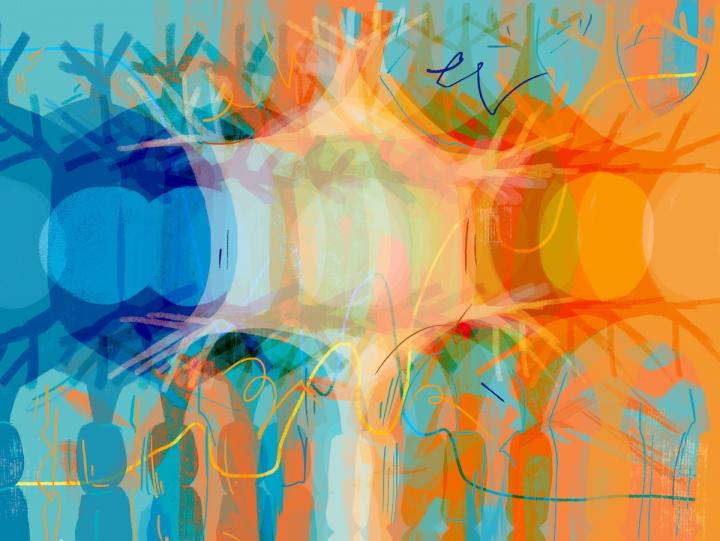
Kyoto University identifies ‘wake-up’ signal for deep-sleeping neural stem cells
IMAGE

Credit: Kyoto University/Robin Hoshino

Kyoto, Japan — The human body has powerful healing abilities. But treating brain disorders is no easy task, as brain cells — neurons — have limited ability to regenerate. Nonetheless, stem cells are a form of natural backup, a vestige of our days as still-developing embryos.

The difficulty is that, as we age, our brains’ stem cells ‘fall asleep’ and become harder to wake up when repairs are needed. Despite efforts to harness these cells to treat neurological damage, scientists have until recently been unsuccessful in decoding the underlying ‘sleep’ mechanism.

Now, researchers at Kyoto University studying brain chemistry in mice have revealed the ebb and flow of gene expression that may wake neural stem cells from their slumber. These findings, which may also apply to stem cells elsewhere in the body, were recently published in the journal Genes & Development.

“No one before us has directly compared active stem cells in embryos with inactive, ‘quiescent’ adult stem cells,” says group leader Ryoichiro Kageyama of Kyoto University’s Institute for Frontier Life and Medical Sciences, who points out that at least two genes and their associated proteins regulating activation had already been identified.

The team focused their attention on protein ‘Hes1’, which is strongly expressed in the adult cells. This normally suppresses the production of other proteins such as ‘Ascl1’, small amounts of which are periodically produced by active stem cells.

Monitoring the production of the two proteins over time, the team pinpointed a wave-like pattern that leads to stem cells waking up and turning into neurons in the brain.

When they ‘knocked out’ the genetic code needed to make Hes1, the cells started to make more Ascl1, which then activated almost all the neural stem cells.

“It is key that the same genes are responsible for both the active and quiescent states of these stem cells,” Kageyama adds. “Only the expression dynamics differ between the two.”

“A better understanding of the regulatory mechanisms of these different expression dynamics could allow us to switch the dormant cells on as part of a treatment for a range of neurological disorders.”

###

The paper “High Hes1 expression and resultant Ascl1 suppression regulate quiescent vs. active neural stem cells in the adult mouse brain” appeared on 13 March 2019 in Genes & Development, with doi: 10.1101/gad.323196.118

About Kyoto University

Kyoto University is one of Japan and Asia’s premier research institutions, founded in 1897 and responsible for producing numerous Nobel laureates and winners of other prestigious international prizes. A broad curriculum across the arts and sciences at both undergraduate and graduate levels is complemented by numerous research centers, as well as facilities and offices around Japan and the world. For more information please see: http://www.kyoto-u.ac.jp/en

Credit: Nano Pico Science

Media Contact
Raymond Kunikane Terhune
[email protected]

Related Journal Article

http://dx.doi.org/10.1101/gad.323196.118

Tags: BiologyCell BiologyDevelopmental/Reproductive BiologyGeneticsMolecular Biologyneurobiology
Share12Tweet8Share2ShareShareShare2

Related Posts

Childbirth in Humans Is Not Uniquely Challenging Among Mammals, New Research Shows — Biology

Childbirth in Humans Is Not Uniquely Challenging Among Mammals, New Research Shows

May 12, 2026
From Complexity to Clarity: Unraveling the “Topological Laws” Governing Cell Death — Biology

From Complexity to Clarity: Unraveling the “Topological Laws” Governing Cell Death

May 11, 2026

New Classification Framework Identifies Tumor-Associated Bacterial Effectors as Crucial Drivers of Tumor Biology and Immune Response

May 11, 2026

HIV-1 Strains Reveal Varied Paths to Antibody Escape

May 11, 2026
Please login to join discussion

POPULAR NEWS

  • Research Indicates Potential Connection Between Prenatal Medication Exposure and Elevated Autism Risk

    842 shares
    Share 337 Tweet 211
  • New Study Reveals Plants Can Detect the Sound of Rain

    728 shares
    Share 290 Tweet 182
  • Salmonella Haem Blocks Macrophages, Boosts Infection

    62 shares
    Share 25 Tweet 16
  • Breastmilk Balances E. coli and Beneficial Bacteria in Infant Gut Microbiomes

    57 shares
    Share 23 Tweet 14

About

We bring you the latest biotechnology news from best research centers and universities around the world. Check our website.

Follow us

Recent News

Breakthrough in CAR T Cell Therapy: Insights from Successfully Treated AML Patients

How Neighborhood Environments Influence Teen Smoking: Exploring the Rural-Urban Divide

Innovative Method Unveiled to Detect Signs of Dark Matter

Subscribe to Blog via Email

Enter your email address to subscribe to this blog and receive notifications of new posts by email.

Join 82 other subscribers
  • Contact Us

Bioengineer.org © Copyright 2023 All Rights Reserved.

Welcome Back!

Login to your account below

Forgotten Password?

Retrieve your password

Please enter your username or email address to reset your password.

Log In
No Result
View All Result
  • Homepages
    • Home Page 1
    • Home Page 2
  • News
  • National
  • Business
  • Health
  • Lifestyle
  • Science

Bioengineer.org © Copyright 2023 All Rights Reserved.