For immediate release
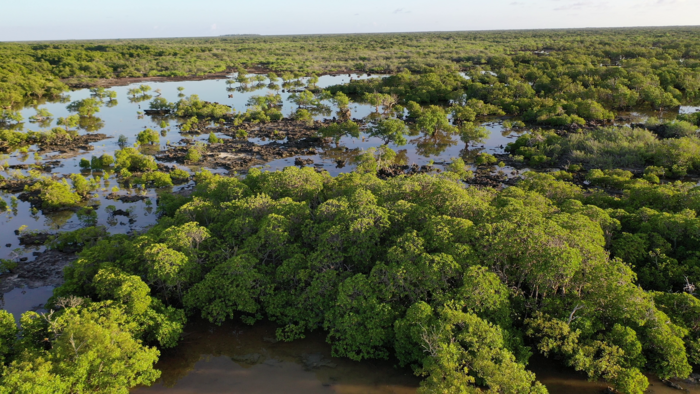
Credit: Image credit: Seychelles Islands Foundation.
For immediate release
Big egos, lack of staff training and policy enforcement are major barriers to island conservation
Published today in the journal People and Nature, a new study is the first to quantify the day-to-day barriers that conservation workers face as they try to conserve and manage island ecosystems around the world.
Island nations are noted for their particularly high-levels of biodiversity and endemic species. However, they are also more vulnerable to biodiversity loss, having already experienced 61% of recent global extinctions.
The research amplifies the voices of frontline conservation workers to highlight the main barriers to effective conservation on islands, as well as potential solutions.
Governance hinders conservation and management efforts
An online survey of 360 conservation practitioners led by researchers from the University of Oxford and the Seychelles Islands Foundation showed that the biggest barriers to effective management of island ecosystems play out at the national level. Over 60% of survey respondents agreed that ‘poor conservation policy implementation and law enforcement’, which are needed to effectively deliver and police plans, hinders more effective management efforts.
Lead author Dr April Burt from the Department of Biology at the University of Oxford, commented: ‘These findings suggest that governments are either not making policies to protect the environment or that existing policies are simply not being enforced, leaving frontline workers without the support they need to effectively manage these critical ecosystems.’
Lack of training opportunities prevents more effective management
85% of participants also highlighted the importance of the skills gap, with 82% of respondents having to recruit volunteers to fill skill gaps within the organisation/s they work for. For instance, staff in many island nations collect data but then struggle to translate it into useful information that can be used to make effective management decisions. This could mean that, despite the data being collected, downward trends in population size or ecosystem health are simply not reported. Species run the risk of becoming extinct before anyone can act.
Big egos interfere with effective collaborations
As well as the lack of national support and the skills gap, 84% of participants in the online survey agreed that ‘big egos’ and other interpersonal issues between practitioners at high levels had hindered effective collaboration and conservation efforts. These issues included a lack of trust within collaborations; blocking of data and knowledge sharing among practitioners; and possessiveness over data, species, or sites.
‘This is really alarming,’ says Dr Burt, ‘because it suggests that egos and interpersonal issues hinder conservation efforts worldwide.’
From problems to practical solutions
The study’s authors hope that the information gathered in the survey can be used to leverage targeted funding for actions that address these barriers experienced by frontline island conservation workers. This may ultimately increase the chances of meeting island nations’ biodiversity targets.
The potential solutions identified by the survey participants were longer funding cycles, additional staff, better training opportunities for staff and incentives to keep high-capacity staff long-term. Dr Nancy Bunbury from the Seychelles Islands Foundation, a co-author of the paper, adds:
‘The practitioners in this study have shown us what they need to be effective as they work in the frontline of conservation. Supporting local people to do their jobs better is the only way to stem the current tide of biodiversity loss.’
-END-
Notes to editors
For media enquiries and interview requests, contact:
Dr April Burt, Department of Biology, University of Oxford: [email protected]
Megan Harvey, Communications Manager, University of Oxford: [email protected] 07485187131
The paper ‘An International Assessment of the Barriers Influencing the Effectiveness of Island Ecosystem Management’ has been published in People and Nature: https://besjournals.onlinelibrary.wiley.com/doi/epdf/10.1002/pan3.10417.
Images and a descriptive cartoon of the study are available at https://drive.google.com/drive/folders/1j656xskczDT-atxJVqxxeVAdLriuRwSY
About the University of Oxford
Oxford University has been placed number 1 in the Times Higher Education World University Rankings for the seventh year running, and number 2 in the QS World Rankings 2022. At the heart of this success are the twin-pillars of our ground-breaking research and innovation and our distinctive educational offer.
Oxford is world-famous for research and teaching excellence and home to some of the most talented people from across the globe. Our work helps the lives of millions, solving real-world problems through a huge network of partnerships and collaborations. The breadth and interdisciplinary nature of our research alongside our personalised approach to teaching sparks imaginative and inventive insights and solutions.
Through its research commercialisation arm, Oxford University Innovation, Oxford is the highest university patent filer in the UK and is ranked first in the UK for university spinouts, having created more than 200 new companies since 1988. Over a third of these companies have been created in the past three years. The university is a catalyst for prosperity in Oxfordshire and the United Kingdom, contributing £15.7 billion to the UK economy in 2018/19, and supports more than 28,000 full time jobs.
The Seychelles Islands Foundation
Seychelles Islands Foundation (SIF), is a non-profit charitable organisation that was established as a public trust by the government of Seychelles in 1979. SIF manages and protects the UNESCO World Heritage Sites of Aldabra Atoll and the Vallée de Mai and has the President of Seychelles, Wavel Ramkalawan, as Patron. https://www.sif.sc/
Journal
People and Nature
DOI
10.1002/pan3.10417
Article Title
An international assessment of the barriers influencing the effectiveness of island ecosystem management
Article Publication Date
6-Dec-2022