• HOME
  • NEWS
  • EXPLORE
    • CAREER
      • Companies
      • Jobs
    • EVENTS
    • iGEM
      • News
      • Team
    • PHOTOS
    • VIDEO
    • WIKI
  • BLOG
  • COMMUNITY
    • FACEBOOK
    • INSTAGRAM
    • TWITTER
Thursday, July 2, 2026
BIOENGINEER.ORG
No Result
View All Result
  • Login
  • HOME
  • NEWS
  • EXPLORE
    • CAREER
      • Companies
      • Jobs
        • Lecturer
        • PhD Studentship
        • Postdoc
        • Research Assistant
    • EVENTS
    • iGEM
      • News
      • Team
    • PHOTOS
    • VIDEO
    • WIKI
  • BLOG
  • COMMUNITY
    • FACEBOOK
    • INSTAGRAM
    • TWITTER
  • HOME
  • NEWS
  • EXPLORE
    • CAREER
      • Companies
      • Jobs
        • Lecturer
        • PhD Studentship
        • Postdoc
        • Research Assistant
    • EVENTS
    • iGEM
      • News
      • Team
    • PHOTOS
    • VIDEO
    • WIKI
  • BLOG
  • COMMUNITY
    • FACEBOOK
    • INSTAGRAM
    • TWITTER
No Result
View All Result
Bioengineer.org
No Result
View All Result
Home NEWS Science News Chemistry

Predicting unpredictable reactions

Bioengineer by Bioengineer
June 9, 2020
in Chemistry
Reading Time: 3 mins read
0
IMAGE
Share on FacebookShare on TwitterShare on LinkedinShare on RedditShare on Telegram

Research from Pitt and Politecnico di Milano paves the way for simulating catalysts under reaction conditions
IMAGE

Credit: Raffaele Cheula

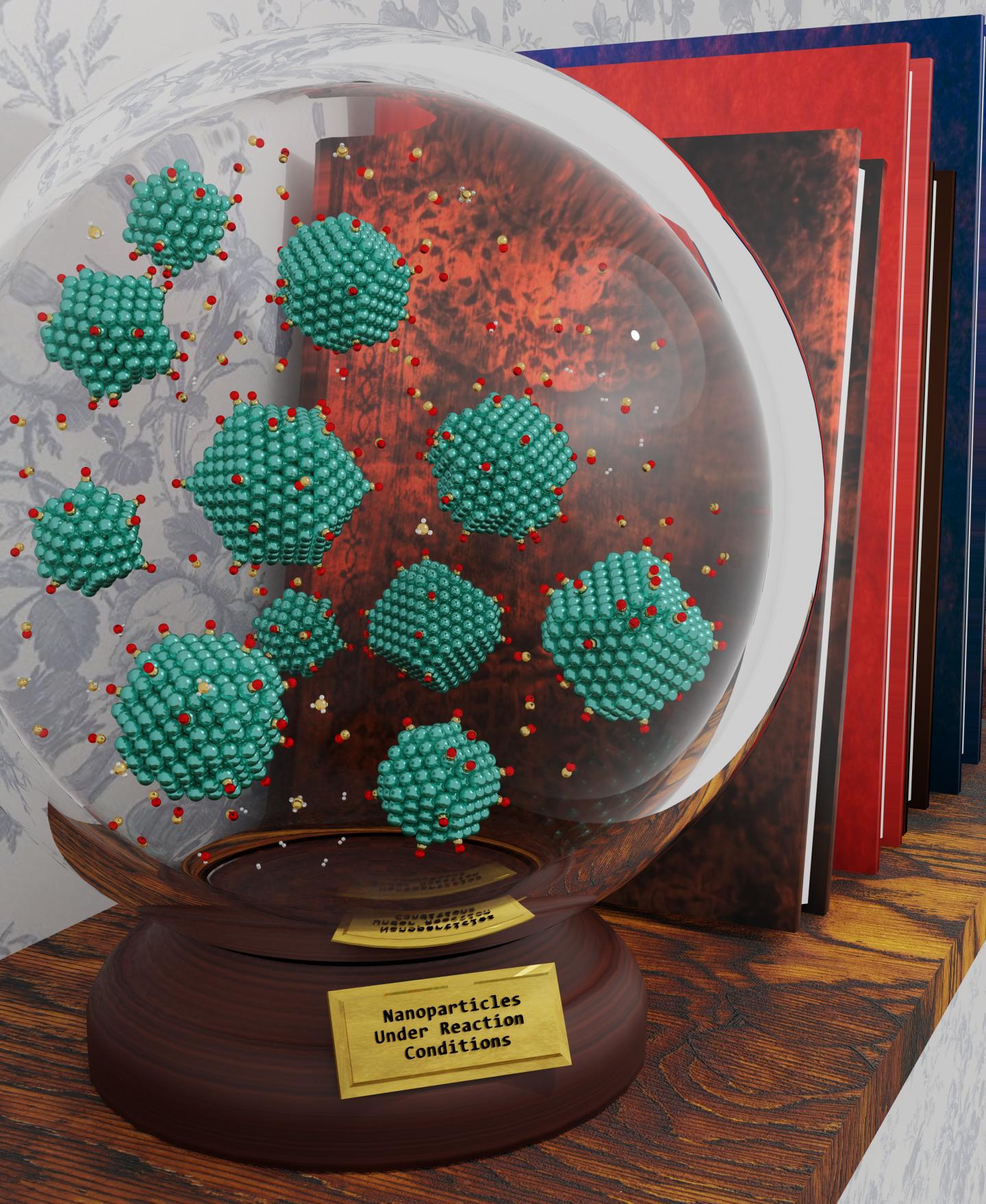
PITTSBURGH (June 9, 2020) — Computational catalysis, a field that simulates and accelerates the discovery of catalysts for chemicals production, has largely been limited to simulations of idealized catalyst structures that do not necessarily represent structures under realistic reaction conditions.

New research from the University of Pittsburgh’s Swanson School of Engineering, in collaboration with the Laboratory of Catalysis and Catalytic Processes (Department of Energy) at Politecnico di Milano in Milan, Italy, advances the field of computational catalysis by paving the way for the simulation of realistic catalysts under reaction conditions. The work, published in ACS Catalysis, was authored by Raffaele Cheula, Ph.D. student in the Maestri group; Matteo Maestri, full professor of chemical engineering at Politecnico di Milano; and Giannis “Yanni” Mpourmpakis, Bicentennial Alumni Faculty Fellow and associate professor of chemical engineering at Pitt.

“With our work, one can see, for example, how metal nanoparticles that are commonly used as catalysts can change morphology in a reactive environment and affect catalytic behavior. As a result, we can now simulate nanoparticle ensembles, which can advance any field of nanoparticles application, like nanomedicine, energy, the environment and more,” says Mpourmpakis. “Although our application is focused on catalysis, it has the potential to advance nanoscale simulations as a whole.”

In order to model catalysis in reaction conditions, the researchers had to account for the dynamic character of the catalyst, which is likely to change throughout the reaction. To accomplish this, the researchers simulated how the catalysts change structure, how probable this change is, and how that probability affects the reactions taking place on the surface of the catalysts.

“Catalysis is behind most of the important processes in our daily lives: from the production of chemicals and fuels to the abatement of pollutants,” says Maestri. “Our work paves the way towards the fundamental analysis of the structure-activity relation in catalysis. This is paramount in any effort in the quest of engineering chemical transformation at the molecular level by achieving a detailed mechanistic understanding of the catalyst functionality. Thanks to Raffaele’s stay at Pitt, we were able to combine the expertise in microkinetic and multiscale modeling of my group with the expertise in nanomaterials simulations and computational catalysis of Yanni’s group.”

Lead author Raffaele Cheula, a PhD student in the Maestri Lab, worked for a year in the Mpourmpakis Lab at Pitt on this research.

“It has been very nice to be involved in this collaboration between Yanni and Matteo” says Cheula. “The combination of my research experiences at Pitt and at PoliMi has been very important for the finalization of this work. It was a challenging topic and I am very happy with this result”.

###

The work is funded by National Science Foundation and the European Research Council, and with computational support from the Center for Research Computing at Pitt and CINECA in Bologna, Italy.

The paper, “Modeling Morphology and Catalytic Activity of Nanoparticle Ensembles Under Reaction Conditions,” was published in ACS Catalysis and featured on the cover of the print edition.

Media Contact
Maggie Pavlick
[email protected]

Original Source

https://www.engineering.pitt.edu/News/2020/Mpourmpakis-ACS-Catalysis-Nanoparticle-Modeling/

Related Journal Article

http://dx.doi.org/10.1021/acscatal.0c01005

Tags: Algorithms/ModelsAtomic/Molecular/Particle PhysicsChemistry/Physics/Materials SciencesIndustrial Engineering/Chemistry
Share12Tweet8Share2ShareShareShare2

Related Posts

Graz University of Technology Deciphers the Structural Secrets of MOF Thin Films — Chemistry

Graz University of Technology Deciphers the Structural Secrets of MOF Thin Films

July 2, 2026
Breaking Thermodynamic Limits: Wavelength-Driven Catalysis Advances Ammonia Synthesis — Chemistry

Breaking Thermodynamic Limits: Wavelength-Driven Catalysis Advances Ammonia Synthesis

July 2, 2026

From Quantum Mechanics to AI-Powered Materials Discovery: MARVEL Marks 12 Years of Transforming Computational Science

July 2, 2026

Djire Recognized with National Award for Outstanding Contributions in Research and Teaching

July 2, 2026
Please login to join discussion

POPULAR NEWS

  • Detection of EDCs in Breast Milk and Infant Urine Up to Six Months Highlights Early Exposure Risks

    77 shares
    Share 31 Tweet 19
  • Saying Goodbye to PGY-6: Pediatric Fellowship Realities

    103 shares
    Share 41 Tweet 26
  • New Drug Candidate Developed at McMaster Shows Potential for Treating Brain Cancer

    58 shares
    Share 23 Tweet 15
  • KTU Researchers Explore Ultrasound’s Role in Enhancing Blood Flow Beyond Diagnostics

    53 shares
    Share 21 Tweet 13

About

BIOENGINEER.ORG

We bring you the latest biotechnology news from best research centers and universities around the world. Check our website.

Follow us

Recent News

Steatosis Drives Liver Metastasis Diversity in CRC

Unlocking the Mysteries of Alzheimer’s Disease

Pensoft Introduces New Peer-Reviewed Journal of Regeneration to Advance Restorative Biology Across Species

Subscribe to Blog via Email

Enter your email address to subscribe to this blog and receive notifications of new posts by email.

Join 83 other subscribers
  • Contact Us

Bioengineer.org © Copyright 2023 All Rights Reserved.

Welcome Back!

Login to your account below

Forgotten Password?

Retrieve your password

Please enter your username or email address to reset your password.

Log In
No Result
View All Result
  • Homepages
    • Home Page 1
    • Home Page 2
  • News
  • National
  • Business
  • Health
  • Lifestyle
  • Science

Bioengineer.org © Copyright 2023 All Rights Reserved.