A Singapore research team has identified PAI-1 and S100A10 as drivers of tumour growth in the ascites microenvironment and developed a nanobody, E8, that targets PAI-1. The experimental study found that E8 suppressed tumour growth with minimal toxicity in cell assays, mouse models and ex vivo human tissue explants; it did not test E8 in people with cancer.
The work was led by the National Cancer Centre Singapore in collaboration with the A*STAR Institute of Molecular and Cell Biology, Singapore General Hospital and the Yong Loo Lin School of Medicine at the National University of Singapore. The peer-reviewed paper, “Identification of novel paracrine therapeutic targets in peritoneal metastases through integrative proteotranscriptomic analysis of ascites,” was published in Molecular Cancer on 11 September 2026.
Peritoneal metastases occur when cancers originating in abdominal organs spread to the peritoneum, the lining of the abdominal cavity. The source identifies gastric, colorectal and ovarian cancers as common primary sources, giving reported ranges of 20–25%, 20–45% and 60–75%, respectively. The condition is often diagnosed at Stage IV, has a median survival of under nine months and is frequently managed with palliative intent. Surgery, regionalised chemotherapy and systemic chemotherapy have limited curative ability.
Many patients with peritoneal metastases develop ascites, an accumulation of fluid in the abdomen. The 2026 study investigated the molecular pathways in this fluid that may support tumour development. It built on an earlier 2022 National Cancer Centre Singapore study, which had established that targeting ascites could inhibit tumour growth; the new analysis sought to characterise biological pathways and therapeutic vulnerabilities more comprehensively.
Using multiomic profiling, the team analysed proteins and biological pathways in a 397-sample ascites dataset spanning 21 primary cancer types. The collection is described by the researchers as one of the world’s largest ascites datasets. The analysis identified several paracrine factors implicated in tumour development, with PAI-1 and S100A10 emerging as key drivers in the ascites microenvironment.
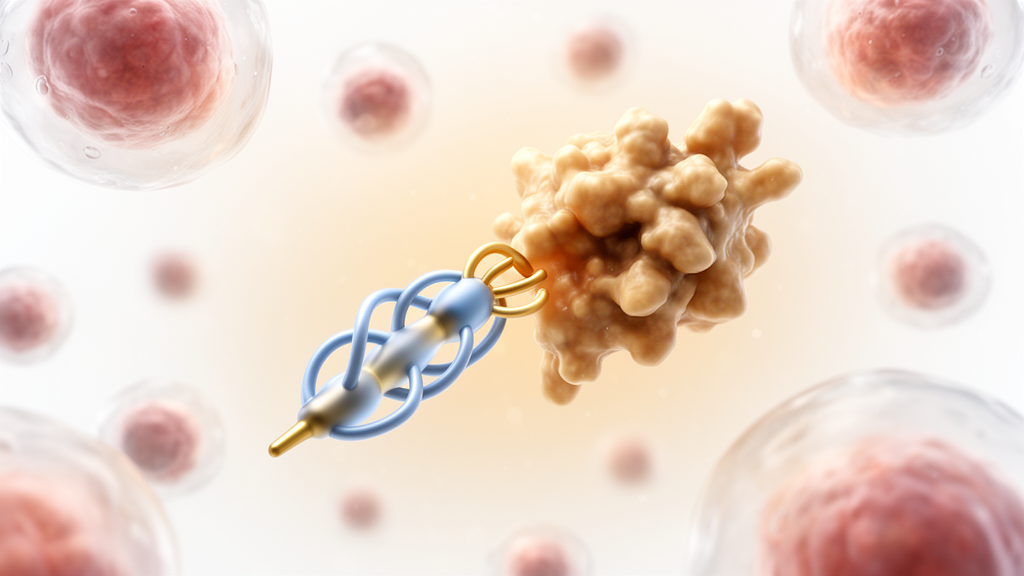
The team selected PAI-1 as a therapeutic target because of its clinical and prognostic relevance in cancer progression. Instead of developing a conventional monoclonal antibody, the researchers created E8, a smaller antibody-derived drug known as a nanobody. The source notes that nanobodies have low immunogenicity and a reduced toxicity risk, and that these properties could support better tolerability than some existing treatments, although this was not established in patients in the reported experiments.
Investigators assessed E8 in three preclinical systems: in vitro cell assays, in vivo mouse models and ex vivo human tissue explants in which tumour tissue was grown in patients’ ascites. Across all three systems, E8 suppressed tumour growth with minimal toxicity. These findings support further investigation of E8 as a treatment directed at the ascites microenvironment, but the experiments do not demonstrate clinical efficacy, safety or patient benefit.
Associate Professor Johnny Ong, the study’s senior author and head of the Department of Sarcoma, Peritoneal and Rare Tumours at Singapore General Hospital and NCCS, said the work creates the possibility of a new class of treatments for peritoneal metastases that targets the tumour microenvironment through ascites rather than tumour cells directly. He said the pathway may have implications for cancers that result in ascites, including ovarian, gastrointestinal, liver, breast and lung cancers.
Dr Joe Yeong, co-author and principal investigator at A*STAR’s Institute of Molecular and Cell Biology, described E8 as a therapeutic candidate with potential to improve outcomes for patients who have limited treatment options. Professor Jimmy So of NUS Medicine said the research could help pave the way for effective therapy for peritoneal metastasis. These statements describe translational potential; the study itself was experimental and preclinical.
The researchers are working to advance E8 toward clinical-grade development and a first-in-human clinical trial. In parallel, they are developing a companion biomarker test to identify patients with elevated PAI-1 levels who may be most likely to benefit from E8. These efforts are part of the Melyorax Initiative, a newly established biologics research programme led by Ong, with E8 as its lead asset. Whether the suppression observed in laboratory and animal models will translate into clinical benefit remains to be established.
Subject of Research: Preclinical identification of ascites targets and testing of the E8 nanobody in peritoneal metastases
Article Title: SG research team develops novel nanobody targeting tumor-fueling fluid to treat late-stage cancer of the abdominal lining
Article References: SG research team develops novel nanobody targeting tumor-fueling fluid to treat late-stage cancer of the abdominal lining. Original publication (Bibliographic details unavailable.)
Image Credits: AI Generated
DOI: Not provided
Keywords: peritoneal metastases, ascites, PAI-1, S100A10, E8 nanobody, tumour microenvironment, preclinical research, cancer therapeutics, Singapore, research, team, develops
News Source: Nathaniel Bowman. (October 21, 2026). Preclinical study identifies ascites targets and tests E8 nanobody in peritoneal metastases. Scienmag.