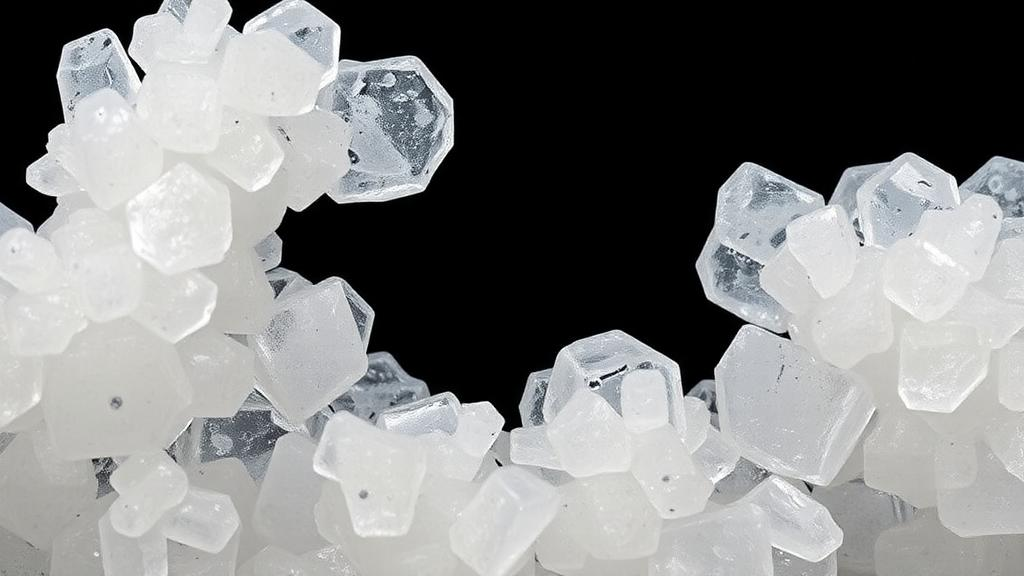
Liquid hydrogen has long been viewed as one of the most promising carriers of clean energy over long distances. Packaged at around twenty degrees above absolute zero, it offers a volumetric energy density that compressed gas simply cannot match, which is why shipping schemes, aviation concepts and large-scale storage plans so often begin with the letters LH2. Yet the fuel carries a stubborn and expensive weakness: it wants to boil. No insulation system is perfect, and as heat inevitably leaks into a tank, the liquid warms, evaporates and drives the pressure upward until venting becomes unavoidable. Every kilogram of hydrogen that escapes in this way is energy that was produced, liquefied and transported at considerable cost, only to be lost to the sky.
A team of researchers from South Korea and Europe now reports a way to attack the problem not by improving the insulation, but by changing what happens inside the tank once heat gets in. Writing in Nature Communications, a group led by Professor Hyunchul Oh of the Department of Chemistry at UNIST, together with Professor Hoi Ri Moon of Ewha Womans University, Dr. Jitae T. Park of the Technical University of Munich and Dr. Mónica Jiménez-Ruiz of the Institut Laue-Langevin in France, describes how metal-organic frameworks, or MOFs, can capture evaporating hydrogen and hold it back, dramatically slowing the loss of stored fuel. In their modeling of a transport-scale tank, the approach extended the usable storage period from roughly 64 days for neat liquid hydrogen to approximately 221 days, a more than threefold increase.
Metal-organic frameworks are crystalline materials built from metal nodes linked by organic molecules into extended, sponge-like networks. The result is a solid that is mostly empty space: nanoscale pores thread through the structure in enormous numbers, giving MOFs internal surface areas that can dwarf those of any conventional material. Chemists have spent decades exploiting these pores for gas storage and separation, but their application to cryogenic liquid hydrogen has been far less explored. The new study asks a deceptively simple question: if the pores can adsorb hydrogen molecules onto their internal surfaces, can that adsorption act as a buffer against boil-off?
The physics behind the idea is straightforward. At cryogenic temperatures, hydrogen molecules that enter the pores experience attractive interactions with the pore walls. These interactions confine the gas at high density on the internal surfaces, so as the bulk liquid evaporates under heat ingress, the liberated molecules are taken up by the framework rather than accumulating freely in the headspace. Pressure builds more slowly, and the point at which venting becomes necessary is pushed far into the future. Crucially, the strategy complements rather than replaces conventional insulation. Instead of focusing only on keeping heat out of the tank, the material changes how the hydrogen responds once heat has entered.
There is, however, an obvious catch, and it is the question that has kept porous materials out of practical liquid hydrogen systems: space. Every cubic centimeter occupied by a solid framework is a cubic centimeter that cannot hold liquid hydrogen. If the material’s presence sacrifices too much capacity, the boil-off savings are meaningless. The researchers therefore compared two MOFs with sharply contrasting architectures. The first, IRMOF-20, is a rigid framework distinguished by a very large pore volume. The second, MIL-53(Al), is a flexible framework whose pores expand and contract as hydrogen is adsorbed, a breathing behavior that gives it stronger interactions with the gas but a denser solid structure.
The comparison proved decisive. When the team accounted for the volume displaced by the material itself, IRMOF-20 retained about 97% of the volumetric capacity of neat liquid hydrogen. The hydrogen confined within its oversized pores packed densely enough on the internal surfaces to compensate for nearly all of the space the framework consumed. In other words, the adsorbed phase effectively did the work of the liquid it displaced. MIL-53(Al) told a different story. It held hydrogen more strongly as the temperature rose, an advantage for thermal retention, but its volumetric capacity reached only about 53% of that of the neat liquid. The contrast crystallizes the central design trade-off for porous materials in cryogenic hydrogen storage: larger pore volume favors capacity, while stronger confinement improves the ability to resist release as the tank warms.
To translate these laboratory measurements into engineering terms, the researchers modeled how the materials would perform in a transport-scale liquid hydrogen tank under mid-vacuum insulation conditions. Neat liquid hydrogen was predicted to deplete after about 64 days. With IRMOF-20 incorporated into the tank, that figure rose to approximately 221 days. The numbers come from modeling based on measured adsorption properties rather than from a full-scale demonstration, and the authors are careful about that distinction. As Oh notes, the calculations represent an idealized upper bound, and further work is needed to determine how closely this performance can be reproduced in practical tank systems. Even so, a modeled tripling of storage duration, achieved while preserving nearly all of the liquid’s volumetric capacity, is a striking result for a field where boil-off losses have long been treated as an unavoidable tax on hydrogen logistics.
The experimental evidence for why IRMOF-20 performs so well came from two complementary directions. Adsorption measurements indicated that hydrogen confined within its pores reaches an effective density higher than that of bulk liquid hydrogen, a counterintuitive finding that explains how the material can give back most of the volume it takes. The deeper mechanistic insight, however, came from neutron scattering. Park, based at the Heinz Maier-Leibnitz Zentrum at TUM, and Jiménez-Ruiz performed inelastic neutron scattering experiments on the IN1-Lagrange spectrometer at the Institut Laue-Langevin, probing how hydrogen molecules rotate inside the pores. The measurements showed restricted molecular rotation, indirect but telling evidence of strong interactions between the hydrogen and the framework walls.
Neutron scattering occupies a special place in hydrogen research, and the choice of technique was no accident. Hydrogen possesses a large neutron-scattering cross section, and inelastic neutron scattering directly probes molecular motion without the optical selection rules that constrain infrared and Raman spectroscopy, as Park explains. The rotational spectrum of solid parahydrogen features a very sharp rotational line at 14.7 millielectronvolts, and when hydrogen interacts with a surface, both the position and the shape of that line shift in ways that depend sensitively on the local environment. This makes the H2 rotational transition a sensitive probe of the interaction between hydrogen and its surroundings. Jiménez-Ruiz, who is responsible for the IN1-Lagrange instrument, points out that the spectrometer combines a broad energy-transfer range, high neutron flux and good energy resolution, allowing changes in the position, shape and splitting of the rotational transition to be measured and used to characterize the hydrogen-surface interaction in porous hosts.
Taken together, the adsorption data and the neutron results sketch a coherent physical picture: nanoscale confinement inside the right framework can simultaneously pack hydrogen more densely than it exists as a free liquid and stabilize it against release as the temperature climbs. That dual effect is what allows the modeled system to hold nearly all of the liquid’s capacity while stretching its storage lifetime by a factor of more than three. The path from model to marketplace will require demonstrating the effect in real tanks, where heat leaks are uneven, materials must survive repeated thermal cycling, and cost and mass matter as much as performance. But the study reframes the boil-off problem in an appealing way. Rather than fighting a losing battle against thermodynamics with ever-thicker insulation, engineers may one day fill part of the tank with an engineered sponge that quietly holds the fuel in place, turning one of the hydrogen economy’s most persistent liabilities into a manageable design parameter.
Subject of Research: Metal-organic frameworks for reducing liquid hydrogen boil-off in cryogenic storage
Article Title: Rethinking liquid hydrogen storage with metal-organic frameworks
Article References: Rethinking liquid hydrogen storage with metal-organic frameworks. (n.d.). Original publication
Image Credits: AI Generated
DOI: Not provided
Keywords: liquid hydrogen, metal-organic frameworks, boil-off, cryogenic storage, IRMOF-20, MIL-53(Al), neutron scattering, hydrogen adsorption, nanoscale confinement, hydrogen economy, Nature Communications, energy transport
News Source: Faith Mcneil. (October 11, 2026). Porous Crystals Could Triple How Long Liquid Hydrogen Stays in the Tank. Scienmag.