• HOME
  • NEWS
  • EXPLORE
    • CAREER
      • Companies
      • Jobs
    • EVENTS
    • iGEM
      • News
      • Team
    • PHOTOS
    • VIDEO
    • WIKI
  • BLOG
  • COMMUNITY
    • FACEBOOK
    • INSTAGRAM
    • TWITTER
Tuesday, October 20, 2026
BIOENGINEER.ORG
No Result
View All Result
  • Login
  • HOME
  • NEWS
  • EXPLORE
    • CAREER
      • Companies
      • Jobs
        • Lecturer
        • PhD Studentship
        • Postdoc
        • Research Assistant
    • EVENTS
    • iGEM
      • News
      • Team
    • PHOTOS
    • VIDEO
    • WIKI
  • BLOG
  • COMMUNITY
    • FACEBOOK
    • INSTAGRAM
    • TWITTER
No Result
View All Result
Bioengineer.org
No Result
View All Result
Home NEWS Science News Agriculture

Polystyrene microplastics with molybdenum improved wheat seed germination in an experimental study

by
October 20, 2026
in Agriculture
Reading Time: 2 mins read
0
Polystyrene microplastics with molybdenum improved wheat seed germination in an experimental study

Microplastics and Trace Elements Team Up to Rewire Wheat from Germination to Genes

Share on FacebookShare on TwitterShare on LinkedinShare on RedditShare on Telegram

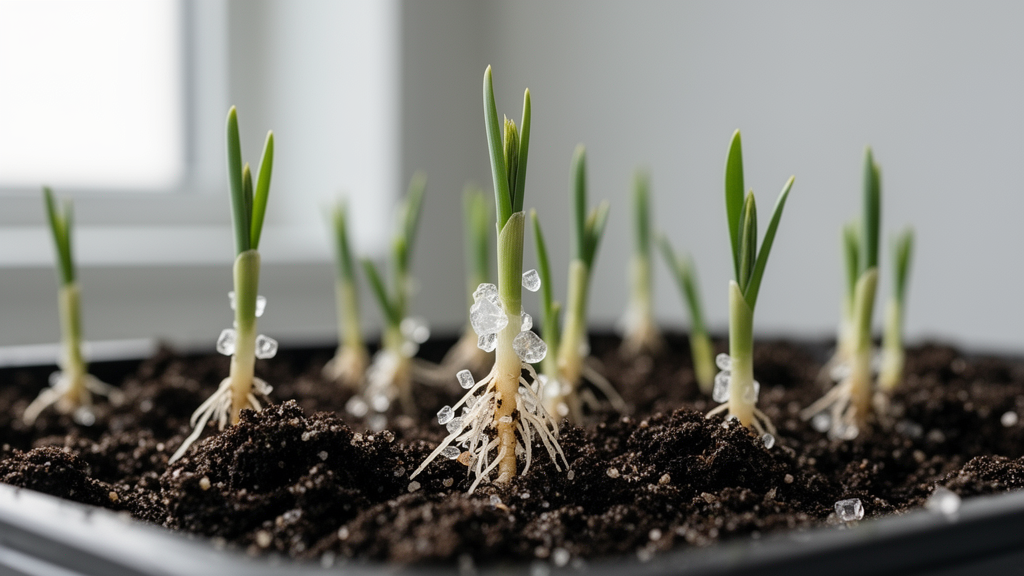
An experimental wheat study reported that a combined treatment of polystyrene microplastics at 50 mg/L and molybdenum VI oxide at 0.01% significantly enhanced several measured seed-germination outcomes. According to the available abstract, the treatment improved germination rate, final germination percentage and the coefficient of velocity of germination. The abstract does not provide numerical effect sizes, uncertainty estimates or detailed statistical comparisons, so the magnitude of the improvements cannot be assessed from the supplied evidence.

The study examined how polystyrene microplastics and trace elements jointly affected wheat physiology, with particular attention to physiological growth, seed germination and secondary-metabolite production in leaves. To identify low-dose trace-element concentrations that maximize secondary-metabolite production, the researchers used response surface methodology. This was a model-based optimization within the conditions tested; the abstract does not establish that an identified concentration would produce the same response in other environmental or experimental settings.

Metabolomic analysis revealed substantial alterations in amino-acid, fatty-acid and energy metabolism. Transcriptomic analysis identified specific genes associated with secondary-metabolite production and plant-defense mechanisms. The available abstract does not specify the full treatment structure, statistical methods, individual gene results or whether every measured metabolite and transcript showed a statistically significant response.

The findings are limited to the reported wheat experiment and do not demonstrate equivalent effects in field conditions, changes in crop yield, or long-term consequences for plant health and development. The authors characterize the work as a foundation for future research on long-term effects of interactions between microplastics and trace elements in plants. The supplied evidence does not establish broader agricultural consequences or clinical relevance.

Subject of Research: Experimental effects of polystyrene microplastics and trace elements on wheat germination, metabolism and associated genes

Article Title: Synergistic effects of polystyrene microplastics and trace elements on wheat (Triticum aestivum L.) physiology: implications for seed germination, metabolites production, and transcriptomic insights

Article References: Kousar, M., Hashmi, Q. A., & Park, J. (2026). Synergistic effects of polystyrene microplastics and trace elements on wheat (Triticum aestivum L.) physiology: implications for seed germination, metabolites production, and transcriptomic insights. BMC Plant Biology. https://doi.org/10.1186/s12870-026-10147-y

Image Credits: AI Generated

DOI: 10.1186/s12870-026-10147-y

Keywords: wheat, seed germination, polystyrene microplastics, trace elements, molybdenum, secondary metabolites, metabolomics, transcriptomics, plant defense, response surface methodology, Synergistic, effects

News Source: Alan Morgan. (October 20, 2026). Polystyrene microplastics with molybdenum improved wheat seed germination in an experimental study. Scienmag.


Tags: effectsMetabolomicsmolybdenumplant defensepolystyrene microplasticsresponse surface methodologysecondary metabolitesSeed germinationSynergistictrace elementsTranscriptomicswheat
Share12Tweet7Share2ShareShareShare1

Related Posts

Comparative genome study identifies candidate genomic correlates of invasiveness in three cucurbit species

Comparative genome study identifies candidate genomic correlates of invasiveness in three cucurbit species

October 20, 2026
Comparative chloroplast genomics of Gnaphalieae (Asteraceae)

Comparative chloroplast genomics of Gnaphalieae (Asteraceae)

October 20, 2026

Biochar and nitrogen effects on nitrate leaching, physiological performance, and rhizome quality of turmeric (Curcuma longa L.) in sandy soil

October 20, 2026

Bayesian genomic prediction models perform favorably in maize panel under optimal and deficient phosphorus conditions

October 20, 2026

POPULAR NEWS

  • Comparative genome study identifies candidate genomic correlates of invasiveness in three cucurbit species

    Comparative genome study identifies candidate genomic correlates of invasiveness in three cucurbit species

    29 shares
    Share 12 Tweet 7
  • Meta-analysis links high tacrolimus variability with kidney graft loss and rejection

    29 shares
    Share 12 Tweet 7
  • Retrospective cohort links immune checkpoint inhibitor–containing chemoimmunotherapy to longer overall survival in recurrent nasopharyngeal carcinoma

    29 shares
    Share 12 Tweet 7
  • Polystyrene microplastics with molybdenum improved wheat seed germination in an experimental study

    29 shares
    Share 12 Tweet 7

About

We bring you the latest biotechnology news from best research centers and universities around the world. Check our website.

Follow us

Recent News

Comparative genome study identifies candidate genomic correlates of invasiveness in three cucurbit species

Meta-analysis links high tacrolimus variability with kidney graft loss and rejection

Retrospective cohort links immune checkpoint inhibitor–containing chemoimmunotherapy to longer overall survival in recurrent nasopharyngeal carcinoma

Subscribe to Blog via Email

Enter your email address to subscribe to this blog and receive notifications of new posts by email.

Join 85 other subscribers
  • Contact Us

Bioengineer.org © Copyright 2023 All Rights Reserved.

Welcome Back!

Login to your account below

Forgotten Password?

Retrieve your password

Please enter your username or email address to reset your password.

Log In
No Result
View All Result
  • Homepages
    • Home Page 1
    • Home Page 2
  • News
  • National
  • Business
  • Health
  • Lifestyle
  • Science

Bioengineer.org © Copyright 2023 All Rights Reserved.