• HOME
  • NEWS
  • EXPLORE
    • CAREER
      • Companies
      • Jobs
    • EVENTS
    • iGEM
      • News
      • Team
    • PHOTOS
    • VIDEO
    • WIKI
  • BLOG
  • COMMUNITY
    • FACEBOOK
    • INSTAGRAM
    • TWITTER
Tuesday, October 20, 2026
BIOENGINEER.ORG
No Result
View All Result
  • Login
  • HOME
  • NEWS
  • EXPLORE
    • CAREER
      • Companies
      • Jobs
        • Lecturer
        • PhD Studentship
        • Postdoc
        • Research Assistant
    • EVENTS
    • iGEM
      • News
      • Team
    • PHOTOS
    • VIDEO
    • WIKI
  • BLOG
  • COMMUNITY
    • FACEBOOK
    • INSTAGRAM
    • TWITTER
No Result
View All Result
Bioengineer.org
No Result
View All Result
Home NEWS Science News Agriculture

Biochar and nitrogen effects on nitrate leaching, physiological performance, and rhizome quality of turmeric (Curcuma longa L.) in sandy soil

by
October 20, 2026
in Agriculture
Reading Time: 2 mins read
0
Biochar and nitrogen effects on nitrate leaching, physiological performance, and rhizome quality of turmeric (Curcuma longa L.) in sandy soil

Coffee Husk Biochar Slashes Nitrate Losses and Boosts Turmeric Quality in Sandy Soils

Share on FacebookShare on TwitterShare on LinkedinShare on RedditShare on Telegram

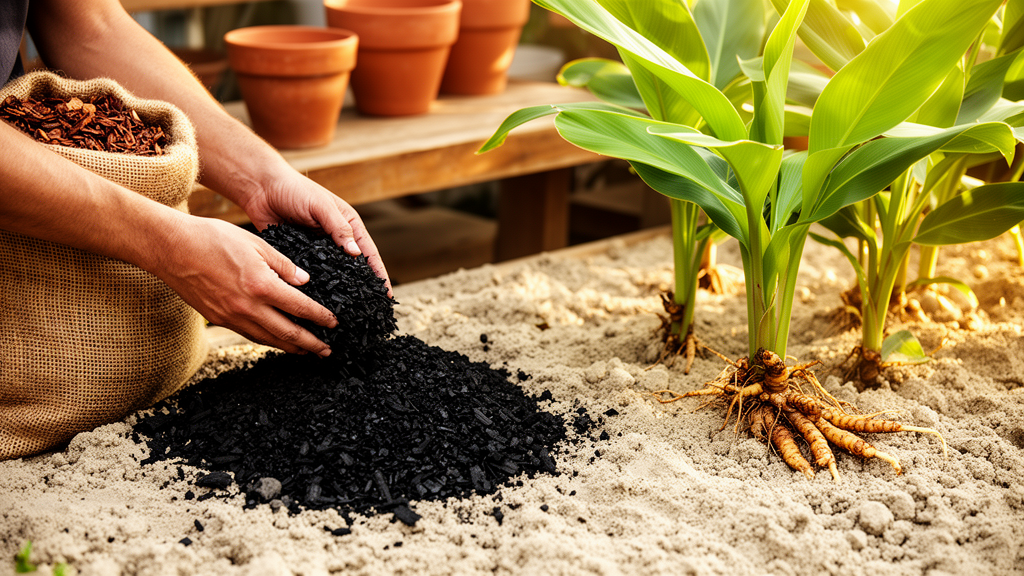
A greenhouse pot experiment found that adding coffee husk biochar was associated with lower nitrate leaching across four nitrogen fertilizer rates in sandy soil, while the combination of 150 kg N ha⁻¹ and 15 t ha⁻¹ of biochar produced the highest measurements for several physiological and rhizome-quality traits in turmeric (Curcuma longa L.).

The factorial experiment, summarized in the study abstract, tested nitrogen rates of 0, 70, 150 and 250 kg N ha⁻¹ with biochar rates of 0 and 15 t ha⁻¹. Researchers measured nitrate leaching and assessed chlorophyll, relative water content and stomatal characteristics. Rhizome analyses covered phenolics, flavonoids, curcuminoids, oleoresin and antioxidant activity. Nitrogen rate, biochar rate and their interaction significantly influenced physiological traits and nitrate leaching, with the reported analysis giving p < 0.001.

Without biochar, measured nitrate loss rose from 360 mg N pot⁻¹ at the zero-nitrogen treatment to 2,906.67 mg N pot⁻¹ at 250 kg N ha⁻¹. With biochar, nitrate loss was 180–280 mg N pot⁻¹ across the tested nitrogen levels. The N150B15 treatment, combining 150 kg N ha⁻¹ with 15 t ha⁻¹ of biochar, recorded the highest chlorophyll content at 41.99 SPAD and relative water content at 92.61%. It also had the highest measured concentrations of phenolics at 39.65 mg gallic acid equivalents g⁻¹, flavonoids at 16.22 mg catechin equivalents g⁻¹ and curcuminoids at 61.67 mg curcuminoid equivalents g⁻¹. Oleoresin reached 61.89% in that treatment.

Antioxidant measurements were also highest under N150B15: 75.03% 2,2-diphenyl-1-picrylhydrazyl activity and 45.56 mg ascorbic acid equivalents g⁻¹ of ferric reducing antioxidant power. The abstract therefore reports improved measured physiology and rhizome phytochemical quality, together with reduced nitrate leaching, for moderate nitrogen combined with biochar in the tested sandy soil. These results are limited to a greenhouse pot experiment using one type and application rate of coffee husk biochar, one soil context and four nitrogen rates. The authors state that field-scale validation using diverse biochar types and rates is required before broader recommendations can be made; the supplied evidence does not establish field performance or wider applicability.

Subject of Research: Effects of coffee husk biochar and nitrogen rates on nitrate leaching and turmeric physiology and rhizome quality in a sandy-soil pot experiment

Article Title: Biochar and nitrogen effects on nitrate leaching, physiological performance, and rhizome quality of turmeric (Curcuma longa L.) in sandy soil

Article References: Eshetu, T., Dessalegn, E., Belew, D., Gobena, A., & Nigusie, A. (2026). Biochar and nitrogen effects on nitrate leaching, physiological performance, and rhizome quality of turmeric (Curcuma longa L.) in sandy soil. BMC Plant Biology. https://doi.org/10.1186/s12870-026-09940-6

Image Credits: AI Generated

DOI: 10.1186/s12870-026-09940-6

Keywords: turmeric, Curcuma longa, biochar, nitrogen fertilization, nitrate leaching, greenhouse pot experiment, sandy soil, rhizome quality, curcuminoids, chlorophyll, nitrogen, effects

News Source: Alan Morgan. (October 20, 2026). Biochar and nitrogen effects on nitrate leaching, physiological performance, and rhizome quality of turmeric (Curcuma longa L.) in sandy soil. Scienmag.


Tags: biocharchlorophyllCurcuma longacurcuminoidseffectsgreenhouse pot experimentnitrate leachingnitrogennitrogen fertilizationrhizome qualitysandy soilturmeric
Share12Tweet7Share2ShareShareShare1

Related Posts

Full-length transcriptome analysis and microsatellite marker development in Euonymus japonicus ‘Beihaidao’

Full-length transcriptome analysis and microsatellite marker development in Euonymus japonicus ‘Beihaidao’

October 20, 2026
Review assesses AI-guided weed control opportunities and risks

Review assesses AI-guided weed control opportunities and risks

October 20, 2026

Experimental multi-omics study links low-phosphorus tolerance in TY2 oat to coordinated metabolic responses

October 20, 2026

Greenhouse study links 5-minute cold argon plasma-activated water treatment with reduced ToBRFV symptoms and improved tomato growth measures

October 20, 2026

POPULAR NEWS

  • Registry study finds fluctuating maternal near-miss cases in northeastern Iran from 2020 to 2024

    Registry study finds fluctuating maternal near-miss cases in northeastern Iran from 2020 to 2024

    29 shares
    Share 12 Tweet 7
  • ARDS subphenotypes offer a path toward personalized critical care

    29 shares
    Share 12 Tweet 7
  • Microstructure evolution and dynamic recrystallization of spray-formed Al–Zn–Mg–Cu alloy under hot deformation

    29 shares
    Share 12 Tweet 7
  • Systematic review of 14 in vitro studies links natural products to apoptosis in salivary gland mucoepidermoid carcinoma

    29 shares
    Share 12 Tweet 7

About

We bring you the latest biotechnology news from best research centers and universities around the world. Check our website.

Follow us

Recent News

Registry study finds fluctuating maternal near-miss cases in northeastern Iran from 2020 to 2024

ARDS subphenotypes offer a path toward personalized critical care

Microstructure evolution and dynamic recrystallization of spray-formed Al–Zn–Mg–Cu alloy under hot deformation

Subscribe to Blog via Email

Enter your email address to subscribe to this blog and receive notifications of new posts by email.

Join 85 other subscribers
  • Contact Us

Bioengineer.org © Copyright 2023 All Rights Reserved.

Welcome Back!

Login to your account below

Forgotten Password?

Retrieve your password

Please enter your username or email address to reset your password.

Log In
No Result
View All Result
  • Homepages
    • Home Page 1
    • Home Page 2
  • News
  • National
  • Business
  • Health
  • Lifestyle
  • Science

Bioengineer.org © Copyright 2023 All Rights Reserved.