


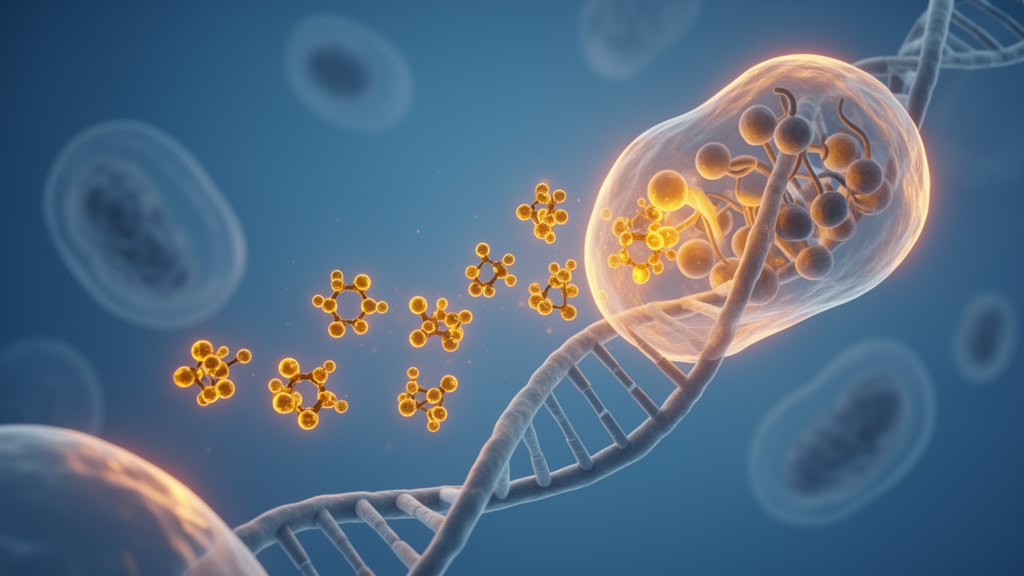
Polyamines, the small positively charged molecules long regarded mainly as stabilisers of DNA and RNA, are being repositioned in a new mini review in the journal Amino Acids as active participants in gene regulation. The review, authored by Sharanya Roy, Sayak Chakraborty, Swastika Rakshit, Sampriti Chakraborty and Aditi Nayak, and published online on 11 September 2026, argues that these cellular metabolites may influence how RNA molecules are chemically modified, and through that influence how genes are ultimately expressed.
The central claim of the review is that polyamines should be viewed not as passive structural supports for nucleic acids but as a link between a cell’s metabolism and its epitranscriptome, the collection of chemical tags on RNA that alter gene expression outcomes. The authors survey recent studies suggesting that these cationic molecules may be involved in establishing or modulating several well-known RNA modifications, including N6-methyladenosine (m6A), 5-methylcytosine (m5C), pseudouridine, N1-methyladenosine (m1A) and N4-acetylcytidine (ac4C). Because each of these tags can change how an RNA message is read, processed or degraded, any metabolic influence over them represents a potentially powerful layer of post-transcriptional control.
The review also addresses a second, more indirect route by which polyamines affect protein production: hypusination. Taken together, the authors present these two routes as a way in which a cell’s internal chemistry can feed directly into its genetic and functional identity.
According to the abstract, these metabolism-linked RNA modifications are discussed in relation to stem cell function, immune signalling and cancer development, with the review suggesting that polyamines act as increasingly recognised controllers of cell fate decisions. The authors frame this as an evolving interface in which RNA regulation responds to metabolic state rather than operating from a fixed blueprint. They also point to potential implications for regenerative medicine and more focused cancer therapies, while flagging the area as one that invites further targeted study.
It is worth noting the nature and limits of this contribution. The article is a mini review, published as an open-access, peer-reviewed accepted manuscript that is still subject to further edits before the final version of record. As a synthesis of existing literature, it does not report new experimental results of its own; the connections it draws between polyamines, specific RNA modifications and disease processes reflect the authors’ interpretation of prior studies, and the abstract itself uses cautious language such as “may” when describing polyamine involvement in epitranscriptomic regulation. Readers should therefore treat the therapeutic possibilities mentioned as directions for future research rather than established clinical findings.
Even so, the review’s framing is notable for how it reorganises a familiar picture of molecular biology. If the relationships it surveys hold up under continued experimental scrutiny, the epitranscriptome would join metabolism as a two-way conversation: metabolic state shaping RNA chemistry, and RNA chemistry shaping cell behaviour. For researchers working on RNA modifications, translation or polyamine metabolism, the article offers a consolidated map of where those fields currently intersect, and of the questions that remain open at the junction.
Subject of Research: The role of polyamines in regulating RNA modifications, translation and post-transcriptional gene regulation
Article Title: Polyamines as emerging regulators of RNA biology: linking the epitranscriptome, translation, hypusination and post-transcriptional gene regulation
Article References: Roy, S., Chakraborty, S., Rakshit, S., Chakraborty, S., & Nayak, A. (2026). Polyamines as emerging regulators of RNA biology: linking the epitranscriptome, translation, hypusination and post-transcriptional gene regulation. Amino Acids. https://doi.org/10.1007/s00726-026-03561-x
Image Credits: AI Generated
DOI: 10.1007/s00726-026-03561-x
Keywords: polyamines, RNA biology, epitranscriptome, m6A, hypusination, translation, post-transcriptional regulation, eIF5A, cancer, stem cells, metabolism, mini review
News Source: Drew Townsend. (October 29, 2026). Polyamines emerge as metabolic controllers of RNA modifications and translation. Scienmag.



