• HOME
  • NEWS
  • EXPLORE
    • CAREER
      • Companies
      • Jobs
    • EVENTS
    • iGEM
      • News
      • Team
    • PHOTOS
    • VIDEO
    • WIKI
  • BLOG
  • COMMUNITY
    • FACEBOOK
    • INSTAGRAM
    • TWITTER
Wednesday, May 20, 2026
BIOENGINEER.ORG
No Result
View All Result
  • Login
  • HOME
  • NEWS
  • EXPLORE
    • CAREER
      • Companies
      • Jobs
        • Lecturer
        • PhD Studentship
        • Postdoc
        • Research Assistant
    • EVENTS
    • iGEM
      • News
      • Team
    • PHOTOS
    • VIDEO
    • WIKI
  • BLOG
  • COMMUNITY
    • FACEBOOK
    • INSTAGRAM
    • TWITTER
  • HOME
  • NEWS
  • EXPLORE
    • CAREER
      • Companies
      • Jobs
        • Lecturer
        • PhD Studentship
        • Postdoc
        • Research Assistant
    • EVENTS
    • iGEM
      • News
      • Team
    • PHOTOS
    • VIDEO
    • WIKI
  • BLOG
  • COMMUNITY
    • FACEBOOK
    • INSTAGRAM
    • TWITTER
No Result
View All Result
Bioengineer.org
No Result
View All Result
Home NEWS Science News Biology

Plastics found in sea-bed sharks

Bioengineer by Bioengineer
July 22, 2020
in Biology
Reading Time: 2 mins read
0
IMAGE
Share on FacebookShare on TwitterShare on LinkedinShare on RedditShare on Telegram

IMAGE

Credit: Jake Davies

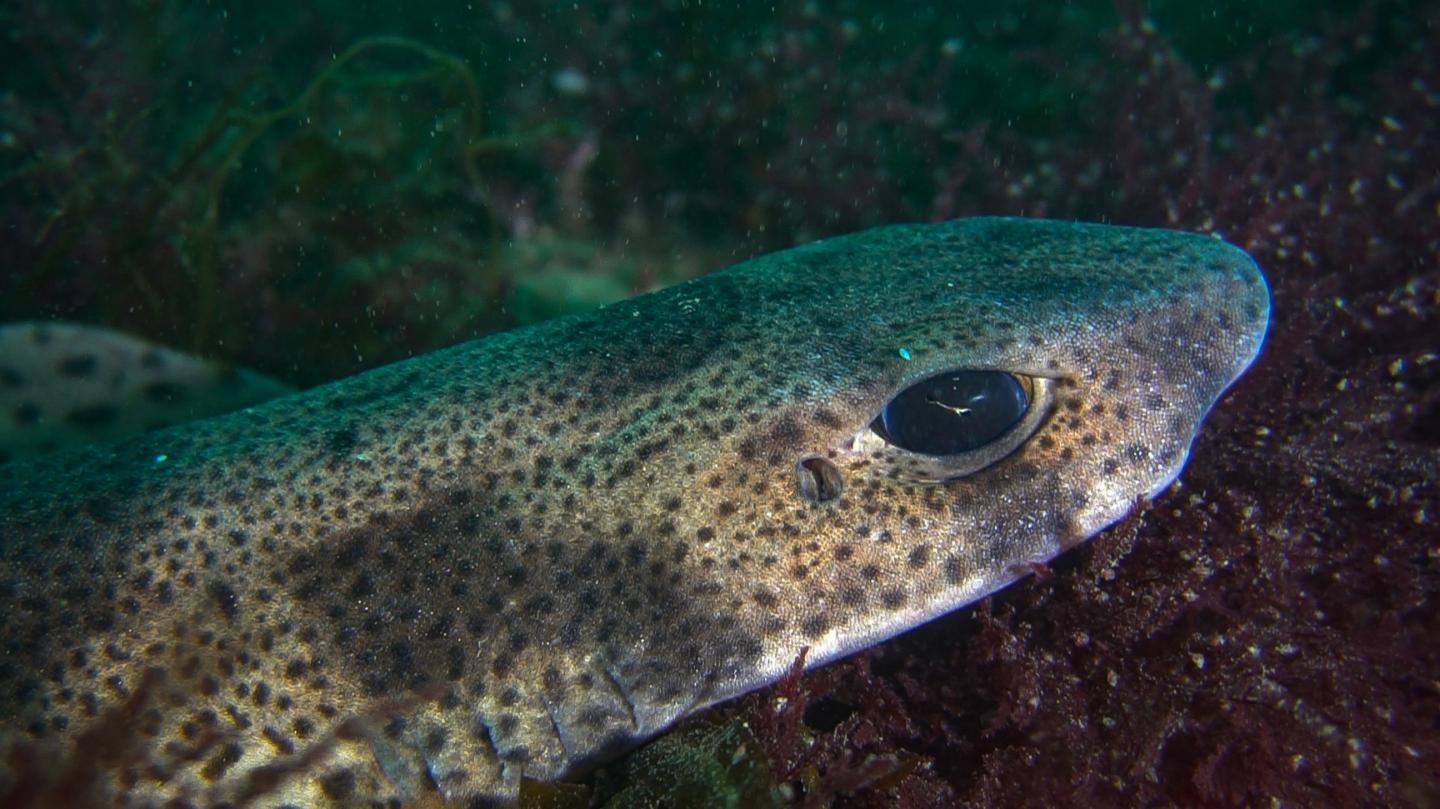
Microplastics have been found in the guts of sharks that live near the seabed off the UK coast.

University of Exeter scientists studied four species of demersal (seabed-dwelling) shark.

Of the 46 sharks examined, 67% contained microplastics and other man-made fibres.

A total of 379 particles were found and – though the impact on the sharks’ health is unknown – the researchers say it highlights the “pervasive nature of plastic pollution”.

“Our study presents the first evidence of microplastics and anthropogenic fibre contaminants in a range of native UK demersal shark species,” said lead author Kristian Parton, of the Centre for Ecology and Conservation at Exeter’s Penryn Campus in Cornwall.

Commenting on the possible sources of the particles, he added: “We were surprised to find not only microplastics but also particles such as synthetic cellulose, which is most commonly found in textiles (including disposable hygiene items like facemasks) and clothing.

“When clothes are washed, or items are discarded as litter, tiny fibres are released and these often flow into water sources and out to sea.

“Once in the sea, microfibres can either float or sink to the bottom, which is where these sharks live.

“The fibres could then be ingested via the sharks’ food, which is mostly crustaceans, or directly through the sediment on the seabed.

“In terms of the other types of microplastics we found, many of these may have come from fishing lines or nets.”

The research team, which included scientists from Greenpeace Research Laboratories, examined the stomachs and digestive tracts of four species: small-spotted catshark, starry smooth-hound, spiny dogfish and bull huss.

These species can be found at varying depths from 5-900m, but usually live and feed near the sea floor.

Though the study is based on a modest sample size, the findings suggest larger sharks contained more particles. No differences were found based on sex or species.

The study was conducted in Cornwall, UK, using sharks caught as “bycatch” (by accident) in a demersal hake fishery, fishing in and around the North-East Atlantic and Celtic Sea.

Study co-author Professor Tamara Galloway, of Exeter’s Global Systems Institute, said: “We were not expecting to find microfibres from textiles in so many of our native shark species.

“Our study highlights how important it is to think before we throw things away.”

Dr Laura Foster, Head of Clean Seas at the Marine Conservation Society, added: “The new research from into these iconic shark species around the UK shows high levels of microplastic ingestion, with 95% of the contaminants found being fibrous.”

###

The paper, published in the journal Scientific Reports, is entitled: “Investigating the presence of microplastics in demersal sharks of the northeast Atlantic.”

Media Contact
Alex Morrison
[email protected]

Related Journal Article

http://dx.doi.org/10.1038/s41598-020-68680-1

Tags: BiodiversityBiologyEcology/EnvironmentFisheries/AquacultureMarine/Freshwater BiologyMicrobiologyPollution/RemediationZoology/Veterinary Science
Share12Tweet8Share2ShareShareShare2

Related Posts

Ancient Complex Life Thrived Along Oxygen-Rich Seafloors for Hundreds of Millions of Years — Biology

Ancient Complex Life Thrived Along Oxygen-Rich Seafloors for Hundreds of Millions of Years

May 20, 2026
How Early Sexual Debut Could Influence Aging Later in Life — Biology

How Early Sexual Debut Could Influence Aging Later in Life

May 20, 2026

New Discovery Reveals How Cancer Progresses During Cell Division

May 20, 2026

Brookfield Zoo Chicago Achieves Major Milestone in Puerto Rican Crested Toad Conservation with Over 12,000 Tadpoles

May 19, 2026
Please login to join discussion

POPULAR NEWS

  • blank

    New Study Reveals Plants Can Detect the Sound of Rain

    732 shares
    Share 292 Tweet 183
  • Research Indicates Potential Connection Between Prenatal Medication Exposure and Elevated Autism Risk

    846 shares
    Share 338 Tweet 212
  • ESMO 2025: mRNA COVID Vaccines Enhance Efficacy of Cancer Immunotherapy

    292 shares
    Share 117 Tweet 73
  • Breastmilk Balances E. coli and Beneficial Bacteria in Infant Gut Microbiomes

    58 shares
    Share 23 Tweet 15

About

We bring you the latest biotechnology news from best research centers and universities around the world. Check our website.

Follow us

Recent News

Carbon Markets Undervalue Climate Change Threats to U.S. Forests

Advances and Future Outlook of mRNA Vaccines in Cancer Immunotherapy for Solid Tumors and Blood Cancers

Modern Medicine Significantly Reduces Gut Microbial Diversity

Subscribe to Blog via Email

Enter your email address to subscribe to this blog and receive notifications of new posts by email.

Join 82 other subscribers
  • Contact Us

Bioengineer.org © Copyright 2023 All Rights Reserved.

Welcome Back!

Login to your account below

Forgotten Password?

Retrieve your password

Please enter your username or email address to reset your password.

Log In
No Result
View All Result
  • Homepages
    • Home Page 1
    • Home Page 2
  • News
  • National
  • Business
  • Health
  • Lifestyle
  • Science

Bioengineer.org © Copyright 2023 All Rights Reserved.