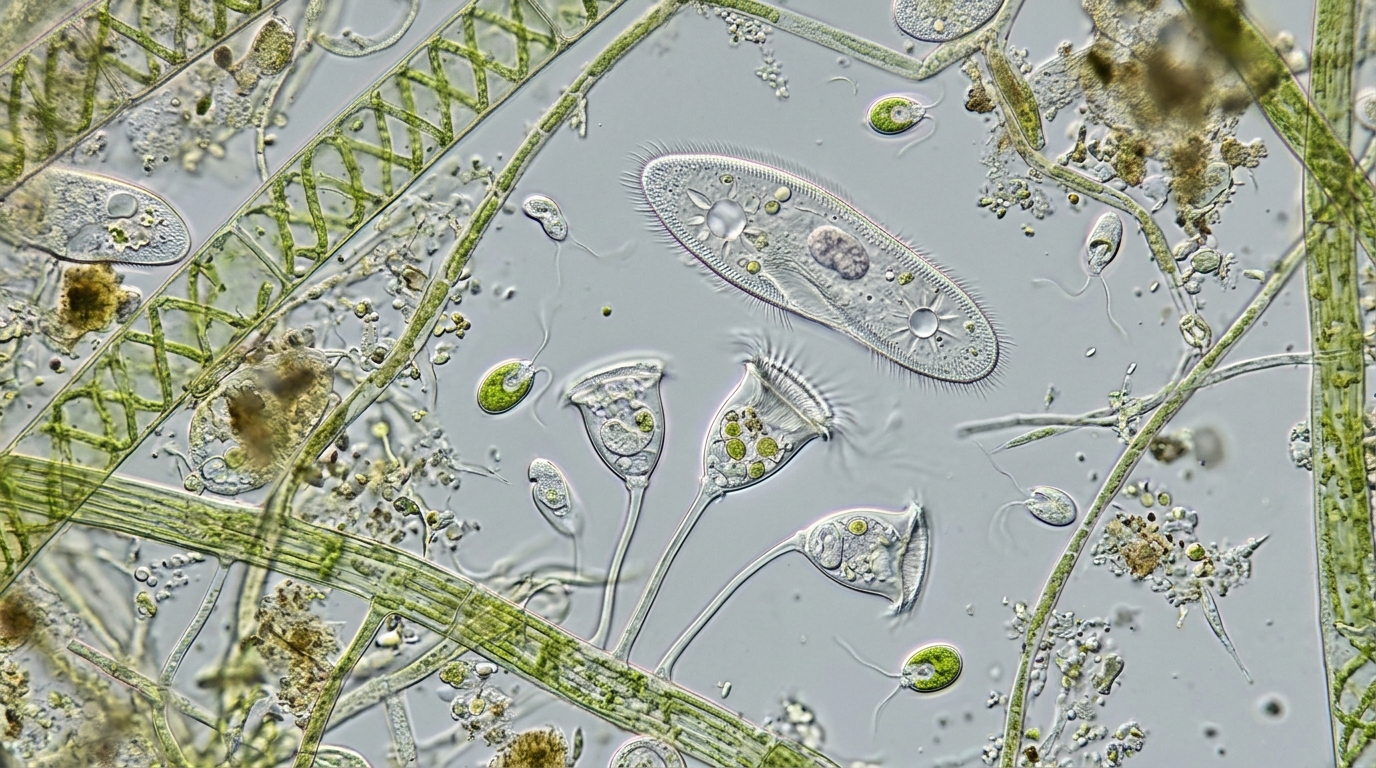
Metagenomic analysis of freshwater samples from the Chishui River has revealed that multi-taxon microbial communities exhibit divergent environmental adaptability and asynchronous responses to seasonal perturbations. Multi-taxon assemblages comprising bacteria, fungi, single-celled eukaryotic algae, and protozoa are recognized as the primary drivers of essential biogeochemical processes in aquatic ecosystems, yet the mechanisms governing their spatiotemporal dynamics and community assembly have remained poorly understood. By tracking these distinct trophic groups across temporal and spatial gradients, researchers found that riverine microbial groups do not respond uniformly to environmental disturbances. Instead, the findings suggest that the overarching stability of riverine ecosystems depends upon the differential buffering capacities of these diverse multi-trophic groups as they encounter recurring seasonal hydrological fluctuations.
The study was situated within the Chishui River, an aquatic system that maintains natural hydrological connectivity, providing an ideal natural setting for evaluating freshwater biogeography and ecological community assembly. To investigate the ecological drivers shaping these different trophic groups, the research team analyzed metagenomic samples collected across all four seasons of the year. The sampling design established 25 distinct sampling sites during each season, creating a seasonal dataset designed to capture spatial patterns and temporal dynamics across the river basin. Metagenomic sequencing was applied to resolve the collective dynamics of the four major coexisting microbial groups, offering an integrated assessment of both prokaryotic and eukaryotic organisms within an unfragmented river system.
The resulting seasonal observations demonstrated clear divergence in diversity patterns across the different microbial groups. Bacterial diversity reached its annual peak in the summer, an increase that researchers identified as likely driven by elevated seasonal temperatures. In contrast, eukaryotic microbial groups displayed marked declines during the summer months, with both fungal diversity and single-celled eukaryotic algal diversity dropping significantly. The researchers noted that these summer declines in fungi and algae are partly attributable to the physical stresses of hydrodynamic disturbances and turbidity-induced photoinhibition, which diminish light availability and disrupt aquatic habitats during high-flow periods. Single-celled eukaryotic algae and fungi were thus particularly susceptible to the turbid, turbulent flow regime of the summer season.
Protozoan communities exhibited a temporal trajectory that diverged from both bacteria and algae, displaying distinct seasonal dynamics across the annual cycle. The metagenomic survey indicated that protozoan taxonomic richness was highest in the spring and fell to its lowest recorded point during the autumn. According to the authors, the prominent spring richness maxima likely reflect environmental conditions that are particularly favorable for early-stage ecological succession within the river. This distinct seasonal timing illustrates how disparate trophic groups experience asynchronous windows of growth and vulnerability, rather than responding in a uniform manner to the changing aquatic environment.
Beyond assessing diversity levels alone, the researchers carried out co-occurrence network analysis to evaluate the structure, complexity, and stability of interactions occurring among the different microbial taxa. The analysis revealed that microbial interactions were at their most complex and structurally stable during the spring season. The authors suggested that intermediate disturbance and warming temperatures in spring facilitate niche sharing and cross-trophic associations among coexisting organisms. In contrast, this intricate network structure did not persist into the summer; summer floods simplified microbial network structures, disrupting cross-trophic connections as hydrological disturbance intensified. Network stability and cross-taxa connectivity thereby diminished under the disruptive physical influence of peak summer hydrological events.
An examination of community assembly mechanisms revealed that both stochastic and deterministic processes shape these riverine assemblages, but with distinct taxonomic biases between different groups. Stochastic processes, driven by high rates of dispersal, dominated the community assembly of bacteria throughout the river. By contrast, deterministic environmental filtering exerted a substantially stronger influence on protozoan communities. The researchers linked this deterministic dominance to the characteristics of protozoan organisms, which exhibit comparatively low dispersal capacities in river waters, making their presence more dependent on localized environmental conditions.
The investigation further identified the primary abiotic parameters responsible for steering these multi-taxon shifts, showing that water temperature, dissolved oxygen saturation, and total nitrogen serve as the principal environmental drivers. These three parameters significantly influenced changes in microbial diversity, community stability, and co-occurrence network complexity across the four seasons. By documenting how these specific drivers interact with assembly mechanisms and multi-trophic interactions, the study underscores that the ecological stability of natural river systems relies on the asynchronous, differential buffering capacities of distinct microbial groups facing seasonal hydrological fluctuations.
Subject of Research: Riverine multi-taxon microbial community dynamics and environmental drivers
Article Title: Temporal and spatial patterns of multi-taxon microbial communities in the Chishui River: diversity, stability, and environmental drivers
Article References: Zhang, M., Zhang, P., Chen, Z., Pan, T., Xiong, X., Liu, F., Liu, B., Gu, C., Gu, S., Luo, S., Yang, F., Kang, D., Zhang, J., Xiong, J., Chen, B., Wang, L., Xiang, P., Chen, K., Jiang, C., & Miao, W. (2026). Temporal and spatial patterns of multi-taxon microbial communities in the Chishui River: diversity, stability, and environmental drivers. Environmental Microbiome. https://doi.org/10.1186/s40793-026-00985-6
Image Credits: AI Generated
DOI: 10.1186/s40793-026-00985-6
Keywords: Chishui River, metagenomics, microbial diversity, freshwater biogeography, community assembly, bacteria, fungi, eukaryotic algae, protozoa, co-occurrence networks, stochastic assembly, deterministic filtering, dissolved oxygen saturation, total nitrogen, water temperature, hydrodynamic disturbances, turbidity photoinhibition, ecological succession
News Source: Morgan Morrow. (November 14, 2026). Protozoan Richness and Microbial Network Complexity Peak During Spring in Chishui River. Scienmag.