• HOME
  • NEWS
  • EXPLORE
    • CAREER
      • Companies
      • Jobs
    • EVENTS
    • iGEM
      • News
      • Team
    • PHOTOS
    • VIDEO
    • WIKI
  • BLOG
  • COMMUNITY
    • FACEBOOK
    • INSTAGRAM
    • TWITTER
Sunday, May 10, 2026
BIOENGINEER.ORG
No Result
View All Result
  • Login
  • HOME
  • NEWS
  • EXPLORE
    • CAREER
      • Companies
      • Jobs
        • Lecturer
        • PhD Studentship
        • Postdoc
        • Research Assistant
    • EVENTS
    • iGEM
      • News
      • Team
    • PHOTOS
    • VIDEO
    • WIKI
  • BLOG
  • COMMUNITY
    • FACEBOOK
    • INSTAGRAM
    • TWITTER
  • HOME
  • NEWS
  • EXPLORE
    • CAREER
      • Companies
      • Jobs
        • Lecturer
        • PhD Studentship
        • Postdoc
        • Research Assistant
    • EVENTS
    • iGEM
      • News
      • Team
    • PHOTOS
    • VIDEO
    • WIKI
  • BLOG
  • COMMUNITY
    • FACEBOOK
    • INSTAGRAM
    • TWITTER
No Result
View All Result
Bioengineer.org
No Result
View All Result
Home NEWS Science News

Plastic biosensor finds sweet success

Bioengineer by Bioengineer
December 16, 2019
in Science News
Reading Time: 2 mins read
0
IMAGE
Share on FacebookShare on TwitterShare on LinkedinShare on RedditShare on Telegram

IMAGE

Credit: © 2019 KAUST; Heno Hwang


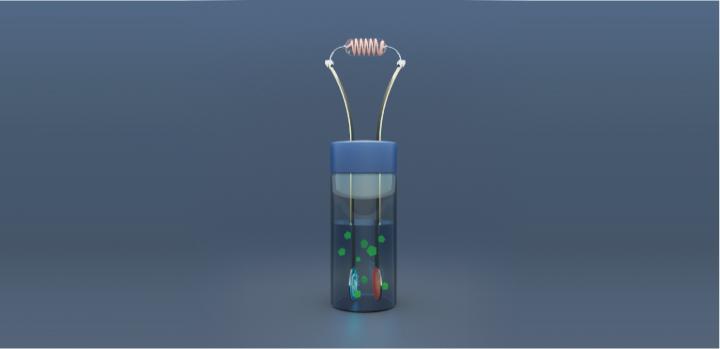
An electronic biosensor powered using the glucose in bodily fluids has been developed by KAUST researchers. The device pairs an electron-transporting polymer with an enzyme that extracts electrons from its reaction with glucose to drive its circuitry. The plastic biosensor could act as a continuous monitor of key health indicators, such as blood sugar levels in diabetes patients.

“Quick, accurate and early detection of abnormalities in metabolism is of paramount importance to monitor, control and prevent many diseases, including diabetes,” says David Ohayon, a Ph.D. student in Sahika Inal’s lab who led led the research with postdoctoral colleague Georgios Nikiforidis. “Today’s glucose monitors are mainly limited to finger-pricking devices, which are often painful,” he says. Implantable glucose-sensing devices are being developed, but their batteries complicate implantation and must eventually be recharged or replaced.

An ideal alternative technology would be implantable polymer biosensors that are able to power themselves using molecules around them.

Inal and her team have hit upon a polymer–synthesized by Iain McCulloch’s team at KAUST–that appears perfectly suited to the task. “The polymer is an n-type semiconductor, meaning that it can accept and transport electrons along its backbone,” Ohayon says. The polymer is coupled with the glucose oxidase enzyme, which oxidatively extracts electrons from its reaction with glucose.

Usually, a third component is required to shuttle the electrons from enzyme to polymer. “These mediators are often toxic and need to be immobilized onto the electrode surface, which complicates device miniaturization and shortens lifetime,” Ohayon says.

The new polymer needs no such mediator. “Our polymer seems to be able to host the enzyme in such proximity that it enables efficient electrical communication between the active center and the polymer backbone.” The polymer’s ethylene glycol side chains are probably the key to the interaction, a hypothesis currently under investigation in collaboration with Enzo di Fabrizo’s group at KAUST.

The team used this n-type polymer material in a transistor to sense glucose levels in saliva and also as one half of an all-polymer fuel cell that uses glucose as an energy source to drive the device. “This fuel cell is the first demonstration of a completely plastic, enzyme-based electrocatalytic energy generation device operating in physiologically relevant media,” Inal says.

“Glucose sensing and power generation are only two examples of the applications possible when a synthetic polymer communicates effectively with a catalytic enzyme-like glucose oxidase,” Inal adds. “Our main aim was to show the versatile chemistry and novel applications of this special water-stable, polymer class, which exhibits mixed conduction (ionic and electronic).”

###

Media Contact
Carolyn Unck
[email protected]
966-054-470-0408

Tags: Biomedical/Environmental/Chemical EngineeringBiotechnologyEndocrinologyHealth CareTechnology/Engineering/Computer Science
Share12Tweet8Share2ShareShareShare2

Related Posts

Evaluating Digoxin Use in Patients with Symptomatic Rheumatic Heart Disease

May 10, 2026

Evaluating the Effectiveness and Safety of Digitalis Glycosides in Treating Heart Failure

May 10, 2026

Urdu Fall Risk Questionnaire Adapted for Elderly

May 10, 2026

Key Pharmacological Markers for HIV Prevention in MSM

May 10, 2026
Please login to join discussion

POPULAR NEWS

  • Research Indicates Potential Connection Between Prenatal Medication Exposure and Elevated Autism Risk

    840 shares
    Share 336 Tweet 210
  • New Study Reveals Plants Can Detect the Sound of Rain

    727 shares
    Share 290 Tweet 181
  • Scientists Investigate Possible Connection Between COVID-19 and Increased Lung Cancer Risk

    68 shares
    Share 27 Tweet 17
  • Salmonella Haem Blocks Macrophages, Boosts Infection

    61 shares
    Share 24 Tweet 15

About

We bring you the latest biotechnology news from best research centers and universities around the world. Check our website.

Follow us

Recent News

Evaluating Digoxin Use in Patients with Symptomatic Rheumatic Heart Disease

Evaluating the Effectiveness and Safety of Digitalis Glycosides in Treating Heart Failure

Urdu Fall Risk Questionnaire Adapted for Elderly

Subscribe to Blog via Email

Enter your email address to subscribe to this blog and receive notifications of new posts by email.

Join 82 other subscribers
  • Contact Us

Bioengineer.org © Copyright 2023 All Rights Reserved.

Welcome Back!

Login to your account below

Forgotten Password?

Retrieve your password

Please enter your username or email address to reset your password.

Log In
No Result
View All Result
  • Homepages
    • Home Page 1
    • Home Page 2
  • News
  • National
  • Business
  • Health
  • Lifestyle
  • Science

Bioengineer.org © Copyright 2023 All Rights Reserved.