Salk scientists uncover a link between RNA editing and chloroplast-to-nucleus communication that could help plants adapt to a changing world
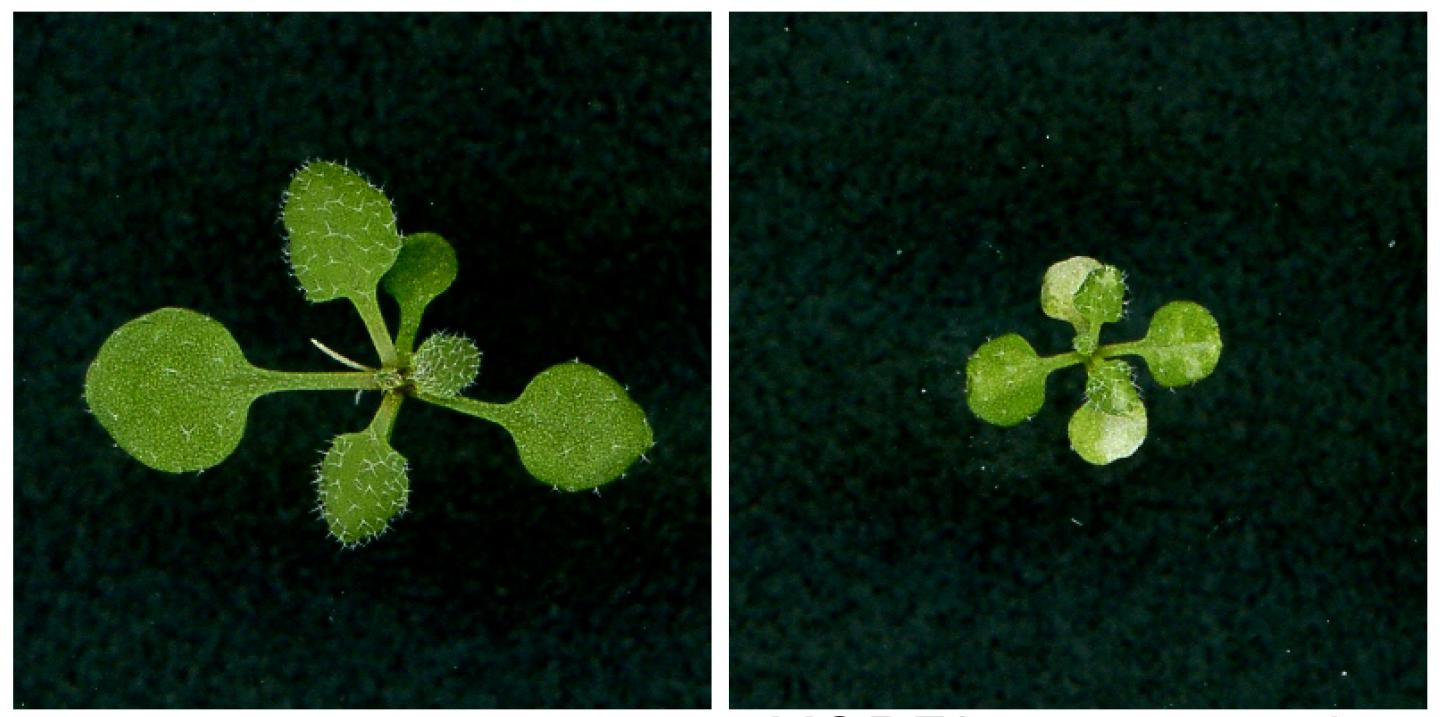
Credit: Salk Institute
LA JOLLA–(April 19, 2019) What will a three-degree-warmer world look like? How will plants fare in more extreme weather conditions? When experiencing stress or damage from various sources, plants use chloroplast-to-nucleus communication to regulate gene expression and help them cope.
Now, Salk Institute researchers have found that GUN1–a gene that integrates numerous chloroplast-to-nucleus retrograde signaling pathways–also plays an important role in how proteins are made in damaged chloroplasts, which provides a new insight into how plants respond to stress. The paper was published in the Proceedings of the National Academy of Sciences (PNAS) on April 15, 2019, and may help biologists breed plants that can better withstand environmental stressors.
“Climate change holds the potential to affect our food system dramatically. When plants are stressed, like in a drought, they produce lower crop yields. If we understand how plants respond to stress, then perhaps we can develop a way to increase their resistance and keep food production high,” says Salk Professor Joanne Chory, director of the Plant Molecular and Cellular Biology Laboratory and senior author of the paper.
In plant cells, structures called chloroplasts convert energy from sunlight into chemical energy (photosynthesis). Normally, the nucleus of the cell transmits information to the chloroplasts to maintain steady energy production. However, in a stressful environment, chloroplasts send an alarm back to the cell nucleus using retrograde signaling (creating a chloroplast-to-nucleus communication feedback loop). This SOS prompts a response that helps regulate gene expression in the chloroplasts and the nucleus to optimize energy production from sunlight.
Previously, the Chory lab identified a group of genes, including GUN1, that influence other genes’ expression in the cell when the plant experiences stress. GUN1 accumulates under stressful conditions but the exact molecular function of GUN1 has been difficult to decipher, until now.
“Plants often experience environmental stressors, so there must be a chloroplast-to-nucleus communication pathway that helps the plant know when to conserve energy when injury occurs,” says Xiaobo Zhao, first author and postdoctoral fellow in Chory’s lab. “GUN1 turns out to play a big role in this.”
To understand how GUN1 regulates chloroplast-to-nucleus communication, the scientists observed plants with functional and nonfunctional GUN1 under pharmacological treatments that could damage chloroplasts. In plants without GUN1, gene expression changed, as did RNA editing in chloroplasts. (RNA editing is a modification of the RNA that changes the identity of nucleotides, so that the information in the mature RNA differs from that defined in the genome, altering the instructions for making proteins.) Some areas of RNA had more editing and other locations had less editing–suggesting that GUN1 plays a role in regulating chloroplast RNA editing.
After further analysis, the team unexpectedly found that GUN1 partners with another protein, MORF2 (an essential component of the plant RNA editing complex), to affect the efficiency of RNA editing during chloroplast-to-nucleus communication in damaged chloroplasts. Greater activity of MORF2 led to widespread editing changes as well as defects in chloroplast and leaf development even under normal growth conditions (see image). During periods of stress and injury, MORF2 overproduction also led to disruption of chloroplast-to-nucleus communication.
“Taken together, these findings suggest a possible link between chloroplast-to-nucleus communication and chloroplast RNA editing, which are important regulatory functions for flowering plants, especially during stress,” says Chory, Howard Hughes Medical Institute investigator and holder of the Howard H. and Maryam R. Newman Chair in Plant Biology.
Next, the researchers plan to examine the mechanism of how the RNA editing changes in chloroplasts activate signals that can be relayed to the nucleus, and how these modifications alter the ability of the plant to respond to stress.
###
Other authors included Jianyan Huang, a postdoctoral fellow in the Chory lab.
The work was funded by the U.S. Department of Energy (DE-FG02-04ER15540) and the Howard Hughes Medical Institute.
About the Salk Institute for Biological Studies:
Every cure has a starting point. The Salk Institute embodies Jonas Salk’s mission to dare to make dreams into reality. Its internationally renowned and award-winning scientists explore the very foundations of life, seeking new understandings in neuroscience, genetics, immunology, plant biology and more. The Institute is an independent nonprofit organization and architectural landmark: small by choice, intimate by nature and fearless in the face of any challenge. Be it cancer or Alzheimer’s, aging or diabetes, Salk is where cures begin. Learn more at: salk.edu.
Media Contact
Salk Communications
[email protected]
Original Source
https:/
Related Journal Article
http://dx.