• HOME
  • NEWS
  • EXPLORE
    • CAREER
      • Companies
      • Jobs
    • EVENTS
    • iGEM
      • News
      • Team
    • PHOTOS
    • VIDEO
    • WIKI
  • BLOG
  • COMMUNITY
    • FACEBOOK
    • INSTAGRAM
    • TWITTER
Saturday, June 27, 2026
BIOENGINEER.ORG
No Result
View All Result
  • Login
  • HOME
  • NEWS
  • EXPLORE
    • CAREER
      • Companies
      • Jobs
        • Lecturer
        • PhD Studentship
        • Postdoc
        • Research Assistant
    • EVENTS
    • iGEM
      • News
      • Team
    • PHOTOS
    • VIDEO
    • WIKI
  • BLOG
  • COMMUNITY
    • FACEBOOK
    • INSTAGRAM
    • TWITTER
  • HOME
  • NEWS
  • EXPLORE
    • CAREER
      • Companies
      • Jobs
        • Lecturer
        • PhD Studentship
        • Postdoc
        • Research Assistant
    • EVENTS
    • iGEM
      • News
      • Team
    • PHOTOS
    • VIDEO
    • WIKI
  • BLOG
  • COMMUNITY
    • FACEBOOK
    • INSTAGRAM
    • TWITTER
No Result
View All Result
Bioengineer.org
No Result
View All Result
Home NEWS Science News Health

Pitt study: Sexual selection alone could spark formation of new species

Bioengineer by Bioengineer
October 17, 2019
in Health
Reading Time: 2 mins read
0
IMAGE
Share on FacebookShare on TwitterShare on LinkedinShare on RedditShare on Telegram

Animals that seek mates and fight rivals that resemble parents could eventually set stage for new species
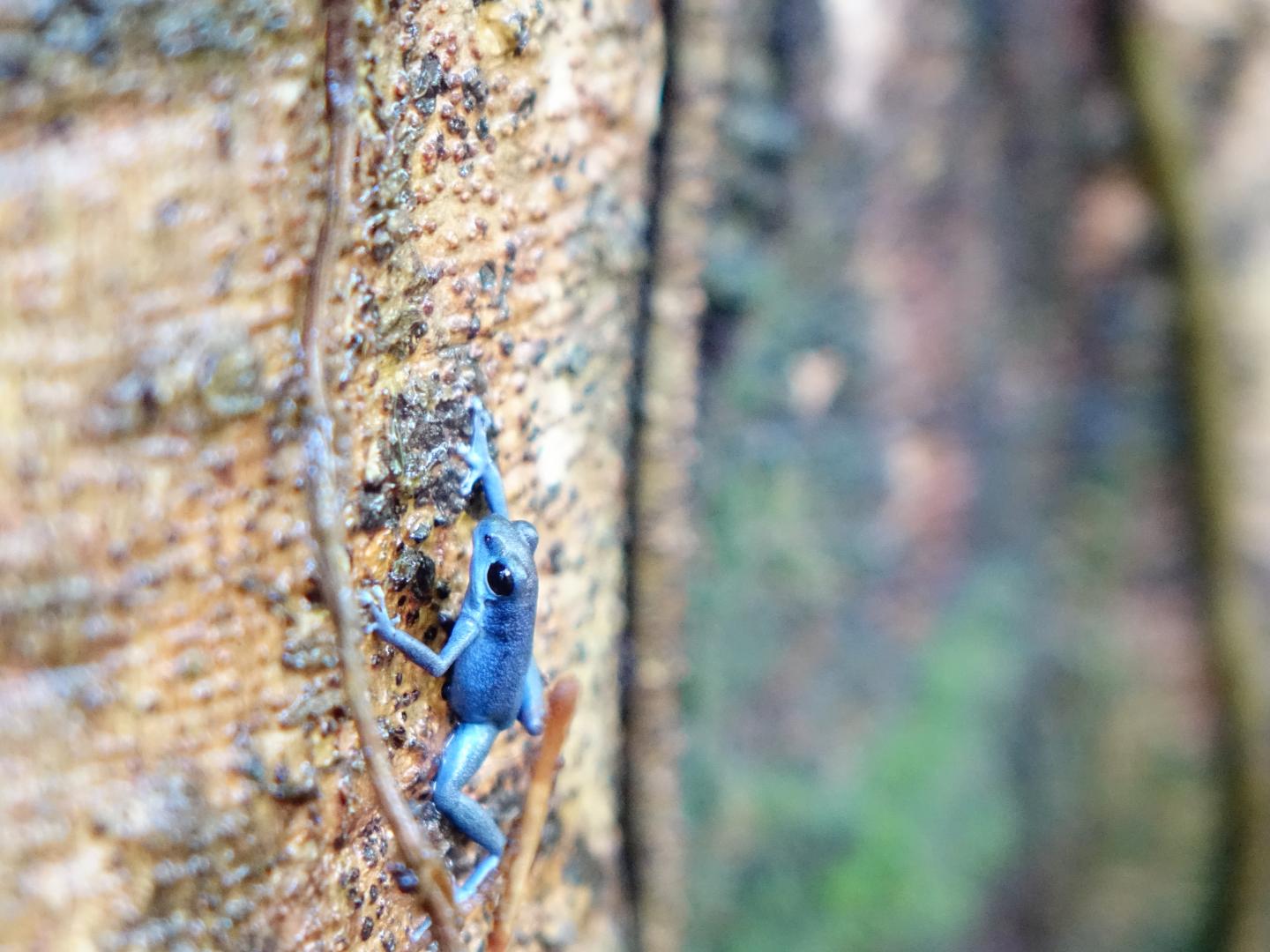
IMAGE

Credit: Richards-Zawacki Lab


PITTSBURGH–A new study by University of Pittsburgh researchers indicates animals that seek mates and fight rivals that resemble their parents could be behaving in ways that lead to the formation of new species.

The study by Yusan Yang, a graduate student in the Richards-Zawacki Lab in the Department of Biological Sciences and associate professor Corinne Richards-Zawacki, examines behavioral imprinting–the phenomenon of offspring learning a parent’s appearance to choose future mates or distinguish rivals–in the strawberry poison frog (Oophaga pumilio).

This central American frog has a wide variety of color types. The mother frog raises their tadpoles by feeding them unfertilized eggs. This mother-offspring interaction, the team discovered, influences the behaviors of the offspring: females grow up to prefer mates that have the same color as their mother and males grow up to be more aggressive when their rival has the same color as their mother.

The team developed a mathematical model to demonstrate how these imprinted behaviors can contribute to the formation of new species. Because of the imprinted preferences, females mate more with similar colored males, and less with differently colored males, which, over time, could lead to two color types becoming separate species.

“Sexual selection is traditionally thought of as a strong driving force for the formation of new species. But several theoretical models have suggested it was not incredibly likely to do so without natural selection or geographic separation,” explained Yang.

“One of the reasons is because it is hard to maintain multiple mating types in the population. Usually, natural selection can serve the role, but our model suggests that imprinted male aggression can also do it. This means that with imprinting in both sexes, sexual selection on its own could potentially kick start speciation.”

The study, “Imprinting Sets the Stage for Speciation,” was published in Nature on Oct. 2.

The study was focused on amphibians, but the results could shed light on the evolution of many other animal species with imprinting, and in general where new species come from.

“Speciation is a key process in biology that has led to the amazing diversity of species we see today. How that happens is a fundamental question in evolution and one we’ve been trying to answer since the time of Charles Darwin,” said Richards-Zawacki.

###

Media Contact
Deborah Todd
[email protected]
412-624-6687
Tags: Algorithms/ModelsBiodiversityBiologyDevelopmental/Reproductive BiologyEvolutionPaleontologyPhysiologyPopulation Biology
Share14Tweet9Share2ShareShareShare2

Related Posts

Tracking Lanthanide-Labeled Microplastics in Plants

June 25, 2026

Neural Design Enables Zero-Shot Drug-Binding Proteins

June 25, 2026

Genomic Insights into Human Skin Fungi Diversity

June 25, 2026

Chiral Laser Gyroscopes Surpass Lock-In Limit

June 25, 2026
Please login to join discussion

POPULAR NEWS

  • Saying Goodbye to PGY-6: Pediatric Fellowship Realities

    103 shares
    Share 41 Tweet 26
  • Multi-Hospital Study Reveals Long Covid Burden Is Twice as High as Current Estimates

    92 shares
    Share 36 Tweet 23
  • Detection of EDCs in Breast Milk and Infant Urine Up to Six Months Highlights Early Exposure Risks

    77 shares
    Share 31 Tweet 19
  • New Drug Candidate Developed at McMaster Shows Potential for Treating Brain Cancer

    58 shares
    Share 23 Tweet 15

About

We bring you the latest biotechnology news from best research centers and universities around the world. Check our website.

Follow us

Recent News

Tracking Lanthanide-Labeled Microplastics in Plants

POSTECH Researchers Slash Cost of Reconstituted Cell-Free Systems by 95%

AI and Physics Collaborate to Design Advanced Hydrogen Storage Materials

Subscribe to Blog via Email

Success! An email was just sent to confirm your subscription. Please find the email now and click 'Confirm' to start subscribing.

Join 82 other subscribers
  • Contact Us

Bioengineer.org © Copyright 2023 All Rights Reserved.

Welcome Back!

Login to your account below

Forgotten Password?

Retrieve your password

Please enter your username or email address to reset your password.

Log In
No Result
View All Result
  • Homepages
    • Home Page 1
    • Home Page 2
  • News
  • National
  • Business
  • Health
  • Lifestyle
  • Science

Bioengineer.org © Copyright 2023 All Rights Reserved.