• HOME
  • NEWS
  • EXPLORE
    • CAREER
      • Companies
      • Jobs
    • EVENTS
    • iGEM
      • News
      • Team
    • PHOTOS
    • VIDEO
    • WIKI
  • BLOG
  • COMMUNITY
    • FACEBOOK
    • INSTAGRAM
    • TWITTER
Saturday, June 27, 2026
BIOENGINEER.ORG
No Result
View All Result
  • Login
  • HOME
  • NEWS
  • EXPLORE
    • CAREER
      • Companies
      • Jobs
        • Lecturer
        • PhD Studentship
        • Postdoc
        • Research Assistant
    • EVENTS
    • iGEM
      • News
      • Team
    • PHOTOS
    • VIDEO
    • WIKI
  • BLOG
  • COMMUNITY
    • FACEBOOK
    • INSTAGRAM
    • TWITTER
  • HOME
  • NEWS
  • EXPLORE
    • CAREER
      • Companies
      • Jobs
        • Lecturer
        • PhD Studentship
        • Postdoc
        • Research Assistant
    • EVENTS
    • iGEM
      • News
      • Team
    • PHOTOS
    • VIDEO
    • WIKI
  • BLOG
  • COMMUNITY
    • FACEBOOK
    • INSTAGRAM
    • TWITTER
No Result
View All Result
Bioengineer.org
No Result
View All Result
Home NEWS Science News Chemistry

Pitt engineers receive $1 million to improve 3D printed turbine components

Bioengineer by Bioengineer
July 15, 2019
in Chemistry
Reading Time: 2 mins read
0
IMAGE
Share on FacebookShare on TwitterShare on LinkedinShare on RedditShare on Telegram

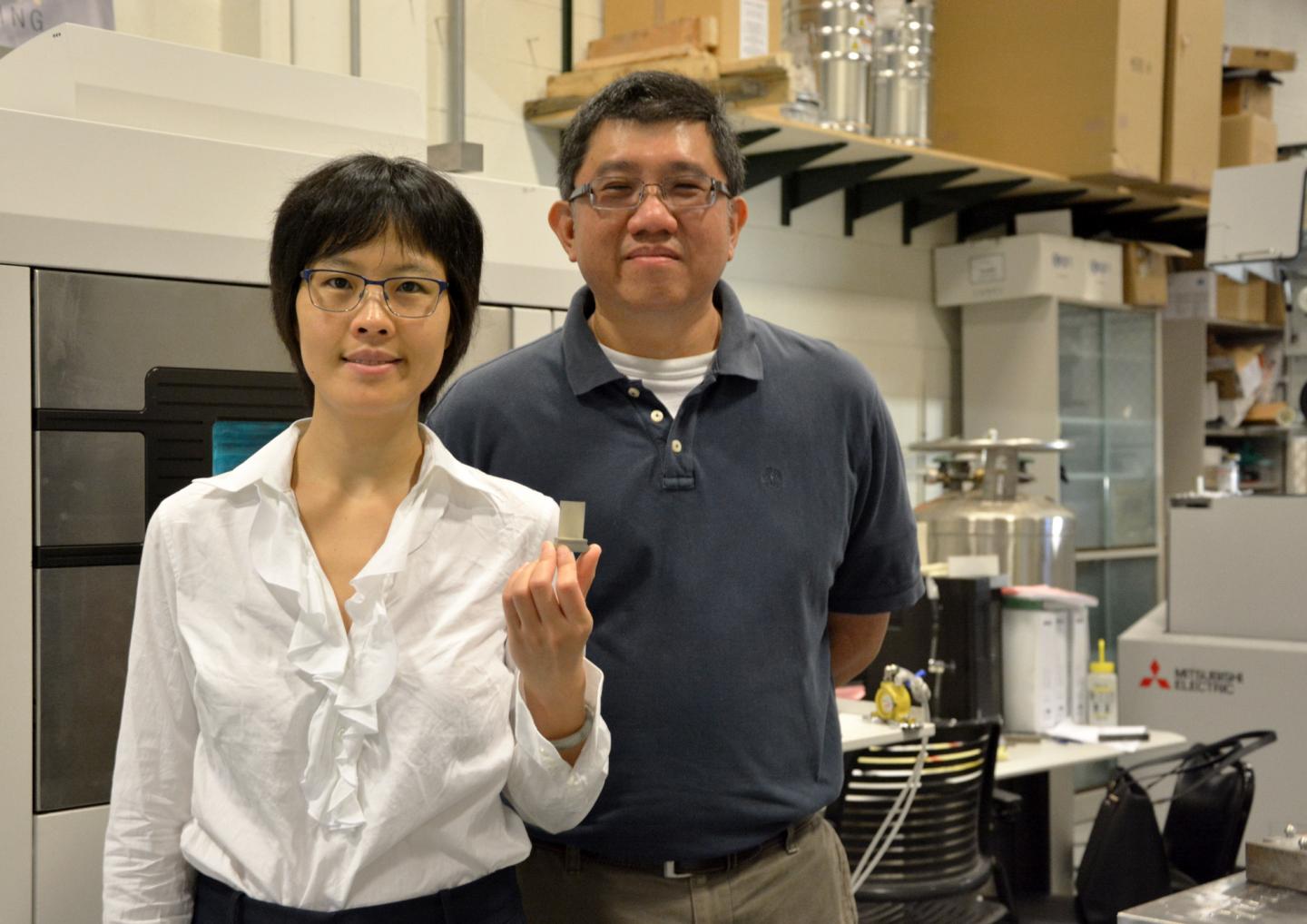
Researchers receive DOE funding to develop better quality control for 3D printing turbine components
IMAGE

Credit: University of Pittsburgh

PITTSBURGH (July 11, 2019) — The U.S. Department of Energy, through its University Turbine Systems Research program, has awarded researchers at the University of Pittsburgh’s Swanson School of Engineering $802,400 to find an effective quality assurance method for additive manufacturing, or 3D printing, of new-generation gas turbine components.

The three-year project has received additional support from the University of Pittsburgh ($200,600), resulting in a total grant of $1,003,000.

Xiayun (Sharon) Zhao, PhD, assistant professor of mechanical engineering and materials science at Pitt, will lead the research, working with Albert To, associate professor of mechanical engineering and materials science at Pitt, and Richard W. Neu, professor in the Georgia Institute of Technology’s School of Mechanical Engineering. The team will use machine learning to develop a cost-effective method for rapidly evaluating, either in-process or offline, the hot gas path turbine components (HGPTCs) that are created with laser powder bed fusion (LPBF) additive manufacturing (AM) technology.

“LPBF AM is capable of making complex metal components with reduced cost of material and time. There is a desire to employ the appealing AM technology to fabricate sophisticated HGPTCs that can withstand higher working temperature for next-generation turbines. However, because there’s a possibility that the components will have porous defects and be prone to detrimental thermomechanical fatigue, it’s critical to have a good quality assurance method before putting them to use,” explains Dr. Zhao. “The quality assurance framework we are developing will immensely reduce the cost of testing and quality control and enhance confidence in adopting the LPBF process to fabricate demanding HGPTCs.”

###

ANSYS will serve as an industrial partner in this project.

Media Contact
Maggie Pavlick
[email protected]

Original Source

https://www.engineering.pitt.edu/News/2019/DOE-Grant-for-3D-Printed-Turbine-Components/

Tags: Energy/Fuel (non-petroleum)Industrial Engineering/ChemistryMechanical EngineeringResearch/DevelopmentTechnology/Engineering/Computer Science
Share12Tweet8Share2ShareShareShare2

Related Posts

AI and Physics Collaborate to Design Advanced Hydrogen Storage Materials

June 25, 2026

International Team Including Dresden Scientists Develops Novel Designer Proteins for Advanced Study of Living Tissue

June 25, 2026

New Study Uncovers Key Factors Driving Water Chemistry in Nanoscale Environments

June 25, 2026

Plasma Technology Extends Catalyst Lifespan in Hydrogen Production

June 24, 2026
Please login to join discussion

POPULAR NEWS

  • Saying Goodbye to PGY-6: Pediatric Fellowship Realities

    103 shares
    Share 41 Tweet 26
  • Multi-Hospital Study Reveals Long Covid Burden Is Twice as High as Current Estimates

    92 shares
    Share 36 Tweet 23
  • Detection of EDCs in Breast Milk and Infant Urine Up to Six Months Highlights Early Exposure Risks

    77 shares
    Share 31 Tweet 19
  • New Drug Candidate Developed at McMaster Shows Potential for Treating Brain Cancer

    58 shares
    Share 23 Tweet 15

About

We bring you the latest biotechnology news from best research centers and universities around the world. Check our website.

Follow us

Recent News

Tracking Lanthanide-Labeled Microplastics in Plants

POSTECH Researchers Slash Cost of Reconstituted Cell-Free Systems by 95%

AI and Physics Collaborate to Design Advanced Hydrogen Storage Materials

Subscribe to Blog via Email

Success! An email was just sent to confirm your subscription. Please find the email now and click 'Confirm' to start subscribing.

Join 82 other subscribers
  • Contact Us

Bioengineer.org © Copyright 2023 All Rights Reserved.

Welcome Back!

Login to your account below

Forgotten Password?

Retrieve your password

Please enter your username or email address to reset your password.

Log In
No Result
View All Result
  • Homepages
    • Home Page 1
    • Home Page 2
  • News
  • National
  • Business
  • Health
  • Lifestyle
  • Science

Bioengineer.org © Copyright 2023 All Rights Reserved.