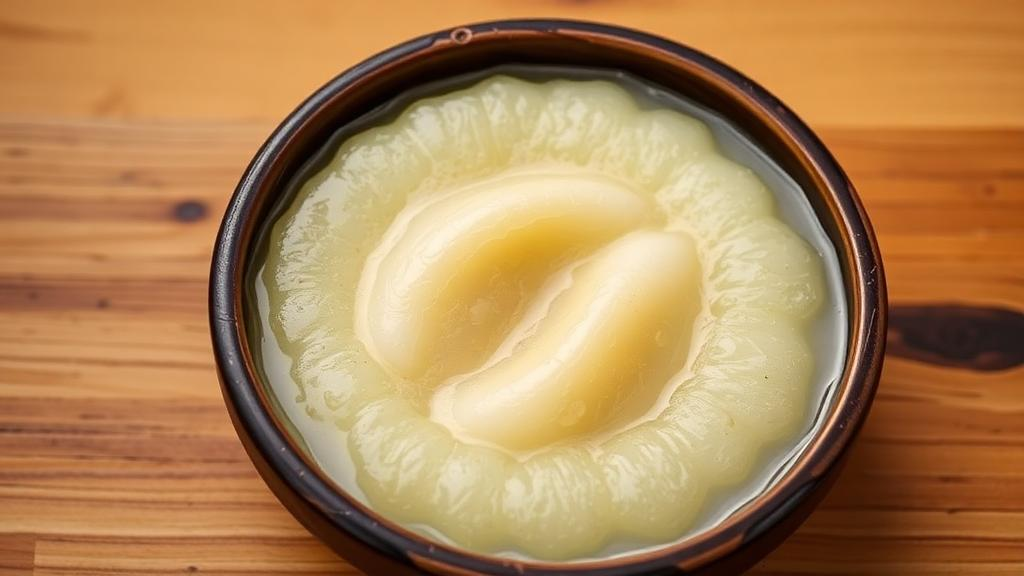
Sufu, the soft, creamy fermented bean curd that has graced Chinese tables for centuries, owes its distinctive character to an invisible workforce of fungi and bacteria. A new study published in Food Chemistry: X has now mapped, in unusual detail, how the volatile flavour compounds of traditional mould-fermented sufu evolve across the fermentation cycle, and how the shifting microbial communities inside the tofu cubes appear to shape that aromatic transformation. By combining headspace gas chromatography–mass spectrometry (HS-GC–MS) with high-throughput DNA sequencing, researchers tracked both the chemistry and the microbiology of sufu at six time points over fifteen days of fermentation, revealing a choreography of microbial succession that culminates in the food’s mellow, fruity and floral aroma.
Traditional sufu production begins with firm tofu cut into uniform cubes, steamed briefly, and dipped in a suspension of mould starter containing Mucor species. The inoculated cubes ferment at 20 degrees Celsius for three days, during which a fine white mycelial film envelops each piece. Workers then gently smooth the mycelium, spray the cubes with Chinese liquor, coat them in a mixture of salt, chilli powder and Sichuan pepper powder, and seal them in bottles for a secondary fermentation lasting fifteen days. Unlike industrial products made with tightly controlled single strains, traditionally produced sufu harbours a complex, naturally assembled microbial ecosystem, and it is this complexity that researchers believe underlies its richer flavour profile.
The analytical campaign identified a striking total of 105 volatile compounds across the fermentation stages: 25 alcohols, 8 aldehydes, 7 ketones, 7 acids, 16 esters, 29 terpenes and aromatic compounds, and a scattering of phenols, ethers, furans and other minor constituents. Each chemical class told its own story. Alcohols, one of the dominant groups, rose early in fermentation as vigorous microbial growth accelerated the breakdown of soybean proteins and the degradation of amino acids, then declined later as some of them were consumed as intermediates in esterification reactions. Acids, led by acetic acid, climbed steadily throughout the process, contributing sour, fermented notes while lowering the pH enough to suppress unwanted microorganisms and extend shelf life.
Esters, the compounds most closely associated with fruity and sweet aromas, increased progressively and became especially prominent in the middle and late stages of fermentation. Their rise tracked closely with the simultaneous accumulation of acids and alcohols, a pattern consistent with microorganism-mediated esterification in which organic acids and alcohols combine under enzymatic catalysis. Terpenes and aromatic compounds such as 3-carene, beta-pinene and d-limonene behaved in the opposite manner, peaking early and then fading through volatilisation and metabolic transformation, even though their floral and citrus-like notes remain important to the product’s overall aroma quality.
Raw abundance, however, does not equal aromatic importance, because compounds differ enormously in the concentrations at which the human nose can detect them. To account for this, the team applied the relative odour activity value (ROAV) method, which weighs each compound’s abundance against its odour threshold. This screening identified 13 potential key aroma-active compounds and six aroma modifiers. In the early stages, linalool, with its floral and sweet character, scored highest, but as fermentation proceeded, 3-methyl-1-butanol, a product of branched-chain amino acid catabolism, took over as the dominant contributor, reaching the maximum reference value of 100 and holding it through the end of the process. The two ethyl esters, ethyl butanoate and ethyl hexanoate, appeared exclusively in the middle and late stages, marking the shift from a fresh, floral early aroma toward the deeper, more fermented and mellow character of mature sufu.
On the microbiological side, sequencing of the bacterial 16S rRNA gene and the fungal ITS1 region revealed two communities following distinct temporal trajectories. Fungi generally showed higher richness and diversity than bacteria during the early and middle stages, though bacterial richness overtook fungal richness by day 15. Ascomycota dominated the fungal community throughout, accounting for roughly 75 to 82 percent of sequences, followed by Mucoromycota and Basidiomycota. At the genus level, the thermotolerant fungi Thermomyces and Thermoascus held steady predominance, while the yeast Pichia maintained a stable presence and the mucoralean genera Rhizopus and Rhizomucor built the dense mycelial network that gives sufu its velvety appearance and delicate texture.
The bacterial community was dominated by Proteobacteria, which made up more than 80 percent of sequences for most of the fermentation, with Firmicutes increasing in the later stages. Among genera, Acinetobacter was abundant early on, potentially participating in initial protein degradation, before acidity and anaerobic conditions curtailed it. Enterobacter grew to become a dominant genus in the late stage, reaching over 40 percent, while Pseudomonas remained relatively stable throughout. The authors are careful to note that these genera are heterogeneous and include species associated with spoilage and safety concerns, so their functional roles in sufu require further validation rather than automatic assumption of beneficial flavour contributions.
The pivotal step came when the researchers correlated the microbial data with the ROAV-screened aroma compounds using Pearson correlation analysis. The resulting heatmap split the microbiota into two opposing clusters. Ascomycota, Pichia, Thermoascus, Thermomyces, Proteobacteria and Acinetobacter formed one group, predominantly positively correlated with key alcohols, aldehydes and esters. Ascomycota correlated significantly with 3-methyl-1-butanol, heptanal and 2-pentylfuran, while Pichia was significantly associated with linalool, eucalyptol, ethyl butanoate and d-limonene, consistent with its known capacity to drive esterification and produce fruity, winy notes. Acinetobacter correlated positively with heptanal, hinting at a role in aldehyde formation.
The second cluster, comprising Mucoromycota, Basidiomycota, Firmicutes, Bacteroidota, Enterobacter, Saccharibacillus and Pseudomonas, was generally negatively correlated with the key aroma compounds. Mucoromycota showed a highly significant negative correlation with 3-methyl-1-butanol, and Bacteroidota was significantly negatively correlated with ethyl hexanoate, suggesting these taxa may be associated with reduced accumulation of certain flavour compounds. Intriguingly, Enterobacter and Saccharibacillus, despite their mostly negative associations, correlated positively with dihydroactinidiolide, a sweet, fruity norisoprenoid, underscoring the complexity of microbe-flavour relationships in a living fermentation matrix.
The authors acknowledge important limitations. Volatile compounds were semi-quantified by peak-area normalisation rather than absolute calibration, and both microbial and chemical datasets are compositional, which can distort correlation estimates through closure effects. With only six sampling points and no multiple-testing correction, some significant associations may be false positives, and physicochemical variables such as pH, salt concentration and temperature were not included in the analysis. The findings should therefore be read as exploratory associations rather than proof of causation. Even so, the study offers a compelling systems-level picture: the signature aroma of traditional sufu appears to emerge from the synergistic activity of Ascomycota-affiliated fungi and Proteobacteria, tempered by taxa that may suppress particular compounds. That insight opens a practical path forward, pointing toward targeted starter cultures, inoculation experiments and co-culture trials that could one day let producers steer flavour with the same precision that microbes already do naturally.
Subject of Research: Microbial community succession and volatile flavour formation during traditional mould-fermented sufu fermentation
Article Title: Associations between volatile flavour compounds and microbial communities during the fermentation of traditional mould-fermented Sufu
Article References: Lu, X., Niu, X., Wu, Z., Zhao, H., Yang, Y., Ma, X., Shi, S., Wang, H., Hu, B., & Luo, A. (2026). Associations between volatile flavour compounds and microbial communities during the fermentation of traditional mould-fermented Sufu. Food Chemistry: X, Article 104552. https://doi.org/10.1016/j.fochx.2026.104552
Image Credits: AI Generated
DOI: 10.1016/j.fochx.2026.104552
Keywords: sufu, fermented soybean, food microbiome, volatile flavour compounds, HS-GC-MS, high-throughput sequencing, Ascomycota, Pichia, esterification, aroma-active compounds, microbial succession, food chemistry
News Source: Morgan Morrow. (October 5, 2026). Microbial Succession Drives the Aroma of Traditional Mould-Fermented Sufu, Study Finds. Scienmag.