• HOME
  • NEWS
  • EXPLORE
    • CAREER
      • Companies
      • Jobs
    • EVENTS
    • iGEM
      • News
      • Team
    • PHOTOS
    • VIDEO
    • WIKI
  • BLOG
  • COMMUNITY
    • FACEBOOK
    • INSTAGRAM
    • TWITTER
Friday, May 15, 2026
BIOENGINEER.ORG
No Result
View All Result
  • Login
  • HOME
  • NEWS
  • EXPLORE
    • CAREER
      • Companies
      • Jobs
        • Lecturer
        • PhD Studentship
        • Postdoc
        • Research Assistant
    • EVENTS
    • iGEM
      • News
      • Team
    • PHOTOS
    • VIDEO
    • WIKI
  • BLOG
  • COMMUNITY
    • FACEBOOK
    • INSTAGRAM
    • TWITTER
  • HOME
  • NEWS
  • EXPLORE
    • CAREER
      • Companies
      • Jobs
        • Lecturer
        • PhD Studentship
        • Postdoc
        • Research Assistant
    • EVENTS
    • iGEM
      • News
      • Team
    • PHOTOS
    • VIDEO
    • WIKI
  • BLOG
  • COMMUNITY
    • FACEBOOK
    • INSTAGRAM
    • TWITTER
No Result
View All Result
Bioengineer.org
No Result
View All Result
Home NEWS Science News Biology

‘Pingers’ could save porpoises from fishing nets

Bioengineer by Bioengineer
May 13, 2020
in Biology
Reading Time: 3 mins read
0
IMAGE
Share on FacebookShare on TwitterShare on LinkedinShare on RedditShare on Telegram

IMAGE

Credit: Fishtek Marine

Underwater sound devices called “pingers” could be an effective, long-term way to prevent porpoises getting caught in fishing nets with no negative behavioural effects, newly published research suggests.

The study of harbour porpoises off Cornwall found they were 37% less likely to be found close to an active pinger.

Concerns have been raised about porpoises becoming used to pingers and learning to ignore them, but the eight-month study – by the University of Exeter and Cornwall Wildlife Trust – found no decrease in effectiveness.

There have also been worries that continual pinger use could affect porpoise behaviour by displacing them from feeding grounds, but when pingers were switched off the animals returned “with no delay”.

The effect was found to be “very localised” – the 37% reduction in porpoise detection at the active pinger compared to a drop of 9% just 100 metres away.

Harbour porpoises are the most common cetaceans (whales, dolphins and porpoises) seen at the Cornish coast, where accidental catching by fishing boats (“bycatch”) is a persistent problem.

“Cornwall Wildlife Trust have been monitoring local dolphin and porpoise deaths through our standings scheme for over 25 years, and bycatch is still the biggest threat to these animals in the South West with large numbers washing ashore every year,” said Ruth Williams, of Cornwall Wildlife Trust.

“Together with other NGOs we have campaigned to try to find a solution to reduce bycatch, that will work in our inshore fisheries.

“The results of this latest research show that there is a practical solution that is both effective and does not impact or change the animals’ behaviour, a positive result for both conservation and fishermen alike.”
Lead author Dr Lucy Omeyer, of the University of Exeter and Fishtek, said: “Based on our findings, it seems likely that pingers would reduce harbour porpoise bycatch in gill-net fisheries with no negative consequences.

“Indeed, we found no evidence that long-term and continual use decreased the effectiveness of pingers or affected harbour porpoise behaviour.”

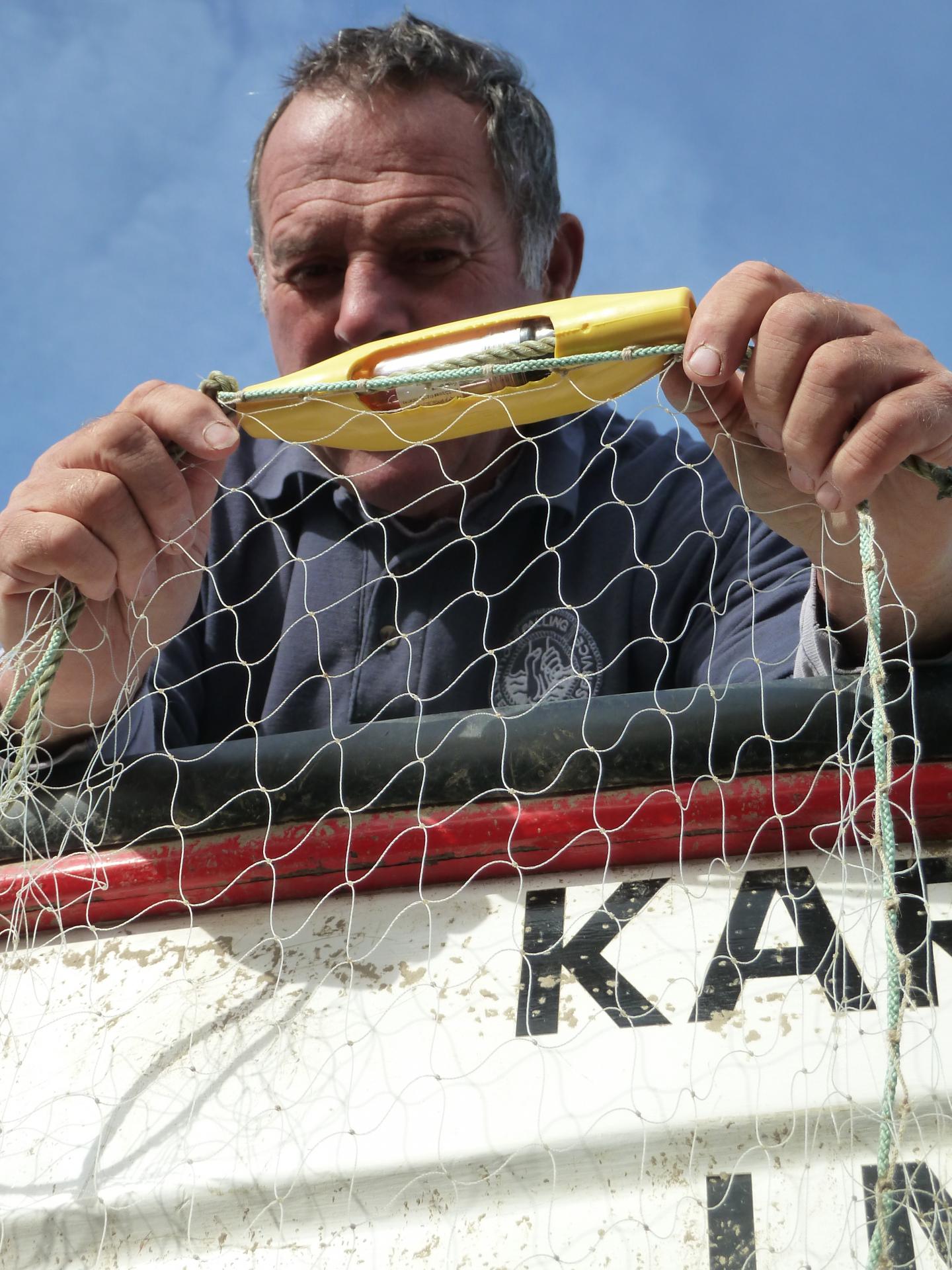
Pingers are acoustic deterrent devices which are fitted on to fishing nets.

They work by emitting a randomised sonic noise, or “ping”, which can be heard by dolphins and porpoises and highlights the presence of the nets, thereby preventing accidental entanglement.

The porpoises’ own click sounds can be way above 100 times louder than the pings from the pinger.

In the study, Fishtek Banana Pingers were placed in the water along with two acoustic loggers (one beside the pinger and one 100m away) to record cetacean activity.

With small-scale operations the main form of fishing in UK waters, the researchers say there is an “acute need” for cost-effective strategies to prevent bycatch, such as pingers.

The study was partly funded by Whale and Dolphin Conservation.

Cornwall Wildlife Trust’s marine strandings report recorded 245 cetacean strandings in Cornwall in 2019.

The paper, published in the journal Frontiers in Marine Science, is entitled: “Assessing the effects of Banana Pingers as a bycatch mitigation device for harbour porpoises (Phocoena phocoena).”

###

Media Contact
Alex Morrison
[email protected]

Related Journal Article

http://dx.doi.org/10.3389/fmars.2020.00285

Tags: AgricultureBiodiversityBiologyEcology/EnvironmentFisheries/AquacultureMarine/Freshwater BiologyZoology/Veterinary Science
Share12Tweet8Share2ShareShareShare2

Related Posts

Why Are Nearly Everyone Right-Handed? It Might Be Linked to How We Learned to Walk — Biology

Why Are Nearly Everyone Right-Handed? It Might Be Linked to How We Learned to Walk

May 15, 2026
Excessive Neuronal Activity Initiates Severe Autoimmune Brain Disorder — Biology

Excessive Neuronal Activity Initiates Severe Autoimmune Brain Disorder

May 15, 2026

Precision Anti-Aging Strategies Focus on Eliminating Harmful Senescent Cells While Preserving Beneficial Ones

May 15, 2026

Root-Knot Nematodes Hijack Plant Signaling Peptides

May 15, 2026
Please login to join discussion

POPULAR NEWS

  • Research Indicates Potential Connection Between Prenatal Medication Exposure and Elevated Autism Risk

    843 shares
    Share 337 Tweet 211
  • New Study Reveals Plants Can Detect the Sound of Rain

    730 shares
    Share 291 Tweet 182
  • Salmonella Haem Blocks Macrophages, Boosts Infection

    62 shares
    Share 25 Tweet 16
  • Breastmilk Balances E. coli and Beneficial Bacteria in Infant Gut Microbiomes

    58 shares
    Share 23 Tweet 15

About

We bring you the latest biotechnology news from best research centers and universities around the world. Check our website.

Follow us

Recent News

Single-Cell Atlas Reveals CD55+ Stem Cells’ Role in Atherosclerosis

Immune Changes Detected After Ohio Train Derailment

Leptin Epigenetics in Preterm Cord Blood Predict Obesity

Subscribe to Blog via Email

Enter your email address to subscribe to this blog and receive notifications of new posts by email.

Join 82 other subscribers
  • Contact Us

Bioengineer.org © Copyright 2023 All Rights Reserved.

Welcome Back!

Login to your account below

Forgotten Password?

Retrieve your password

Please enter your username or email address to reset your password.

Log In
No Result
View All Result
  • Homepages
    • Home Page 1
    • Home Page 2
  • News
  • National
  • Business
  • Health
  • Lifestyle
  • Science

Bioengineer.org © Copyright 2023 All Rights Reserved.