In an open-label randomized pilot trial evaluating skin-directed treatments for early-stage cutaneous T-cell lymphoma, topical synthetic hypericin activated by visible light produced higher lesion response rates and substantially fewer application-site reactions than topical mechlorethamine over twelve weeks of therapy. The investigation, conducted at the Rochester Skin Lymphoma Medical Group in Fairport, New York, enrolled ten adult patients diagnosed with stage IB mycosis fungoides to obtain preliminary comparative assessments of clinical efficacy, treatment compliance, and adverse event profiles between the two regimens.
Mycosis fungoides represents the most frequent form of cutaneous T-cell lymphoma, a chronic and malignant disease where abnormal T lymphocytes manifest primarily in the skin as patches, plaques, and tumors. Although early-stage disease typically carries a favorable prognosis and accounts for the majority of cases, lesions can eventually progress to systemic involvement with markedly increased mortality. Because available therapeutic interventions seek to manage debilitating symptoms, improve physical and psychological well-being, and potentially suppress progression to systemic stages, safe and tolerable skin-directed therapies remain essential clinical tools.
The current standard approved topical treatment for early-stage cutaneous T-cell lymphoma in the United States is Valchlor, a gel formulation of mechlorethamine, also known as nitrogen mustard. Mechlorethamine functions as an alkylating chemotherapeutic agent that suppresses rapidly dividing malignant cells. While mechlorethamine demonstrated a sixty percent response rate in its pivotal licensing trial, that outcome required continuous daily application for up to twelve months. In routine practice, treatment is frequently complicated by severe contact dermatitis, burning, ulceration, and risk of accidental exposure to household contacts and caregivers, prompting frequent dose adjustments, interruptions, or complete discontinuation.
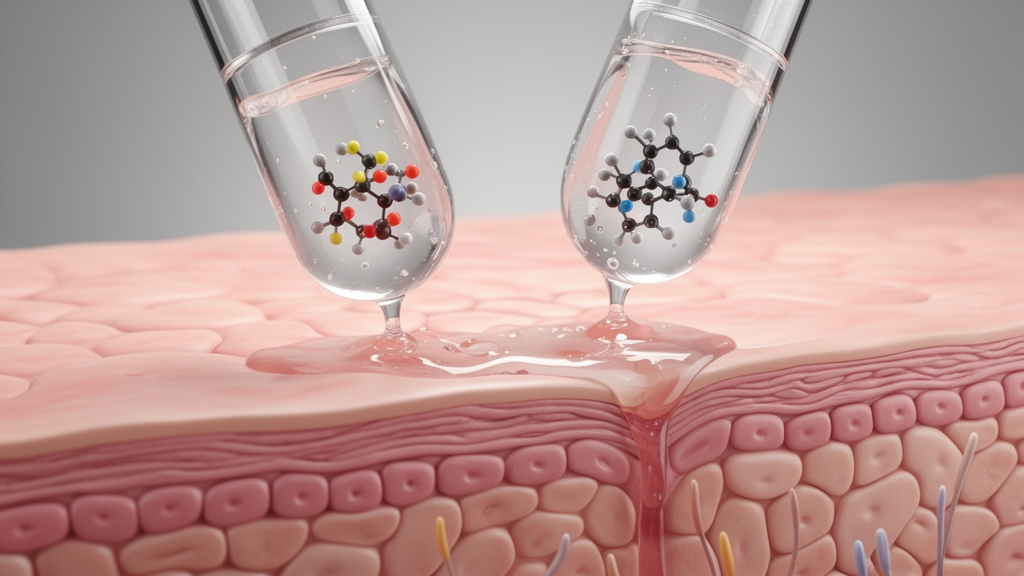
To explore alternatives with reduced tissue toxicity, investigators evaluated HyBryte, a photodynamic therapy utilizing synthetic hypericin. Hypericin is a naturally occurring photosensitizing compound originally isolated from Hypericum plants such as St. John’s Wort. Unlike older phototherapies and photodynamic regimens that require ultraviolet radiation—which damages cellular DNA and elevates lifetime risks of keratinocyte carcinomas, melanoma, and photoaging—hypericin absorbs visible light with maximal spectroscopy peaks around 545 and 590 nanometers. Upon excitation with non-carcinogenic visible yellow and red light, synthetic hypericin generates reactive oxygen species that selectively trigger apoptosis in malignant cutaneous T cells without inherent mutagenic risk.
The study protocol randomized ten participants in a one-to-one ratio to receive either HyBryte photodynamic therapy or Valchlor gel across a twelve-week active treatment period, followed by four weeks of post-treatment observation. Participants presented with a mean age of 59.3 years, ranging from 32 to 86 years, and had undergone an average of 3.7 prior therapies. Baseline disease severity was balanced between arms: baseline body surface area involvement averaged 34 percent in the hypericin cohort and 35 percent in the mechlorethamine cohort, and all ten participants had stage IB disease with at least three treatment-evaluable index lesions.
Administration protocols differed fundamentally based on the pharmaceutical properties of each drug. Patients assigned to the hypericin arm applied 0.25% synthetic hypericin twice weekly to all accessible lesions and reported to the clinic approximately 21 hours later for controlled irradiation using a Daavlin Series 7 visible-light device. Phototherapy commenced at a starting fluence of 6 joules per square centimeter and was titrated upward at physician discretion by up to 2 joules per square centimeter at subsequent visits, reaching maximum delivered exposures between 30 and 50 joules per square centimeter without causing grade 2 or greater erythema. Patients assigned to the comparator arm self-applied mechlorethamine gel once daily at home following approved labeling, with protocol rules mandating temporary cessation and dose step-downs if moderate or severe dermatitis developed.
Efficacy monitoring relied on standardized dermatologic scoring instruments administered every three weeks, most notably the modified Composite Assessment of Index Lesion Severity, which quantifies changes in lesion erythema, scaling, and elevation.
Across the primary twelve-week evaluation window, patients receiving hypericin achieved an overall patient-level response rate—defined as at least a fifty percent reduction in cumulative index lesion score—of 60 percent (three of five subjects), compared to 20 percent (one of five subjects) in the mechlorethamine arm, a numerical difference that did not reach statistical significance in this small cohort. Kaplan-Meier survival curves comparing time to achieve treatment response similarly showed a non-significant log-rank comparison value of 0.515.
When individual index lesions were evaluated across the extended sixteen-week study period, treatment differences reached statistical significance. Among 36 tracked lesions, 72.2 percent of lesions in the hypericin cohort achieved clinical success, compared to 33.3 percent in the mechlorethamine arm (p = 0.044). This divergence was pronounced in thicker plaque lesions, where hypericin yielded a 75.0 percent response rate and a 31.3 percent complete clearance rate by week sixteen, compared to a 16.7 percent response rate and zero complete responses with mechlorethamine (p = 0.006). By the conclusion of treatment at week twelve, plaque lesion success was 62.5 percent for hypericin versus 16.7 percent for mechlorethamine (p = 0.024).
Whole-body scoring metrics showed identical rates between groups, with one patient in each cohort achieving a 50 percent reduction in baseline body surface score and one patient in each achieving clear or almost-clear status on physician global assessment. The authors noted that three of five hypericin-treated subjects did not apply study drug to facial, hand, or foot lesions due to light accessibility constraints, yet these untreated anatomical sites remained counted within their cumulative body surface area calculations, whereas mechlorethamine patients applied medication over all affected body regions.
Safety and tolerability outcomes distinctly favored the photodynamic approach. While 60 percent of mechlorethamine-treated patients experienced application-site skin reactions—including one case of severe contact dermatitis leading to withdrawal—zero application-site adverse events occurred in the hypericin group, where the only reported adverse events were unrelated occurrences of neck trauma and coronavirus infection with reactive lymphadenopathy. Patient questionnaires evaluating burning, pain, redness, and swelling demonstrated faster symptom declines in the hypericin group, and treatment adherence reached 97 percent for hypericin compared to 67 percent for daily mechlorethamine.
The study also assessed whether the deep purple pigmentation inherent to natural hypericin compound distorted clinical lesion grading. While constrained by its single-center open-label design and small ten-patient enrollment, the pilot provides comparative clinical evidence supporting synthetic hypericin, which is currently undergoing larger-scale confirmation in an ongoing randomized phase 3 placebo-controlled trial evaluating eighteen weeks of therapy.
The cellular foundation for synthetic hypericin in cutaneous lymphoma dates to 1998, when Fox and colleagues first demonstrated that visible-light activation of the compound triggered antiproliferative effects and apoptosis in malignant T cells isolated from patients. In contextualizing the pilot trial’s outcomes, the authors noted that the 60 percent overall response rate seen with HyBryte aligns with findings from the prior HPN-CTCL-01 trial, which reported a 40 percent twelve-week response under a less aggressive regimen involving lower light fluences and assessment pauses. Likewise, the 20 percent response observed among mechlorethamine recipients corresponds closely with the 22 percent twelve-week rate estimated from the phase 3 registration trial’s Kaplan-Meier data, underscoring that topical mechlorethamine typically requires prolonged exposure before demonstrating clinical benefit.
Beyond topical tolerability scores, laboratory evaluations confirmed systemic safety throughout the investigation. Complete blood counts with differentials and comprehensive metabolic panels gathered at baseline, week twelve, and week sixteen revealed no clinically significant hematologic or biochemical abnormalities across either cohort. Resting vital signs, including blood pressure, heart rate, and respiratory rate, also remained stable without adverse treatment effects. The patient demographic distribution comprised five men and five women, including nine white participants and one Black participant, who had previously tried between zero and seven distinct therapies (median 3.5). Strict protocol parameters prescribed 24 clinic phototherapy sessions for hypericin versus 84 daily applications for mechlorethamine; however, zero mechlorethamine patients successfully completed the scheduled 84 applications without modification.
In flat patch lesions, where baseline elevation was absent, therapeutic activity proved comparable between arms. Hypericin yielded a 50 percent response rate in one of two patch lesions, while mechlorethamine achieved a 66.7 percent response across four of six patch lesions, with each drug producing complete clearance in exactly half of treated patches. Given the slower response and elevated toxicity seen with mechlorethamine, the authors concluded that short-term head-to-head trials against hypericin may pose ethical and logistical challenges, particularly because unblinded designs could exacerbate dropout rates among comparator patients. Looking toward broader clinical utility, the investigators suggested that future research might explore natural daylight activation as a decentralized alternative to clinic-based phototherapy lamps, while cautioning that sunlight introduces variable irradiance and carcinogenic ultraviolet radiation.
Subject of Research: Comparative pilot evaluation of topical synthetic hypericin photodynamic therapy versus topical mechlorethamine for early-stage cutaneous T-cell lymphoma
Article Title: Results from a Pilot Study of HyBryte™ (Topical Synthetic Hypericin) Versus Valchlor® (Mechlorethamine) in the Treatment of CTCL
Article References: Poligone, B., Pullion, C., Rumage, A., Straube, R., Donini, O., Schaber, C. J., & Gilmore, E. S. (2026). Results from a Pilot Study of HyBryte™ (Topical Synthetic Hypericin) Versus Valchlor® (Mechlorethamine) in the Treatment of CTCL. Oncology and Therapy, 14(2), 693-705. https://doi.org/10.1007/s40487-026-00430-1
Image Credits: AI Generated
DOI: 10.1007/s40487-026-00430-1
Keywords: cutaneous T-cell lymphoma, mycosis fungoides, HyBryte, synthetic hypericin, Valchlor, mechlorethamine, photodynamic therapy, visible light phototherapy, mCAILS, mSWAT, dermatology, skin-directed therapy, clinical trial, oncology, topical chemotherapy, nitrogen mustard
News Source: Nathaniel Bowman. (November 20, 2026). Pilot Study Compares Topical Hypericin with Mechlorethamine in Early Cutaneous Lymphoma. Scienmag.