• HOME
  • NEWS
  • EXPLORE
    • CAREER
      • Companies
      • Jobs
    • EVENTS
    • iGEM
      • News
      • Team
    • PHOTOS
    • VIDEO
    • WIKI
  • BLOG
  • COMMUNITY
    • FACEBOOK
    • INSTAGRAM
    • TWITTER
Friday, November 20, 2026
BIOENGINEER.ORG
No Result
View All Result
  • Login
  • HOME
  • NEWS
  • EXPLORE
    • CAREER
      • Companies
      • Jobs
        • Lecturer
        • PhD Studentship
        • Postdoc
        • Research Assistant
    • EVENTS
    • iGEM
      • News
      • Team
    • PHOTOS
    • VIDEO
    • WIKI
  • BLOG
  • COMMUNITY
    • FACEBOOK
    • INSTAGRAM
    • TWITTER
No Result
View All Result
Bioengineer.org
No Result
View All Result
Home NEWS Science News Health

Hybrid PET-MRI Motion Correction Enables High-Resolution Cardiac Disease Quantification

by
November 20, 2026
in Health, Technology
Reading Time: 2 mins read
0
Hybrid PET-MRI Motion Correction Enables High-Resolution Cardiac Disease Quantification

Hybrid PET-MRI Motion Correction Enables High-Resolution Cardiac Disease Quantification

Share on FacebookShare on TwitterShare on LinkedinShare on RedditShare on Telegram

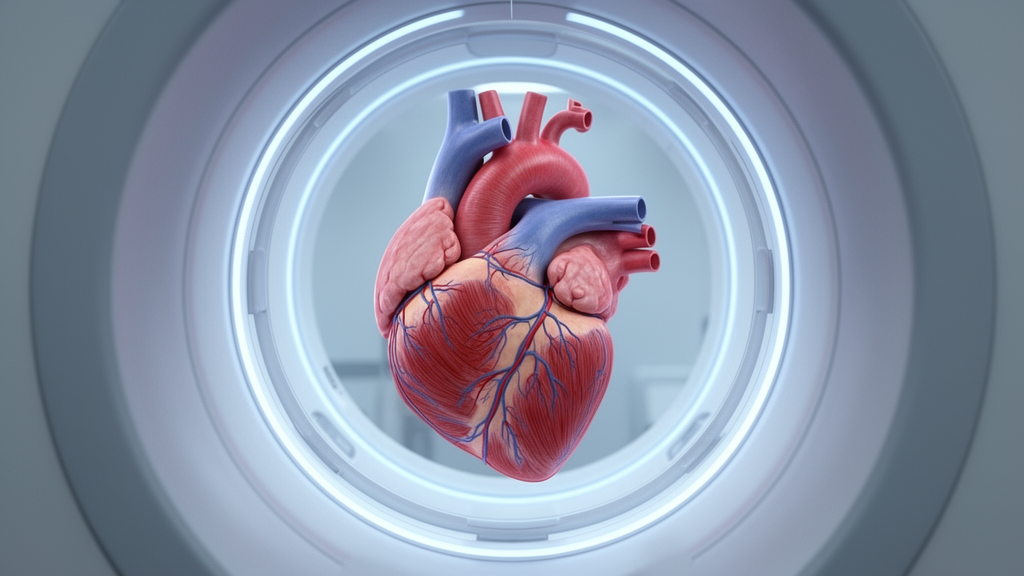
A focused review published in EJNMMI Physics examines how integrating simultaneous magnetic resonance imaging with positron emission tomography can mitigate complex cardiac and respiratory motion to achieve quantifiable, high-resolution cardiac imaging. Producing reliable cardiac PET images requires overcoming independent and highly variable respiratory and heart movements. These physiological motions frequently exceed the thickness of the left ventricular wall, introducing blur that compromises diagnostic precision and the quantification of cardiovascular diseases.

Magnetic resonance imaging currently excels at resolving transmural differences across the left ventricular wall, an anatomical capability that cardiac PET alone has not fully achieved. However, technical advancements in PET spatial resolution are approaching three millimeters. This engineering progress indicates that transmural quantification is feasible if cardiac and respiratory displacements are effectively corrected during data acquisition and image processing.

Simultaneous hybrid PET and MRI platforms provide a synergistic framework by acquiring co-registered multimodal datasets in parallel. Under this approach, the superior anatomical resolution of MRI directly informs PET image reconstruction. This combined architecture permits spatial resolution enhancement and motion correction without incurring the severe signal-to-noise ratio penalties typical of traditional prospective or retrospective gating strategies.

Key motion mitigation strategies highlighted in the review rely on deriving accurate motion vector fields directly from Cine MRI sequences. When investigators apply these MRI-derived motion vectors to acquired PET emission data, the resulting reconstructions display substantial improvements in cardiac image sharpness and overall quality.

Beyond motion vector tracking, integrating anatomical priors from MRI into PET reconstruction algorithms provides additional resolution enhancement, which proves particularly critical when imaging thin myocardial walls. Furthermore, machine learning frameworks offer transformative potential to accelerate these complex correction pipelines, creating operational pathways for demanding applications such as multi-tracer injection protocols.

By overcoming respiratory and cardiac motion artifacts, hybrid PET and MRI systems deliver the quantifiable, high-resolution cardiac data necessary for rigorous preclinical investigations and precise clinical theranostic evaluations in heart disease management.

Subject of Research: Cardiac PET/MRI motion correction strategies and high-resolution quantification

Article Title: Defeating the Black Knight: a focused review of cardiac PET/MRI motion correction

Article References: Lim, H., Wilk, B., Moran, G., Faul, D., Thiessen, J. D., & Prato, F. S. (2026). Defeating the Black Knight: a focused review of cardiac PET/MRI motion correction. EJNMMI Physics. https://doi.org/10.1186/s40658-026-00973-2

Image Credits: AI Generated

DOI: 10.1186/s40658-026-00973-2

Keywords: PET/MRI, cardiac imaging, motion correction, respiratory motion, cardiac motion, left ventricular wall, transmural quantification, image reconstruction, Cine MRI, motion vectors, anatomical priors, machine learning, multi-tracer studies, preclinical research, theranostics, positron emission tomography

News Source: Denise Maddox. (November 20, 2026). Hybrid PET-MRI Motion Correction Enables High-Resolution Cardiac Disease Quantification. Scienmag.


Tags: anatomical priorscardiac imagingcardiac motionCine MRIimage reconstructionleft ventricular wallMachine Learningmotion correctionmotion vectorsmulti-tracer studiesPET/MRIpositron emission tomographypreclinical researchrespiratory motiontheranosticstransmural quantification
Share12Tweet7Share2ShareShareShare1

Related Posts

Melatonin Protects Rat Brain Subcellular Fractions Against Oxidative Toxicity in Lab Models

Melatonin Protects Rat Brain Subcellular Fractions Against Oxidative Toxicity in Lab Models

November 20, 2026
Study Identifies Converging Ravines and Sediment in 2024 Valencia Flash Flood

Study Identifies Converging Ravines and Sediment in 2024 Valencia Flash Flood

November 20, 2026

Brentuximab Vedotin Yields Modest Response in Relapsed Diffuse Large B-Cell Lymphoma

November 20, 2026

Prophylactic Sephin1 Preserves Mouse Visual Circuit Structure and Function in Autoimmune Encephalomyelitis

November 20, 2026

POPULAR NEWS

  • Hybrid PET-MRI Motion Correction Enables High-Resolution Cardiac Disease Quantification

    Hybrid PET-MRI Motion Correction Enables High-Resolution Cardiac Disease Quantification

    29 shares
    Share 12 Tweet 7
  • Microbiota Shifts Interact With Host Methylation and TP53 Mutations in Gastric Cancer

    29 shares
    Share 12 Tweet 7
  • Cardiac Imaging Links Heart Markers to Quality of Life in DMD Carriers

    29 shares
    Share 12 Tweet 7
  • Study Links 18p Chromosomal Deletions to Reproductive and Endocrine Anomalies

    29 shares
    Share 12 Tweet 7

About

We bring you the latest biotechnology news from best research centers and universities around the world. Check our website.

Follow us

Recent News

Melatonin Protects Rat Brain Subcellular Fractions Against Oxidative Toxicity in Lab Models

New Komagataeibacter Isolate Boosts Bacterial Nanocellulose Yields Using Low-Cost Agricultural Byproducts

Water and Fertiliser Regimes Alter Marrs Orange Yield and Water Efficiency

Subscribe to Blog via Email

Enter your email address to subscribe to this blog and receive notifications of new posts by email.

Join 89 other subscribers
  • Contact Us

Bioengineer.org © Copyright 2023 All Rights Reserved.

Welcome Back!

Login to your account below

Forgotten Password?

Retrieve your password

Please enter your username or email address to reset your password.

Log In
No Result
View All Result
  • Homepages
    • Home Page 1
    • Home Page 2
  • News
  • National
  • Business
  • Health
  • Lifestyle
  • Science

Bioengineer.org © Copyright 2023 All Rights Reserved.