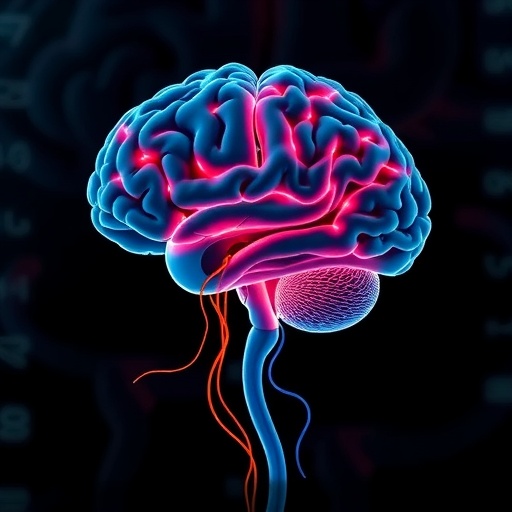
In a groundbreaking study poised to reshape our understanding of Parkinson’s disease (PD), a team of neuroscientists has unveiled intricate details linking specific circuit dysfunctions within the brain to the severity of motor symptoms experienced by patients. The research, published in the prestigious journal npj Parkinson’s Disease, elucidates how individualized aberrations in the cortico-basal ganglia-thalamo-cortical (CBGTC) loop are intimately connected to the loss of dopaminergic neurons in the striatum, the brain region long implicated in PD pathology. This revelation opens new avenues for precision-targeted therapies and highlights the need for tailored interventions in managing this complex neurodegenerative disorder.
Parkinson’s disease, characterized predominantly by tremors, rigidity, bradykinesia, and postural instability, has long been associated with progressive depletion of dopamine-producing cells in the substantia nigra pars compacta. Traditional models have emphasized a generalized dopaminergic deficit; however, this new research challenges the conventional paradigm by suggesting that the dysfunction is far from uniform throughout the CBGTC circuits. Instead, the investigation reveals a nuanced, patient-specific disruption of neural connectivity and signaling pathways within this critical loop, which underpins voluntary movement control.
The cortico-basal ganglia-thalamo-cortical circuit forms a closed feedback loop crucial for motor planning, initiation, and execution. Aberrations in this circuitry interfere with the basal ganglia’s role in filtering motor commands, thereby compromising the execution of smooth, coordinated movements. By employing state-of-the-art neuroimaging techniques alongside advanced computational modeling, the scientists unraveled the heterogeneous patterns of circuit dysfunction at an unprecedented individual level, correlating these with patients’ motor symptomatology assessed through standardized clinical scales.
Central to their approach was the integration of multimodal neuroimaging data — including functional MRI (fMRI), diffusion tensor imaging (DTI), and positron emission tomography (PET) with dopaminergic tracers. This comprehensive neurovisualization allowed the team to map both functional connectivity and dopaminergic integrity concurrently. Their analysis demonstrated that regions exhibiting the most pronounced dopaminergic depletion also corresponded to impaired connectivity within specific segments of the CBGTC circuit, underscoring a direct mechanistic link between biochemical deficits and circuit-level dysfunction.
Moreover, the study highlights the variability of this dysfunction across individuals, reinforcing that Parkinson’s disease is far from a monolithic entity. Instead, it manifests as a spectrum of circuitopathies, each uniquely calibrated by the extent and location of dopaminergic loss. This differentiation is pivotal for understanding why certain patients exhibit more severe tremors, while others suffer predominantly from rigidity or gait disturbances. Such a graded perspective challenges the one-size-fits-all approach in therapeutic management and urges the development of personalized interventions.
Delving deeper into the neurobiological underpinnings, the research sheds light on how dopaminergic loss disrupts the delicate balance between excitatory and inhibitory signals within the basal ganglia nuclei. This imbalance leads to maladaptive oscillatory activity and aberrant synchronization in thalamocortical networks, phenomena that have been implicated in the motor deficits characteristic of PD. By quantitatively linking these electrophysiological changes to connectivity metrics derived from neuroimaging, the team bridges biochemical pathology with circuit dynamics in a comprehensive framework.
An especially compelling aspect of the findings relates to the predictive potential of individualized circuit dysfunction profiles. By leveraging machine learning algorithms trained on multimodal datasets, the researchers were able to forecast motor symptom severity with remarkable accuracy. This predictive capacity not only facilitates early diagnosis but also portends the possibility of preemptive, tailored interventions designed to stabilize or even reverse circuit dysregulation before clinical symptoms become debilitating.
The implications of this research resonate beyond mere academic curiosity, proposing tangible clinical benefits. Targeted neuromodulation strategies—such as deep brain stimulation (DBS)—could be optimized based on a patient’s specific circuit dysfunction, enhancing efficacy and minimizing adverse effects. Furthermore, pharmacological regimes might be fine-tuned to complement circuit-based deficits, opening the door to combination therapies that address both neurochemical and network-level perturbations.
Importantly, this study also provides a framework to understand the progression of Parkinson’s disease over time. The longitudinal analysis conducted suggests that as dopaminergic neurons continue to degenerate, the associated circuit dysfunctions become more pronounced and widespread, correlating with worsening motor symptoms. This temporal dimension enriches our grasp of disease dynamics and underscores the necessity for timely interventions that preserve circuit integrity.
The interdisciplinary nature of this research, blending neurobiology, computational neuroscience, and clinical neurology, exemplifies the future of studying complex brain disorders. It reinforces the concept that diseases like Parkinson’s cannot be reduced merely to neurotransmitter imbalances but must be understood in the context of dynamic, interconnected neural systems whose dysfunctions manifest in symptom-specific ways.
Moreover, the findings challenge researchers and clinicians to consider individual patient variability as a foundational element in both experimental design and clinical practice. By acknowledging and characterizing this variability, science advances towards truly personalized medicine, where interventions are not only reactive but also predictive and adaptive, harnessing the brain’s inherent plasticity to combat neurodegeneration.
This research also lays the groundwork for the exploration of non-motor symptoms of Parkinson’s disease, many of which involve cognitive and emotional circuits overlapping with or adjacent to motor pathways within the basal ganglia and thalamus. Understanding circuit dysfunction in a patient-specific manner could illuminate the pathophysiology of these debilitating non-motor complications, ultimately leading to holistic treatment approaches.
By redefining the relationship between dopaminergic neuron loss and motor control through the prism of individualized circuit dysfunction, this study marks a watershed moment in Parkinson’s disease research. It not only reconciles disparate clinical presentations but also challenges the field to innovate new diagnostic and therapeutic modalities informed by intricate neural circuitry rather than solely by cellular pathology.
While the study represents a significant leap forward, the authors emphasize the need for further research to validate these findings in larger and more diverse populations. Moreover, longitudinal studies tracking changes in circuit functionality alongside clinical progression are vital. Such efforts will deepen our understanding and enable the translation of these insights into next-generation treatments.
In conclusion, this pioneering work by Sun, Lin, Ma, and colleagues enriches our understanding of Parkinson’s disease by pinpointing the individualized dysfunctions in the cortico-basal ganglia-thalamo-cortical circuit as critical mediators between dopaminergic loss and motor symptom severity. As the field moves towards a future shaped by personalized neuroscience and precision medicine, these findings promise to guide the development of interventions that are as unique as the patients themselves, heralding hope for more effective management of this debilitating disorder.
Subject of Research: Individualized cortico-basal ganglia-thalamo-cortical circuit dysfunction in Parkinson’s disease and its association with striatal dopaminergic loss and motor symptom severity.
Article Title: Individualized cortico-basal ganglia-thalamo-cortical circuit dysfunction links striatal dopaminergic loss to motor symptom severity in Parkinson’s disease.
Article References:
Sun, YY., Lin, HM., Ma, J. et al. Individualized cortico-basal ganglia-thalamo-cortical circuit dysfunction links striatal dopaminergic loss to motor symptom severity in Parkinson’s disease. npj Parkinsons Dis. (2026). https://doi.org/10.1038/s41531-026-01409-5
Image Credits: AI Generated
Tags: advanced Parkinson’s disease researchbasal ganglia role in movement disordersbradykinesia and circuit dysfunctioncortico-basal ganglia-thalamo-cortical loop abnormalitiesdopaminergic neuron loss in striatumindividualized neural connectivity disruptionsneurodegenerative disorder motor controlParkinson’s disease motor symptom severityParkinson’s motor symptom mechanismspatient-specific Parkinson’s interventionspersonalized brain circuit dysfunction in Parkinson’sprecision-targeted therapies for Parkinson’s