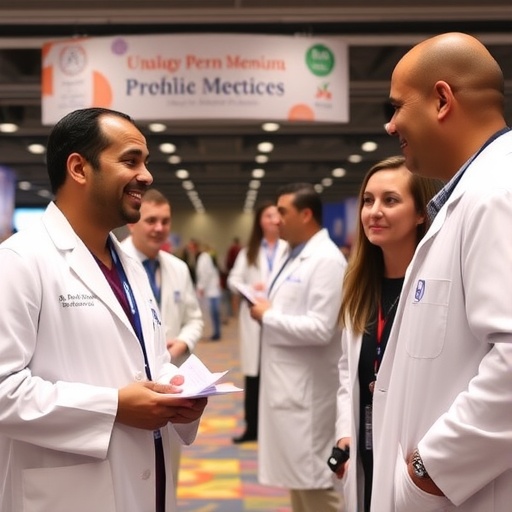
SAN DIEGO, CA – At the forefront of cancer research and innovation, the Abramson Cancer Center (ACC) and the Perelman School of Medicine at the University of Pennsylvania are gearing up to present transformative findings at the American Association for Cancer Research (AACR) Annual Meeting 2026, set to take place from April 17-22 in San Diego, California. This annual congregation of top-tier scientists and clinicians offers a platform to unveil groundbreaking scientific methods and clinical trial data that promise to redefine cancer therapy and patient outcomes. The spotlight on Penn Medicine’s contributions underscores their position as leaders in oncology research, particularly in the realms of immunotherapy, targeted therapies, and cutting-edge technology integration.
Leadership updates at the AACR signal a continued influence from Penn, with Robert Vonderheide, MD, DPhil, Director of the Abramson Cancer Center, stepping into the role of AACR President-Elect for the 2026-2027 tenure. Concurrently, E. John Wherry, PhD, a distinguished professor and department chair at Penn, joins the AACR Board of Directors. Their leadership will steer the organization’s scientific agenda towards enhanced collaboration and translational research, bridging preclinical discoveries and clinical application. These appointments reflect the deep engagement of Penn researchers in national and international cancer science leadership and policy-making.
One of the hallmark presentations poised to attract intense interest is the Opening Plenary Session featuring Carl June, MD, a pioneer in CAR T cell therapy. June will detail significant advances in extending CAR T therapy from hematological malignancies into the more challenging arena of solid tumors. This includes novel “armored” CAR T cells capable of resisting the hostile tumor microenvironment, as well as dual-target engineered CARs designed specifically to confront glioblastoma, a notably aggressive brain cancer. The technical complexity of these next-generation cellular therapies lies in enhancing persistence, efficacy, and tumor specificity while mitigating off-target effects and immune-related toxicities.
Further into the meeting, riveting clinical data will be disclosed from the STAR-101 Phase 1 Clinical Trial, a pioneering study investigating KIR-CAR T cells in patients who have advanced mesothelin-expressing solid tumors such as ovarian cancer and cholangiocarcinoma. Unlike conventional CAR T cells, these KIR-CARs leverage natural killer (NK) cell receptors to overcome T cell exhaustion—a major limitation in prolonged immunotherapy efficacy. The multi-chain receptor design introduces a new dimension in immune engineering, aiming to reinvigorate anti-tumor responses in difficult-to-treat solid malignancies. Janos L. Tanyi, MD, PhD, the study’s principal investigator, will be sharing these initial clinical outcomes, which bear significant implications for durable cancer control.
On the front of early interception and prevention strategies, Minh Than, MD, PhD, will discuss innovative work illustrating how targeting active RAS signaling pathways can prevent pancreatic cancer development at its nascent stages in murine models. These findings represent a monumental shift from treatment paradigms to cancer interception, emphasizing the eradication of precancerous lesions before tumorigenesis. The utilization of genetically engineered mice to mimic human pancreatic cancer evolution offers mechanistic insights into the molecular drivers of oncogenesis and potential intervention points.
Cancer immunotherapy remains a dominant theme, with E. John Wherry chairing a symposium dedicated to immune evasion mechanisms and immune dysregulation in malignancies. Specifically, Wherry will elaborate on the pharmacodynamics of anti-PD-1 therapies and their capacity to reinvigorate exhausted CD8+ T cells within the tumor microenvironment. Understanding T cell exhaustion—characterized by diminished effector function and sustained expression of inhibitory receptors—is pivotal for refining checkpoint blockade strategies and improving therapeutic durability.
Integrating artificial intelligence (AI) into oncology diagnostics also figures prominently in Penn’s presentations. Mingyao Li, PhD’s work on AI-powered tissue mapping melds spatial transcriptomics with histopathology images to generate detailed molecular and cellular maps within tumors. This fusion of computational pathology and spatial omics facilitates a granular understanding of tumor heterogeneity, microenvironmental interactions, and disease progression. The promise of predictive AI models extends to prognosis, treatment response assessment, and personalized therapy design.
Saar Gill, MD, PhD, will contribute vital knowledge to emerging methodologies for in vivo CAR T cell generation. The current ex vivo manufacturing process is complex, labor-intensive, and costly. Gill’s research envisions technologies that could directly engineer CAR T cells within the patient’s body, bypassing extensive laboratory manipulation. The feasibility of in vivo gene editing and delivery mechanisms is a cutting-edge development potentially revolutionizing cell-based immunotherapies by enhancing accessibility and scalability.
In cervical cancer prevention, Carmen Guerra, MD, is advancing community-level interventions through HPV self-sampling approaches, crucial for early detection and screening in underserviced populations. Chairing a session on vaccination and self-sampling, Guerra’s work leverages community outreach to address significant disparities in cervical cancer outcomes globally. These public health strategies demonstrate how molecular diagnostics can be translated beyond the lab bench into impactful epidemiological interventions.
Recognition of early-stage investigators is exemplified by Carman Man-Chung Li, PhD receiving the AACR Gertrude B. Elion Cancer Research Award. Li’s research delves into the chromatin priming mechanisms that underpin the initiation and aggressiveness of basal-like breast cancer. Epigenetic alterations driving tumor heterogeneity and plasticity are emerging as promising targets for interception therapies that aim to halt cancer progression at its earliest chromatin-based regulatory events.
Adding to the momentum, Amulya Sreekumar, PhD, featured as an AACR NextGen Star, highlights the role of residual breast cancer cells in endogenous dormancy, maintained via SOX5-driven endochondral ossification pathways. This novel mechanistic insight into tumor cell dormancy after conventional therapy is vital for developing therapeutic regimens aimed at eradicating minimal residual disease and preventing relapse. The translational value is underscored by ongoing clinical trials targeting disseminated tumor cells, led by Lewis Chodosh, MD, PhD.
Penn Medicine continues to serve as a crucible for transformative discoveries, wielding a multidisciplinary approach that synergizes clinical expertise, molecular biology, immunology, bioinformatics, and community health. This AACR Annual Meeting highlights not only the technological and therapeutic strides but also the comprehensive ecosystems required to accelerate innovation from bench to bedside. As cancer therapy enters a new era defined by precision and immunologic sophistication, the University of Pennsylvania stands at the vanguard, shaping the future of oncology for patient benefit worldwide.
For media inquiries and interview arrangements with Penn Medicine experts during the AACR meeting, contact Meagan Raeke at [email protected] or via phone at 267-693-6224.
Subject of Research: Advances in CAR T cell therapies, immune evasion, cancer interception, AI in oncology diagnostics, and cancer prevention strategies.
Article Title: Transforming Oncology: Penn Medicine’s Pioneering Research at AACR Annual Meeting 2026
News Publication Date: April 2026
Web References:
https://www.pennmedicine.org/Specialties/Cancer/About-Abramson-Cancer-Center
https://clinicaltrials.gov/study/NCT05568680
https://www.pennmedicine.org/news/pioneering-strategy-may-keep-breast-cancer-from-coming-back
Keywords: CAR T cell therapy, solid tumors, immunotherapy, cancer prevention, immune evasion, AI pathology, pancreatic cancer, cervical cancer prevention, KIR-CAR, tumor dormancy, basal-like breast cancer, translation research
Tags: AACR Annual Meeting 2026 highlightsAbramson Cancer Center oncology innovationsclinical trial data in cancer therapycollaboration in cancer science researchE. John Wherry AACR board membershipimmunotherapy advancements in cancer treatmentintegration of technology in oncologyPenn Medicine cancer research breakthroughsPerelman School of Medicine cancer studiesRobert Vonderheide AACR leadershiptargeted cancer therapies researchtranslational cancer research developments