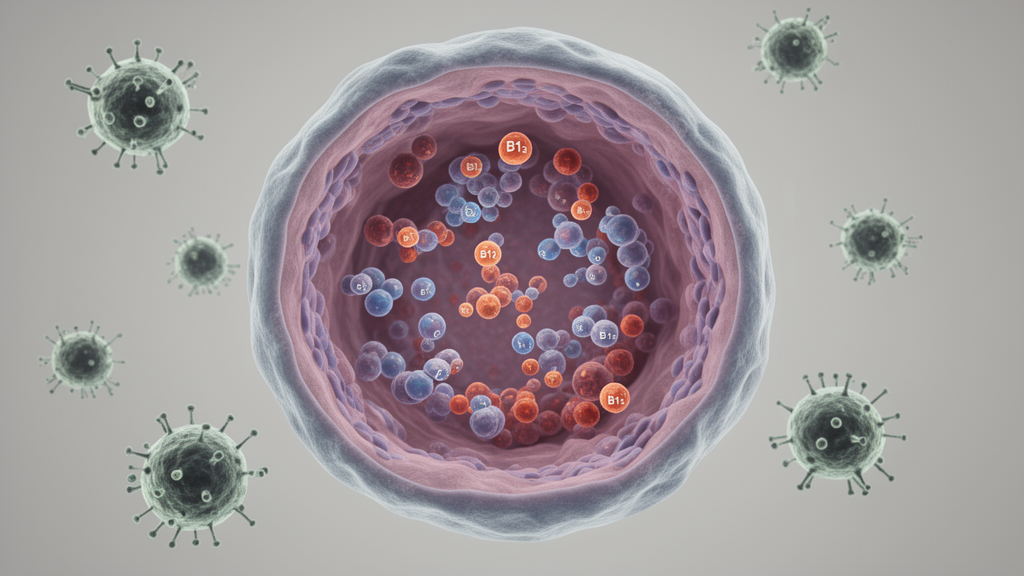
Five pediatric patients diagnosed with cobalamin C deficiency initially presented with recurrent infections and immune abnormalities that closely mirrored common variable immunodeficiency, according to a clinical investigation published in the Journal of Clinical Immunology. Cobalamin C deficiency represents the most frequent inborn error of intracellular cobalamin metabolism, arising from defective synthesis of adenosylcobalamin and methylcobalamin that leads to combined methylmalonic acidemia and homocystinuria. Although traditional pediatric manifestations center on developmental delay, poor feeding, hypotonia, cytopenias, and metabolic complications, the documented cohort demonstrated that immune dysfunction can serve as the predominant presenting clinical feature.
The study cohort comprised five children, including four females and one male, all of whom experienced recurrent infections as their initial and leading disease manifestation. Across the five evaluated cases, the median age at the onset of symptoms was 2.3 years, spanning an overall range from 3 months to 5 years. Late-onset disease, defined by an onset past 1 year of age, characterized four of the five children in the series, illustrating that the presentation may emerge well into early childhood rather than presenting exclusively in early infancy.
Recurrent respiratory tract infections represented the primary infectious presentation observed in the cohort, with four patients experiencing recurrent pneumonia and one child presenting with recurrent upper respiratory tract infections. Beyond respiratory illness, documented infectious complications included viral encephalitis in one patient and Candida albicans fungal infections in two patients. Notably, the clinical histories lacked episodes of recurrent skin infections, Pneumocystis jirovecii pneumonia, or herpesvirus-related disease, and none of the children experienced serious opportunistic infections throughout the observed course.
Diagnostic biochemical testing confirmed underlying methylmalonic acidemia in every case in accordance with established European consensus guidelines. Comprehensive molecular genetic evaluation via whole-exome sequencing identified compound heterozygous pathogenic variants in the MMACHC gene across all five children. Testing for autoantibodies yielded negative results in all cases, and genomic screening did not reveal any causative variants associated with known primary immunodeficiency syndromes or inborn errors of immunity. None of the patients had familial histories of primary immunodeficiency, autoimmune conditions, or known cobalamin C deficiency.
Immunologic testing revealed humoral and cellular defects resembling a primary antibody deficiency or common variable immunodeficiency phenotype, though formal diagnostic criteria for definite common variable immunodeficiency were not met. Factors precluding a definitive immunodeficiency diagnosis included the young age of three patients who were evaluated prior to 4 years of age, an absence of systematic assessments of specific vaccine responses, and a lack of documented persistence of hypogammaglobulinemia across the series.
Humoral immune irregularities were documented in four of the five patients, with three individuals displaying reduced serum immunoglobulin G concentrations and two exhibiting reduced immunoglobulin A, immunoglobulin M, or both. The authors emphasized that these quantitative reductions alone do not establish an intrinsic primary B-cell defect. For example, Patient 3 exhibited a normal serum immunoglobulin G concentration during an initial assessment at 3 months of age, which may have reflected circulating maternal antibodies acquired transplacentally.
Cellular immune evaluations revealed multi-lineage hematologic and lymphoid abnormalities across the cohort. Specific findings included CD3-positive T-cell lymphopenia in three patients, reduced CD19-positive B-cell counts in three patients, low natural killer cell percentages in all five patients, and reduced absolute natural killer cell counts in four patients. In addition, two children exhibited abnormal CD4 to CD8 T-cell ratios. Complete blood counts further revealed systemic suppression, showing leukopenia in three patients, lymphopenia in three patients, and neutropenia with absolute neutrophil counts below 1500 per microliter in three patients.
The biological mechanisms connecting cobalamin C deficiency to secondary immune suppression involve the accumulation of toxic organic acid metabolites, including methylmalonic acid and propionylcarnitine. These accumulating compounds can disrupt mitochondrial energy generation within immune cells, compromising metabolic reprogramming required for immune cell activation and maturation. The resulting mitochondrial dysfunction may hinder T-lymphocyte proliferation and differentiation, reduce B-cell antibody production, impair phagocytosis in neutrophils and monocytes, and drive chronic systemic inflammation and immune dysregulation.
Therapeutic management for all five children consisted of targeted metabolic therapy combined with anti-infective treatment during acute infectious episodes, and notably, none of the patients received immunoglobulin replacement therapy. During paired follow-up evaluations, serum immunoglobulin G concentrations normalized to age-appropriate reference ranges in all five children, accompanied by measurable improvements in selected T-cell and B-cell counts. Because these immunologic recoveries occurred concurrently with clinical infection resolution and metabolic stabilization, the findings suggest that the immunologic abnormalities may be reversible and fluctuate with metabolic control.
The study authors concluded that clinicians evaluating pediatric patients with suspected primary antibody deficiencies or combined immunodeficiencies should maintain a high index of suspicion for metabolic phenocopies, particularly when atypical systemic signs such as unexplained macrocytic anemia, neurodevelopmental delay, metabolic acidosis, hemolytic uremic syndrome, or pulmonary disease are present. Because MMACHC is frequently absent from standard targeted primary immunodeficiency gene panels, the authors advised confirming MMACHC coverage or utilizing broader genomic sequencing when an underlying metabolic etiology is suspected.
The underlying biochemical pathogenesis of cobalamin C deficiency centers on a critical block in intracellular cobalamin processing that disrupts two vital enzymatic pathways. Because the cellular machinery fails to properly synthesize both adenosylcobalamin and methylcobalamin, patients simultaneously develop methylmalonic acidemia and homocystinuria. While cobalamin C deficiency is recognized as the most frequent inborn error of intracellular cobalamin metabolism, scientific literature characterizing the accompanying immune status of affected individuals has remained exceedingly sparse. Historically, medical understanding of this condition has focused predominantly on the direct metabolic derangements, leaving the secondary immunological consequences underrecognized in clinical practice. The five pediatric cases describe an important intersection where intracellular metabolic failure directly compromises immune homeostasis, manifesting as hypogammaglobulinemia, altered lymphocyte subsets, and increased susceptibility to recurrent infections that closely resemble an inherited inborn error of immunity.
Clinically, the primary presentation of recurrent infections in all five patients sharply contrasts with the classic pediatric presentation of cobalamin C deficiency. The traditional clinical spectrum typically includes profound failure to thrive, poor feeding, severe hypotonia, developmental delay, seizures or encephalopathy, cytopenias or megaloblastic anemia, ocular involvement, hemolytic uremic syndrome, pulmonary hypertension, and diffuse lung disease. Although recurrent infections are recognized as a possible complication, they rarely constitute the dominant initial symptom leading to clinical presentation. In this cohort, four female patients and one male patient presented primarily with recurrent infectious disease, demonstrating that immune dysfunction can overshadow traditional metabolic and neurometabolic signs. Recognizing that cobalamin C deficiency can present predominantly with an infectious phenotype is vital, as clinicians may otherwise fail to consider an underlying metabolic defect when classic features such as encephalopathy or severe acidosis are absent at onset.
The chronological patterns observed in the cohort further clarify the clinical course of this metabolic immunodeficiency phenocopy. The median age at symptom onset was 2.3 years, encompassing an overall span from three months to five years of age. Late-onset disease, defined as presentation after one year of age, occurred in four of the five children. This high prevalence of late-onset presentations illustrates that immune-related manifestations may become clinically evident well into early childhood rather than appearing solely during infancy. The infectious spectrum was characterized predominantly by respiratory tract disease, with four patients experiencing pneumonia and one exhibiting upper respiratory tract infections. In addition, one patient developed viral encephalitis and two experienced Candida albicans infections. Conspicuously absent from the clinical histories were recurrent skin infections, Pneumocystis jirovecii pneumonia, herpesvirus-related diseases, and serious opportunistic infections, outlining a distinct infectious profile.
Immunological investigations demonstrated cellular and humoral abnormalities resembling common variable immunodeficiency, yet strict diagnostic criteria for definite common variable immunodeficiency were not fulfilled. Diagnostic limitations included the young age of three patients who were younger than four years old during initial evaluation, the absence of systematic evaluations of specific vaccine antibody responses, and the lack of documented persistence of hypogammaglobulinemia across the cohort. Humoral analyses identified low immunoglobulin G levels in three patients and decreased immunoglobulin A or immunoglobulin M in two, though Patient 3 exhibited a normal immunoglobulin G level at three months of age, likely reflecting transplacentally transferred maternal antibodies. Complete blood counts and flow cytometry demonstrated widespread suppression across immune lineages, showing CD3-positive T-cell lymphopenia in three patients, reduced CD19-positive B-cell counts in three, abnormal CD4 to CD8 ratios in two, leukopenia in three, lymphopenia in three, and neutropenia with absolute neutrophil counts under 1500 per microliter in three. Notably, natural killer cell percentages were reduced in all five patients, and absolute natural killer cell counts were depressed in four.
The biological explanation for this multilineage immune suppression involves the cellular toxicity of accumulating organic acids, particularly methylmalonic acid and propionylcarnitine. Within immune cells, the secondary accumulation of these toxic metabolites disrupts mitochondrial energy generation, which subsequently impairs the metabolic reprogramming essential for immune cell activation and maturation, especially in T lymphocytes. This bioenergetic compromise hinders T-cell proliferation and differentiation, impairs B-cell antibody synthesis, reduces the phagocytic capacity of neutrophils and monocytes, and drives chronic systemic inflammation and immune dysregulation that limits recovery from immune stress. Importantly, paired follow-up evaluations demonstrated that metabolic therapy alongside anti-infective treatment, administered without immunoglobulin replacement therapy, led to serum immunoglobulin G normalization across all five children and concurrent improvements in lymphocyte subsets. These clinical recoveries coincided with metabolic stabilization, indicating that the immunologic derangements may be reversible. Because standard targeted inborn error of immunity gene panels frequently omit the MMACHC gene, the authors emphasized verifying MMACHC coverage or utilizing whole-exome sequencing whenever evaluating suspected immunodeficiencies with atypical multisystem features.
Subject of Research: Cobalamin C deficiency presenting with immunologic abnormalities mimicking common variable immunodeficiency in pediatric patients
Article Title: Cobalamin C Deficiency Presenting with CVID-like Immunologic Abnormalities: A Five-Patient Pediatric Case Series
Article References: He, R., Liu, J., Zhao, S., & Yang, H. (2026). Cobalamin C Deficiency Presenting with CVID-like Immunologic Abnormalities: A Five-Patient Pediatric Case Series. Journal of Clinical Immunology, 46(1), Article 84. https://doi.org/10.1007/s10875-026-02068-0
Image Credits: AI Generated
DOI: 10.1007/s10875-026-02068-0
Keywords: cobalamin C deficiency, cblC deficiency, MMACHC gene, methylmalonic acidemia, homocystinuria, common variable immunodeficiency, inborn errors of immunity, inborn errors of metabolism, pediatric immunology, hypogammaglobulinemia, lymphopenia, neutropenia, natural killer cells, metabolic phenocopy, recurrent infections, mitochondrial dysfunction
News Source: Harold Sullivan. (November 18, 2026). Pediatric Cobalamin C Deficiency Can Mimic Common Variable Immunodeficiency Features. Scienmag.