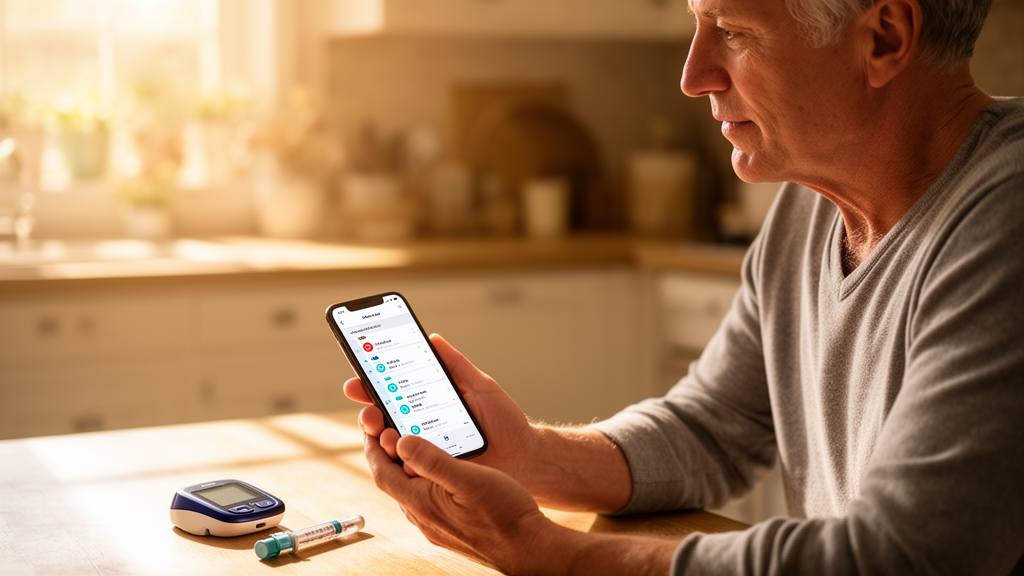
Patients with type 2 diabetes in Sweden are open to digital tools that help them take their medications, but only if those tools do more than fire off generic reminders. In a qualitative interview study published in BMC Digital Health, researchers report that patients expect medication adherence technologies to be responsive, personalized and capable of delivering genuine insight into their own health, rather than simply logging doses or issuing alerts.
These technologies include mobile applications, web-based systems, smart dispensers and wearables designed to monitor or support medication taking. Common features include electronic reminders, tracking of medication intake, feedback on self-monitoring data, informational support, behavior-planning tools and data-sharing functions.
Between 2023 and 2025, the researchers conducted semi-structured interviews with 13 adults with type 2 diabetes in Sweden, recruited through patient organizations, social media and primary healthcare centres. Purposive sampling was used to ensure diversity in age, sex, education, country of birth, self-rated medication difficulties and technology proficiency. Interviews lasted between 50 and 120 minutes and were analyzed inductively using qualitative content analysis. The interview guide covered nine specific technology features, from digital reminders and self-monitoring of medication intake to feedback on health data, digital goals and plans, social support, information, data sharing and digital communication with healthcare providers.
The participants were, on the whole, digitally confident. The median self-rated technology proficiency was 9 on a scale of 1 to 10, while self-rated medication difficulties varied, with a median of 5 on a 1-to-10 scale where 1 indicated few difficulties. Twelve of the thirteen had renewed a prescription online, six had experience with continuous glucose monitoring, five had used medication intake reminders, eight had used lifestyle apps and four had digitally shared data with healthcare professionals. The researchers note that this high level of digital competence limits how far the findings can be transferred to populations with lower eHealth literacy.
Three main categories emerged from the analysis: Control and Safety, Added Value and Motivation, and Impact on the patient-provider interaction. Patients said that features such as medication reminders, self-monitoring of medication intake and feedback on glucose values could promote a sense of security and control. Several described difficulties remembering doses when routines were disrupted, and electronic reminders for prescriptions nearing expiration or alerts for low home stock were viewed positively as ways to avoid suddenly running out of medication. Continuous glucose monitoring, which several participants had used, gave them insights into how diet, physical activity and medications interact in their own bodies, increasing both knowledge and confidence in self-management.
Yet the same features could also irritate. Many patients emphasized the importance of smart reminders that appear only when a dose is genuinely at risk of being missed, in order to reduce alert fatigue. Some preferred passive reminders, such as calendar entries without active notifications, and others found feedback on medication intake unnecessary. One participant asked what a congratulatory message about taking all her pills for the week would actually give her. In general, respondents were not widely concerned about occasionally missing or delaying doses, and for some the burden of tracking and reminders outweighed the consequences of a few missed doses each month.
What patients did value was technology that interprets data and provides new insights. They wanted information presented in a way that enhanced understanding, supported decision-making and translated patterns into suggested actions, for example identifying situations in which behavior change might be needed or revealing patterns of non-adherence. Some participants had already used artificial intelligence to help understand their medical records or to suggest diets suited to type 2 diabetes, and were open to using it to optimize their treatment. The usefulness of any feature also depended heavily on personal circumstances: needs changed over the course of the disease, with digital information and routine support mattering more soon after diagnosis, while self-monitoring and reminders were expected to become more useful with many medications or cognitive decline.
The third category concerned how these technologies could reshape the interaction between patients and healthcare providers. Patients saw potential in sharing self-collected data on medication use and blood glucose with their providers, hoping this would give clinicians a fuller picture than the three-month HbA1c value and a few days of glucose measurements typically available. Several patients who felt they received insufficient follow-up from healthcare services described a strong sense of personal responsibility and said such tools could have helped them gain control in the difficult first years after diagnosis. At the same time, participants stressed that digital solutions should remain complementary: physical meetings were the preferred form of contact for most, and some worried that sharing monitoring data could reduce or degrade in-person care. Acceptance of data sharing was conditional on the data leading to concrete action or support; if shared information was simply filed away, patients considered the exchange unnecessary and potentially intrusive.
Patients also raised concerns about vulnerability and autonomy. They described difficulties judging which digital sources of health information were trustworthy, worried that data sharing could create a false sense of safety if providers were assumed to be monitoring continuously, and felt that sharing everyday data could compromise their privacy, particularly with family members. Those with strong social support often perceived family access to their data as intrusive, while for patients with less supportive families, sharing could promote positive actions but carried greater risks of shame and emotional discomfort.
The authors conclude that MATech features have the potential to empower patients and improve healthcare interactions, but that patients expect more advanced, responsive and personalized functionalities than those currently available. They also caution that the study examined behavioral intention rather than actual technology use, that few participants had experience with technologies specifically designed to support medication adherence, and that the generally high technological competence of the sample limits transferability. Within those limits, the message for developers is clear: reminders and logging alone are not enough, and tools that combine medication support with monitoring, meaningful outcome-related feedback and genuine personalization are the ones patients say they would actually use.
Subject of Research: Patient expectations and needs regarding digital medication adherence technologies in type 2 diabetes
Article Title: Digital medication adherence technologies (MATech): a qualitative study of type 2 diabetes patients’ expectations and needs
Article References: Ekenberg, M., Hägglund, M., Wettermark, B., Schaal, M. S., & Svensberg, K. (2026). Digital medication adherence technologies (MATech): a qualitative study of type 2 diabetes patients’ expectations and needs. BMC Digital Health, 4(1), Article 71. https://doi.org/10.1186/s44247-026-00304-6
Image Credits: AI Generated
DOI: 10.1186/s44247-026-00304-6
Keywords: medication adherence, type 2 diabetes, digital health, qualitative research, patient perspectives, self-management, mHealth, continuous glucose monitoring, healthcare communication, Sweden, patient-provider interaction, personalization
News Source: Denise Maddox. (October 28, 2026). Patients with type 2 diabetes want smarter, more personal digital medication tools. Scienmag.