Findings could one day help predict response to targeted breast cancer drugs
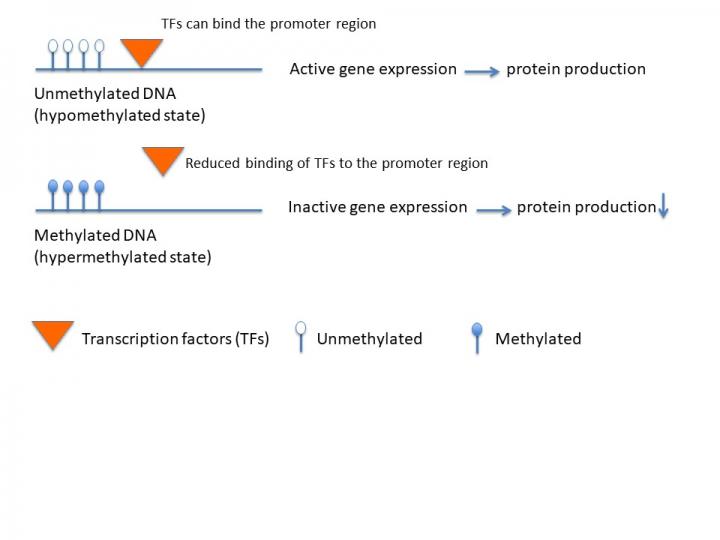
Credit: Daniela Furrer, Laval University
Orlando, Fla. (April 6, 2019) – According to a new study, breast cancer patients who don’t respond to targeted therapy have different patterns of epigenetic modifications than patients who do respond. Epigenetic modifications change gene expression without altering the DNA’s genetic code.
“Our study could contribute to new ways to predict who might not respond to targeted therapy,” said Daniela Furrer, PhD, a postdoctoral fellow at Laval University in Canada, who performed the study. “It could also lead to ways to identify patients who need a closer clinical follow-up because they are more prone to experience breast cancer recurrence.”
Furrer will present the research at the American Society for Investigative Pathology annual meeting during the 2019 Experimental Biology meeting to be held April 6-9 in Orlando, Fla.
Targeted cancer therapies use drugs to block molecules in cells that cause them to grow out of control. The therapy specifically targets cancer cells, unlike chemotherapy, which kills all quickly growing cells whether they are cancerous or not. Although the development of targeted therapies has increased breast cancer survival, treatment failure is still an important problem.
“This is one of the first studies to evaluate the impact of epigenetic modifications on treatment response to targeted therapy in a subgroup of breast cancer patients,” said Furrer. “Importantly, we measured these changes directly in breast cancer tissues and looked at epigenetic modifications throughout the entire breast cancer cell.”
For the new study, the researchers examined a type of epigenetic change known as DNA methylation in breast cancer tissue from patients with HER2-positive breast cancer who received the targeted drug trastuzumab (Herceptin). Trastuzumab targets human epidermal growth factor receptor 2 (HER2), which promotes the growth of cancer cells.
The researchers compared DNA methylation patterns in six patients who responded to the therapy and six who did not. Breast cancer tissue from patients resistant to the therapy exhibited 879 genes with higher levels of methylation and 293 genes with lower methylation than patients who responded to the treatment. Many of the genes affected were involved in cellular movement as well as cell death and survival, processes that play an important role in cancer.
The next step for this research is to validate the findings in a bigger group of breast cancer patients receiving the targeted treatment. If the results are confirmed, the researchers plan to develop new drugs that target the molecular pathways and cellular processes that lead to targeted treatment failure through DNA methylation.
Daniela Furrer will present this research on Saturday, April 6 at 7 p.m. during the Experimental Biology Welcome Reception in Valencia Ballroom ABCD, Orange County Convention Center and on Monday, April 8 at 9:45 a.m. in Room W108 B (poster 250.6 )(abstract). Contact the media team for more information or to obtain a free press pass to attend the meeting.
Image available.
###
About Experimental Biology 2019
Experimental Biology is an annual meeting that attracts more than 14,000 scientists and exhibitors from five host societies and more than two dozen guest societies. With a mission to share the newest scientific concepts and research findings shaping clinical advances, the meeting offers an unparalleled opportunity for exchange among scientists from across the U.S. and the world who represent dozens of scientific areas, from laboratory to translational to clinical research. http://www.
About the American Society for Investigative Pathology (ASIP)
ASIP is a society of biomedical scientists who investigate mechanisms of disease. Investigative pathology is an integrative discipline that links the presentation of disease in the whole organism to its fundamental cellular and molecular mechanisms. ASIP advocates for the practice of investigative pathology and fosters the professional career development and education of its members. http://www.
Find more news briefs and tipsheets at: https:/
Media Contact
Anne Frances Johnson
[email protected]