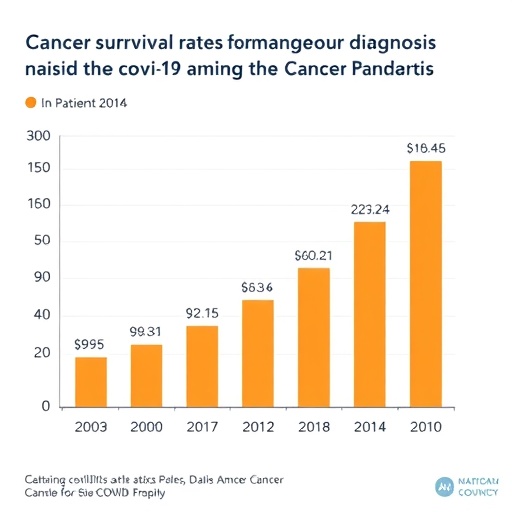
A recent cohort study published in JAMA Oncology reveals disturbing evidence that the COVID-19 pandemic has exerted profound and detrimental effects on short-term cancer survival rates. Researchers have found that individuals diagnosed with cancer during the tumultuous years of 2020 and 2021 experienced significantly worse outcomes compared to those diagnosed in the preceding years from 2015 to 2019. This study serves as a critical benchmark in understanding the cascading consequences of healthcare disruptions caused by the global pandemic.
The investigation employed a longitudinal cohort design, meticulously tracking patient outcomes over defined intervals before and during the pandemic. Such a design enables correlation of survival trends directly with the timing of care interruptions, allowing researchers to isolate the pandemic’s impact on cancer prognosis. Prior to 2020, oncological care followed established protocols with regular screenings, timely diagnoses, and uninterrupted treatment regimens. However, the pressure placed on healthcare systems during the pandemic led to deferrals, cancellations, and modifications of these protocols, possibly explaining the survival decrement observed.
One of the most pressing concerns elucidated by this study revolves around the delayed diagnosis of cancers. COVID-19-related restrictions severely limited access to routine screening services, which are essential for early detection. The researchers highlight that such delays allowed cancers to progress undiagnosed to more advanced stages, undermining the effectiveness of subsequent interventions. The study’s statistical analysis corroborates this, indicating increased incidence of late-stage diagnoses recorded during the pandemic years compared with reference years.
Moreover, disruptions were not limited to diagnosis. Standard treatment pathways—including surgery, chemotherapy, radiation therapy, and immunotherapy—faced unprecedented challenges. Hospitals reprioritized resources towards COVID-19 care, and many patients experienced interrupted or modified treatment schedules. These alterations have a known potential to negatively influence cancer outcomes by reducing treatment intensity, extending treatment intervals, or outright delaying therapy initiation, all factors linked to poorer survival.
The pandemic-induced strain also reverberated through patient monitoring processes. Standard protocols for evaluating response to treatment and early detection of complications rely on routine clinical visits and diagnostic imaging. During 2020-2021, many patients faced reduced clinical contact due to infection control measures, contributing to suboptimal management of cancer trajectories. The study’s findings underscore that such diminished monitoring may have further contributed to adverse outcomes during this period.
From a mechanistic perspective, the biological toll of SARS-CoV-2 infections on cancer patients also cannot be overlooked. Though the study primarily focuses on care delivery disruptions, it acknowledges that concomitant COVID-19 infection in immunocompromised individuals may exacerbate clinical deterioration and complicate treatment strategies. This intersectionality of infectious disease and oncology presents a uniquely challenging clinical landscape.
The authors point out that the statistical models used to evaluate survival incorporated confounding variables such as age, cancer type, stage at diagnosis, and comorbidities. This rigorous adjustment strengthens the argument that the primary driver behind worsened survival is the disruption in healthcare delivery rather than intrinsic changes in cancer biology or population demographics during the pandemic.
Importantly, the study emphasizes the urgent need for healthcare systems to develop resilient frameworks capable of maintaining essential cancer services in the face of global crises. This includes ensuring uninterrupted access to screening, diagnosis, treatment, and follow-up care, even amidst resource reallocation and infection control imperatives. Failure to do so risks reversing decades of progress in cancer survival rates.
This research adds a vital dimension to the growing body of literature on indirect health consequences of the COVID-19 pandemic, highlighting that the consequences extend far beyond direct viral morbidity and mortality. The findings represent a clarion call to policymakers, healthcare providers, and the global community to urgently address gaps laid bare in cancer care infrastructure.
Oncology experts underscore that the pandemic’s impact on cancer mortality might extend beyond short-term survival to influence long-term outcomes, given the delayed nature of cancer progression and recurrence patterns. Continuous surveillance and further research will be necessary to fully map these extended trajectories in the post-pandemic era.
The corresponding author, Todd Burus, PhD, emphasizes in his communications that these observations must inform strategic planning to bolster health system preparedness. Innovations such as telemedicine, home-based diagnostics, and flexible treatment protocols may form part of the solution matrix to safeguard cancer care continuity during future healthcare disruptions.
Overall, this landmark cohort study not only quantifies the severe harm dealt to cancer patients by pandemic-era care interruptions but also serves as a wake-up call to institutionalize cancer care resilience worldwide. Its publication in JAMA Oncology ensures wide dissemination to the oncology community, fostering collaborative efforts to mitigate these adverse effects in ongoing and future health emergencies.
Subject of Research: Cancer survival rates during the COVID-19 pandemic and the impact of healthcare disruptions.
Article Title: Not specified in provided content.
News Publication Date: Not specified in provided content.
Web References: Not specified in provided content.
References: (doi:10.1001/jamaoncol.2025.6332)
Image Credits: Not specified in provided content.
Keywords: Cancer, COVID-19, Medical diagnosis, Patient monitoring, Health care, Cohort studies, Oncology
Tags: cancer care interruptions due to COVID-19cancer survival rates during COVID-19consequences of deferring cancer treatmentsCOVID-19 effects on healthcare systemsdelayed cancer diagnosis during pandemichealthcare disruptions and cancer outcomesimpact of pandemic on cancer diagnosisJAMA Oncology study findingslongitudinal study on cancer prognosisoncology patient outcomes during pandemicroutine screening access limitationsshort-term cancer survival post-COVID