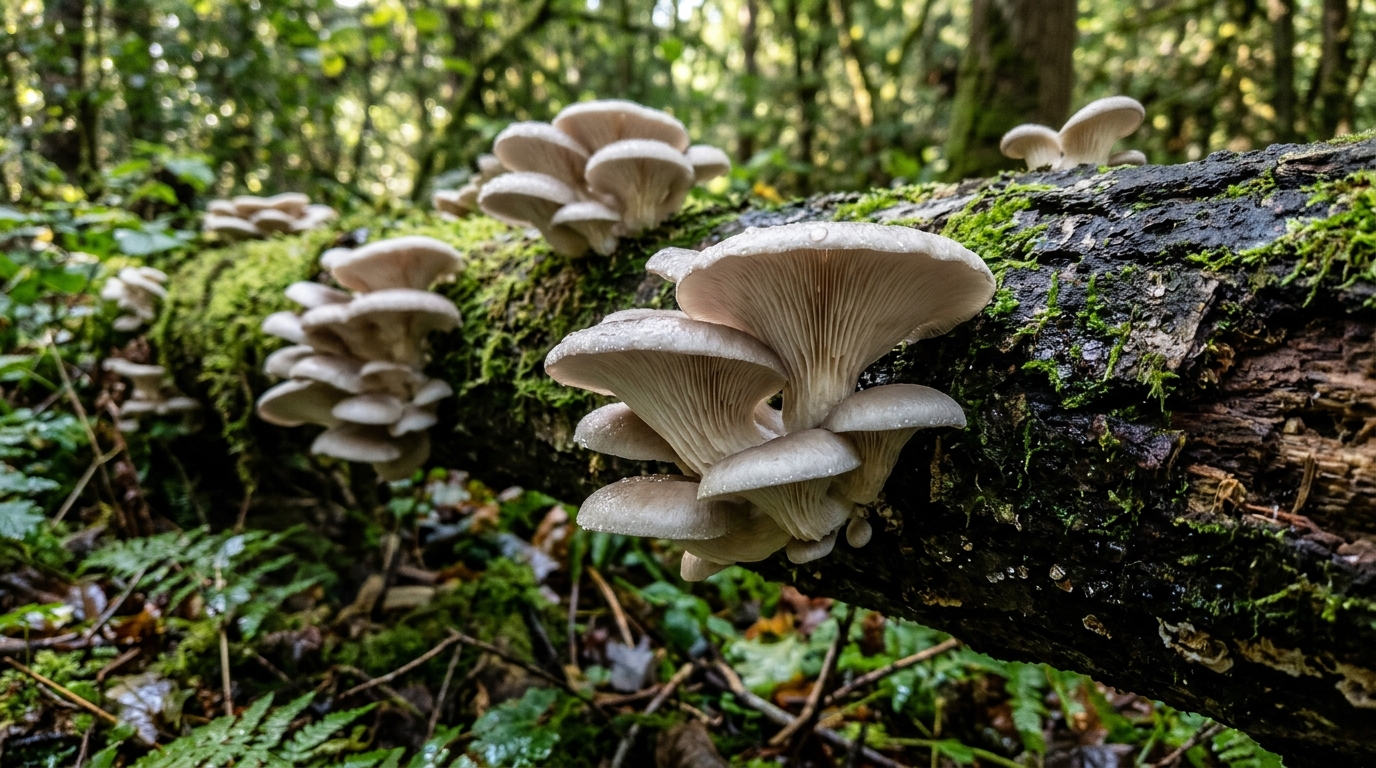
Chemists working with a fungus recovered from an edible oyster have characterized three previously undescribed members of a structurally distinctive family of fungal metabolites, and two of them measurably dampened a key inflammatory signal in mouse microglial cells. The fungus, Westerdykella dispersa strain Ca4-13, was isolated from the edible oyster Crassostrea angulata collected in Yunlin County, Taiwan, in November 2021. When grown on brown rice in solid-state fermentation, it yielded an ethyl acetate extract that chromatographic purification separated into seven compounds, including the three new cytochalasins the team named westerchalasin A, westerchalasin B, and westerchalasin C.
Cytochalasans are fungal secondary metabolites built around a bicyclic lactam, or isoindolone, core, and roughly 400 of them had been identified before this study, with reported activities ranging from antiviral and antibacterial to anti-inflammatory and antitumor effects. The genus Westerdykella, first described in 1955, occurs in soil, mud, and plant material, and earlier work had shown that its members can produce cytochalasan-type metabolites. What makes the new report notable is both the source organism, an oyster-associated fungus whose bioactive potential remains largely unexplored, and the specific biological target the compounds appear to influence: inducible nitric oxide synthase, the enzyme responsible for excessive nitric oxide production during inflammatory responses.
The structural work relied on the standard toolkit of natural products chemistry. Nuclear magnetic resonance spectroscopy and high-resolution electrospray ionization mass spectrometry established the molecular formulas and connectivity of each compound. Westerchalasin A, obtained as a colorless crystal, has the molecular formula C25H39NO5 and contains a γ-lactam ring, a cyclohexene moiety, a cycloheptane portion, and a cyclohexane unit, with a C-18 to C-21 oxygen bridge and a hemiketal carbon at C-21. Its relative configuration was assigned from nuclear Overhauser effect spectroscopy correlations, and its absolute configuration was fixed by single-crystal X-ray diffraction using copper radiation, giving the assignments 3S,4R,5S,8R,9S,13S,14R,16S,18S,21S. The crystallographic data were deposited with the Cambridge Crystallographic Data Centre under number 2,379,340.
Westerchalasin B, a whitish powder with the formula C26H41NO5, differs from compound 1 by a single methoxy group, whose position was secured by a key heteronuclear multiple bond correlation from the methoxy protons to C-14. Its relative configuration matched that of westerchalasin A, and comparison of experimental electronic circular dichroism spectra, which showed the same positive Cotton effect near 220 nanometers, supported the same absolute configuration. Westerchalasin C, also a whitish powder but with the formula C25H37NO5, is structurally more divergent: it carries three carbonyl carbons, including two ketones at C-18 and C-21, and an eleven-membered diketone-containing ring in place of the smaller ring system of its congeners. Calculated electronic circular dichroism spectra for the 3S,4R,7S,8R,9S,16S configuration matched the experimental curve, fixing its absolute configuration. The remaining four isolates were known compounds: asterric acid, auranticin A, auranticin B, and pilobolusone C.
Biological testing was conducted in BV-2 microglial cells, a mouse cell line widely used to model the inflammatory behavior of brain-resident immune cells. Before any anti-inflammatory assays, the team checked cytotoxicity with an MTT assay. Most compounds showed low toxicity at 20 micromolar, but compound 6, auranticin B, cut cell viability to below half, flagging it as potentially cytotoxic at the tested concentration and excluding it from further interpretation. The researchers then stimulated the cells with lipopolysaccharide, a bacterial wall component that robustly induces inflammatory gene expression, and measured nitric oxide output through nitrite levels in the culture medium.
Two compounds stood out. Westerchalasin B and westerchalasin C significantly reduced nitric oxide production at 20 micromolar compared with the lipopolysaccharide-stimulated control, with p values below 0.001. Half-maximal inhibitory concentrations came out at 11.1 plus or minus 0.5 micromolar for compound 2 and 9.9 plus or minus 0.1 micromolar for compound 3, figures that approach the performance of curcumin, the well-known anti-inflammatory natural product used as a positive control, which scored 2.7 plus or minus 0.3 micromolar in the same assay. Westerchalasin A was far weaker, with an IC50 of 44.8 plus or minus 4.4 micromolar, and the four known compounds showed negligible effects. The contrast between the three new cytochalasins suggests that specific structural features, such as the methoxy group on compound 2 and the diketone ring of compound 3, contribute to the enhanced activity.
Because inducible nitric oxide synthase is the enzyme behind much of the nitric oxide surge in activated microglia, the investigators used Western blotting to ask whether the compounds suppress the enzyme itself rather than merely scavenging the gas or interfering with the assay chemistry. At 20 micromolar, westerchalasin B and westerchalasin C significantly downregulated iNOS protein expression in lipopolysaccharide-stimulated BV-2 cells, with p values of 0.01 and 0.001 respectively, while westerchalasin A produced only a mild reduction. Curcumin again showed the strongest inhibition. The alignment between nitric oxide suppression and iNOS protein reduction supports the interpretation that the compounds act upstream of the enzyme, at the level of its expression, rather than simply masking nitrite in the medium.
To probe how the compounds might engage the enzyme directly, the team ran computational docking using the CDOCKER protocol in Discovery Studio against the crystal structure of inducible nitric oxide synthase, PDB entry 1QW4. All three westerchalasins contacted residues in the active-site cavity, including Glu371, Pro344, and Trp457. Compound 3 showed the strongest predicted binding, with a binding free energy of minus 18.8104 kilocalories per mole and a CDOCKER interaction energy of minus 46.4667, driven by a hydrogen bond between the catalytic residue Arg375 and the C-18 carbonyl of its cycloundecene moiety, plus a pi-alkyl interaction with Trp367. Compounds 1 and 2 bound more weakly, with free energies of minus 11.3284 and minus 15.3685 kilocalories per mole, relying on alkyl contacts with Phe363 and Trp188 and pi-alkyl interactions with Arg193, Cys194, and Val346 rather than the critical Arg375 hydrogen bond. Curcumin, with a free energy of minus 19.9625 kilocalories per mole, formed multiple hydrogen bonds and pi interactions with Arg375 and Arg382 and served as the reference standard. The ranking of docking energies mirrored the ranking of iNOS expression inhibition in the cell assays, which the authors cite as support for the reliability of the computational predictions.
The study also proposed a biosynthetic route. Cytochalasan core skeletons are generated through hybrid polyketide synthase and nonribosomal peptide synthetase pathways, with a Diels-Alder cycloaddition assembling the characteristic tricyclic framework. For westerchalasins A and B, the authors propose an intramolecular carbonyl-ene addition that yields an intermediate with a distinctive seven-six fused-ring system, while compound 3 is suggested to arise from further epoxidation, elimination, and oxidation of the isoindolone core. These proposals are grounded in precedent from earlier biosynthetic studies of cytochalasan formation and remain hypotheses rather than experimentally demonstrated pathways.
The authors frame the work within the broader biology of neuroinflammation. Chronic immune activation in the nervous system contributes to oxidative stress and neuronal damage, and reactive oxygen species can activate the NF-κB pathway, upregulating pro-inflammatory genes. Inducible nitric oxide synthase sits squarely in this cascade, and its overproduction of nitric oxide is implicated in inflammation-induced neuronal injury, which has made the enzyme a target of interest for drug discovery. Against that backdrop, the finding that two structurally novel fungal metabolites from an oyster-associated organism suppress both nitric oxide output and iNOS expression in a microglial model, and that one of them docks favorably into the enzyme active site, positions the westerchalasins as candidate lead structures. The authors explicitly call for further exploration of their therapeutic potential, and the docking work aligns with a recent report that natural cytochalasins hold promise as scaffolds against neglected tropical diseases, underscoring the structural adaptability of this metabolite family. As with all cell-based natural products screening, the results are early-stage: the compounds have been tested in a single mouse cell line at defined concentrations, cytotoxicity was assessed only at 20 micromolar, and no animal or human data exist yet. What the study firmly establishes is chemical novelty, structural rigor anchored by X-ray crystallography for compound 1, and a reproducible cellular phenotype that correlates with a plausible molecular mechanism, a combination that gives medicinal chemists a concrete starting point for optimization.
Subject of Research: Discovery of novel cytochalasin compounds from an oyster-derived fungus with nitric oxide inhibitory activity in microglial cells
Article Title: Novel inducible nitric oxide synthase-inhibiting cytochalasins from an oyster-derived fungus Westerdykella dispersa Ca4-13: structural insights and molecular docking analysis
Article References: Huang, S.-J., Hsu, S.-J., Wang, S.-W., Liu, Y.-C., Jiang, C.-Y., Hsiao, G., & Lee, T.-H. (2025). Novel inducible nitric oxide synthase-inhibiting cytochalasins from an oyster-derived fungus Westerdykella dispersa Ca4-13: structural insights and molecular docking analysis. Botanical Studies, 66(1), Article 33. https://doi.org/10.1186/s40529-025-00481-z
Image Credits: AI Generated
DOI: 10.1186/s40529-025-00481-z
Keywords: Westerdykella dispersa, cytochalasins, westerchalasin, nitric oxide, inducible nitric oxide synthase, BV-2 microglial cells, molecular docking, marine fungi, neuroinflammation, natural products, oyster microbiome, anti-inflammatory
News Source: Roger Howard. (November 6, 2026). Oyster fungus yields new anti-inflammatory molecules that block nitric oxide enzyme. Scienmag.