Credit: University of Oklahoma
A University of Oklahoma professor, Daniel C. Allen, will lead one of the first coordinated ecology research projects to study what happens to streams as they dry across the United States. The National Science Foundation funded the study with a $1.4 million grant to OU and $1.6 million in grants to researchers from the University of California, Berkeley; Northern Arizona University; University of Louisiana at Lafayette; Virginia Polytechnic Institute and State University and University of Arizona.
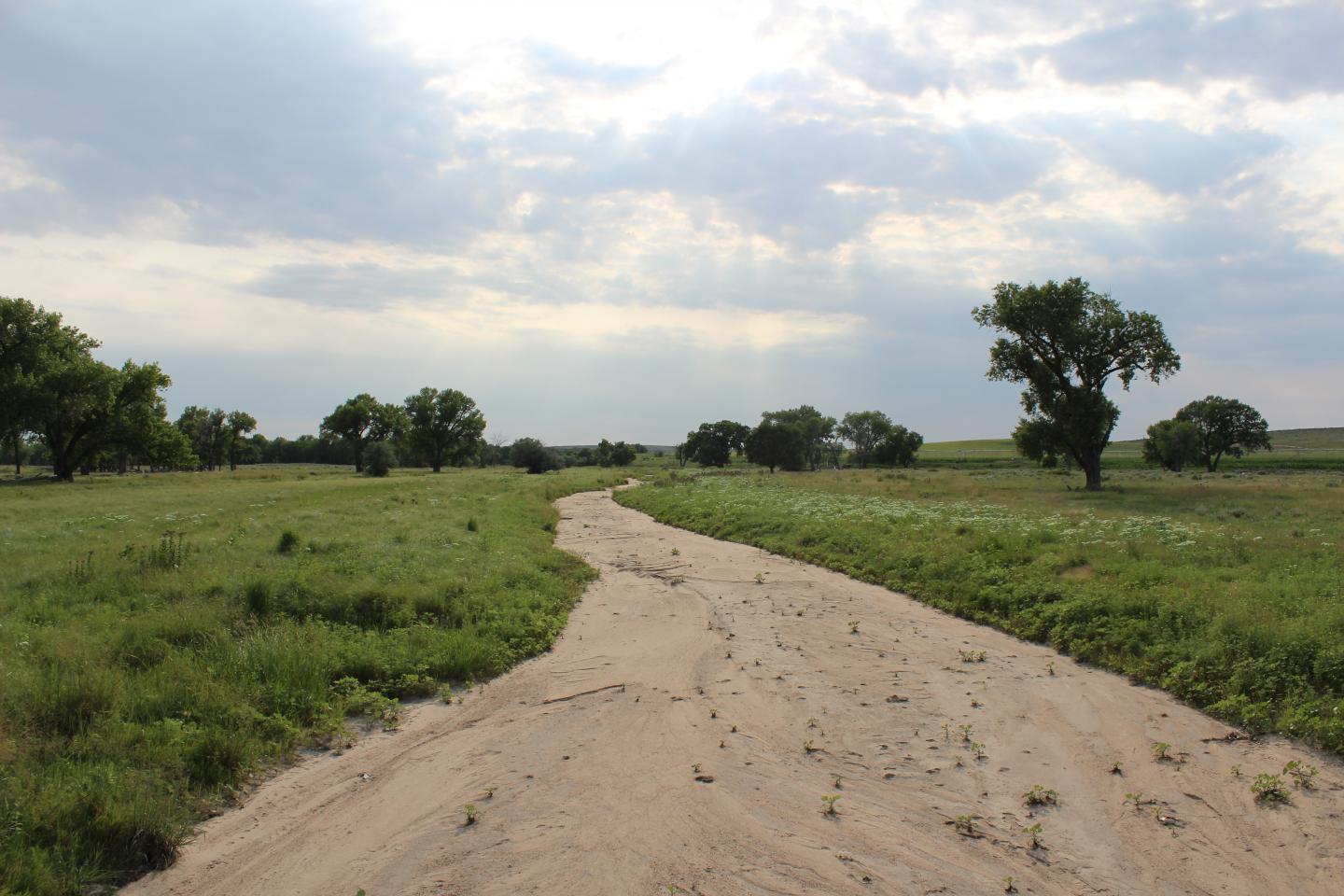
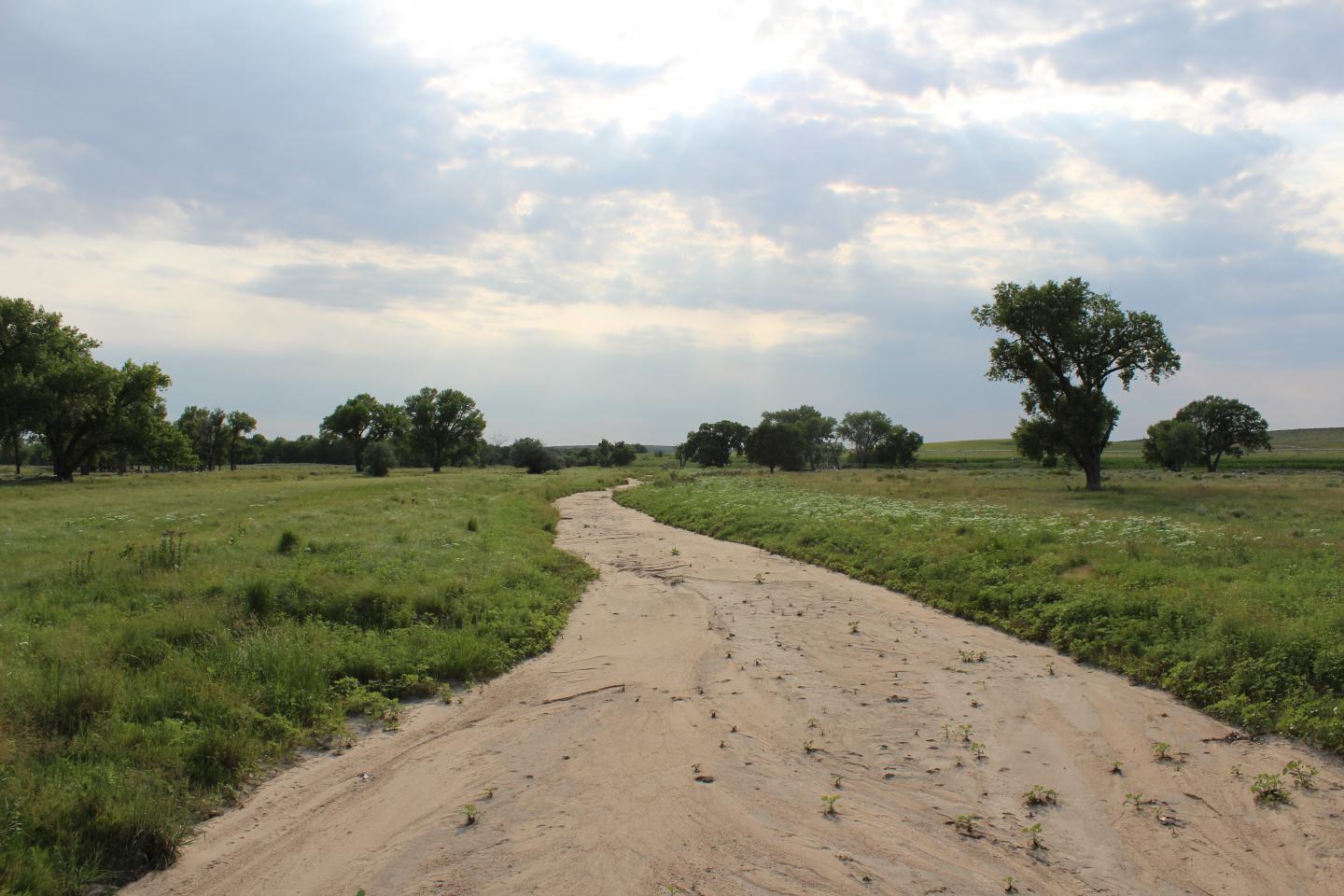
"For decades we have studied the ecology of streams that always have flowing water while largely ignoring those that do not, but only 40 percent of U.S. streams always flow. This large new project will be one of the first to study both the 40 percent of U.S. streams that always flow as well as the 60 percent of streams that dry or stop flowing. In doing so, we hope to change the way we think about streams," said Allen, professor in the Department of Biology, OU College of Arts and Sciences.
The study will include three main phases, and in the first phase, field research will take place at 100 sites across the United States in 10 different ecological regions. Researchers will include stream sites as part of the NSF-funded National Ecological Observatory Network that monitors water chemistry, invertebrates, fish, algae and nutrients in their research as well. The study sites will span coastal northern California to coastal Virginia in the north and the Georgia Gulf Coast to the Sonoran Desert in Arizona in the south.
OU researchers will conduct field research at sites in Oklahoma, Kansas and Colorado, and all researchers at all sites will follow NEON sampling protocols to produce NEON-compatible data. In each region some of the study sites will always flow and others will not to investigate the effects of stream drying on the different ecosystems in varied climates. The research project will focus on aquatic invertebrates (e.g. aquatic insect larvae) as a way to study how drying influences which species can survive, and how this effect may vary across the different climates of the southern half of the United States.
In phase two of the research, Yang Hong, professor in the School of Civil Engineering and Environmental Science, Gallogly College of Engineering, will produce hydrological models from watersheds and run them through different climate scenarios, including various climate oscillations and climate change. During phase three, Tom Neeson, professor in the Department of Geography and Environmental Sustainability, College of Atmospheric and Geographic Sciences, will build models using hydrological and field ecological data to project how these different climate scenarios could change stream drying patterns and, thus, stream ecosystems.
A smartphone application for mapping wet and dry reaches of streams and rivers will be developed for researchers and citizen scientists by Benjamin L. Ruddell and a team of NAU researchers. Michael T. Bogan, UA, is an expert taxonomist and will identify invertebrates collected during the research and conduct field research in Arizona. Albert Ruhi, UC Berkeley, will use his analytic expertise to determine spatial patterns of invertebrate communities and conduct field research in California.
Katie H. Costigan, UL at Lafayette, is a geomorphologist and hydrologist, and will lead the field hydrology component of the study and conduct field research in Mississippi and Georgia. Meryl Mims, VT, will use her genetic skill set to study how stream drying influences connectedness of aquatic insect populations as well as conduct field research in Virginia and Tennessee. For more information about this project, contact Professor Allen at [email protected].
###
Media Contact
Jana Smith
[email protected]
405-325-1322
@ouresearch
http://www.ou.edu
Original Source
https://bit.ly/2N73fTD