• HOME
  • NEWS
  • EXPLORE
    • CAREER
      • Companies
      • Jobs
    • EVENTS
    • iGEM
      • News
      • Team
    • PHOTOS
    • VIDEO
    • WIKI
  • BLOG
  • COMMUNITY
    • FACEBOOK
    • INSTAGRAM
    • TWITTER
Thursday, July 2, 2026
BIOENGINEER.ORG
No Result
View All Result
  • Login
  • HOME
  • NEWS
  • EXPLORE
    • CAREER
      • Companies
      • Jobs
        • Lecturer
        • PhD Studentship
        • Postdoc
        • Research Assistant
    • EVENTS
    • iGEM
      • News
      • Team
    • PHOTOS
    • VIDEO
    • WIKI
  • BLOG
  • COMMUNITY
    • FACEBOOK
    • INSTAGRAM
    • TWITTER
  • HOME
  • NEWS
  • EXPLORE
    • CAREER
      • Companies
      • Jobs
        • Lecturer
        • PhD Studentship
        • Postdoc
        • Research Assistant
    • EVENTS
    • iGEM
      • News
      • Team
    • PHOTOS
    • VIDEO
    • WIKI
  • BLOG
  • COMMUNITY
    • FACEBOOK
    • INSTAGRAM
    • TWITTER
No Result
View All Result
Bioengineer.org
No Result
View All Result
Home NEWS Science News Biology

Otago discovery paves way for precision medicine in future

Bioengineer by Bioengineer
March 21, 2019
in Biology
Reading Time: 3 mins read
0
IMAGE
Share on FacebookShare on TwitterShare on LinkedinShare on RedditShare on Telegram

IMAGE

Credit: University of Otago

University of Otago scientists have discovered a way to view the immune cell “landscape” of bowel cancer tumours, paving the way towards more individualised medicine and treatment for many other diseases in future.

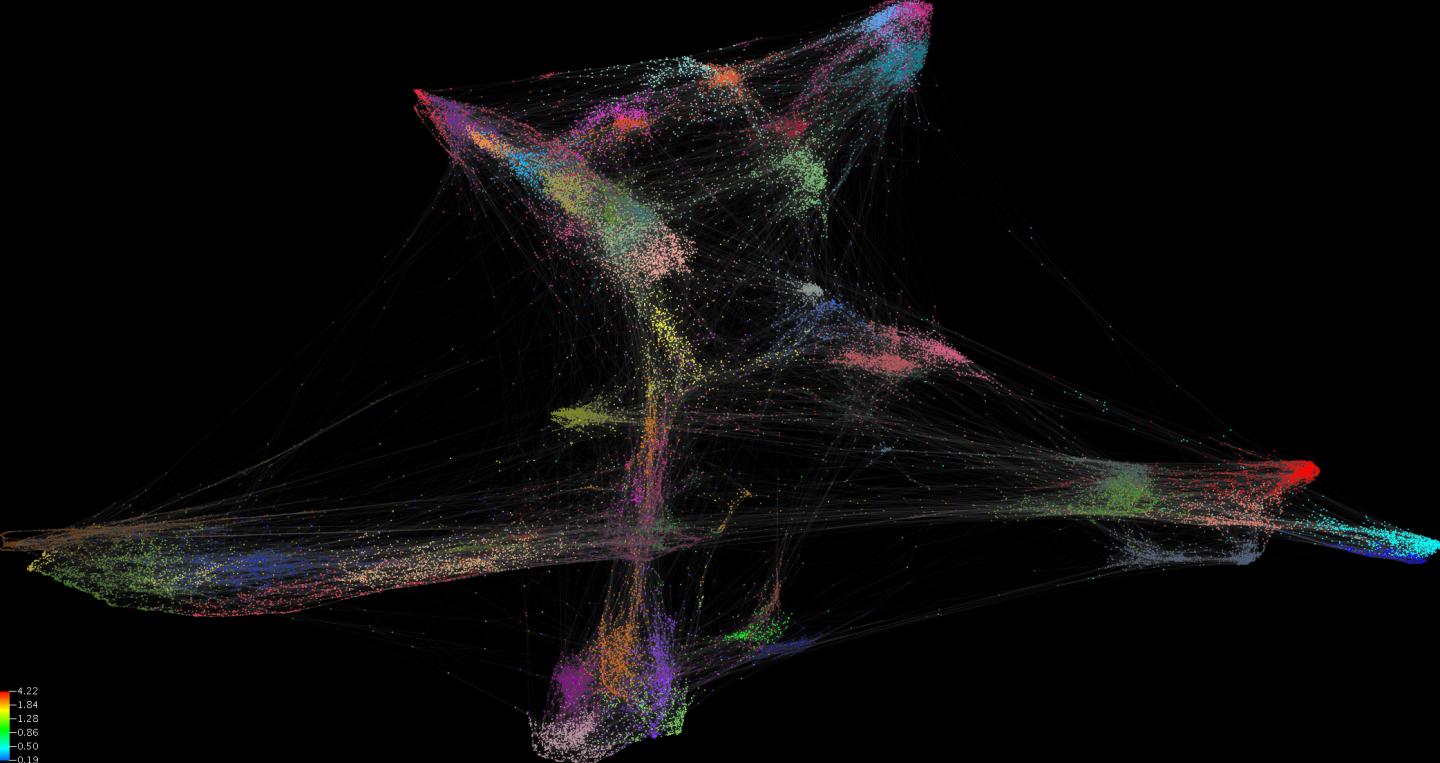
In a paper recently published and featuring on the cover of the Journal of Immunology, the scientists have shown the incredible diversity of immune cells that are inside a colorectal tumour. Immune cells are known to protect against cancer growth and this work provides new information on the types of cells present and how they might be beneficial for the patient.

Lead researcher Associate Professor Roslyn Kemp explains they are using a new technology called high dimensional mass cytometry to identify cells in the tumours of people with bowel cancer.

“It can be thought of as taking a higher resolution ‘photo’ of the inside of the tumour. The photo may reveal new types of cells that may or may not be targetable by drugs, or reveal different composition of immune cell populations in individuals that could be used to predict the course of the disease.”

Associate Professor Kemp says results of their study have shown there is huge diversity in the type of immune cells that infiltrate the tumour, which means that any one, or more likely a combination of many immune cells, could have an effect on patient outcomes.

The technique could be used to study a number of different diseases, she says.

“It demonstrates the use of a new technology to study the immune response in much more detail than other methods currently used, providing new types of information for patients,” Professor Kemp explains.

“It is a step towards personalised medicine, sometimes referred to as precision medicine, since each patient’s tumour could be looked at with this amount of detail.”

The next step is to carry out a similar study with a slightly different technique to further investigate where all the cells are in the tumour and how that might affect cell function and relationships between types of cells and patient data like stage of disease and patient survival.

###

The research is supported by the Cancer Research Trust, Lotteries Health Research, the University’s School of Biomedical Sciences with Associate Professor Kemp supported by the NZSO Roche Translational Cancer Research Fellowship.

Caption: This high-dimensional analysis reveals the T cell signature in people with bowel cancer. The new analysis groups cells together so all cells can be viewed at once. In the past cells would be considered individually to work out what they were doing.

For further information, contact

Associate Professor Roslyn Kemp

Department of Microbiology and Immunology

Mob +64 21 026 0599

Email [email protected]

Liane Topham-Kindley

Senior Communications Adviser

Tel +64 3 479 9065

Mob +64 21 279 9065

Email [email protected]

Media Contact
Liane Topham-Kindley
 @otago

64-212-799-065

Original Source

https://www.otago.ac.nz/news/news/otago708041.html

Related Journal Article

http://dx.doi.org/10.4049/jimmunol.1801368

Tags: BiologycancerCell BiologyImmunology/Allergies/AsthmaMedicine/Health
Share12Tweet8Share2ShareShareShare2

Related Posts

Evolution-Inspired Biosensors Revolutionize Lipid Tracking in Real Time — Biology

Evolution-Inspired Biosensors Revolutionize Lipid Tracking in Real Time

July 2, 2026
New Study Reveals How to Reduce Risk of Dangerous Wildlife Encounters This Summer — Biology

New Study Reveals How to Reduce Risk of Dangerous Wildlife Encounters This Summer

July 2, 2026

Hepatic IFRD1 Alleviates Metabolic Dysfunction-Linked Steatohepatitis Through the GLUD1/α-KG Pathway

July 2, 2026

Intricate Food Webs Support Ecosystem Health and Stability

July 2, 2026
Please login to join discussion

POPULAR NEWS

  • Detection of EDCs in Breast Milk and Infant Urine Up to Six Months Highlights Early Exposure Risks

    77 shares
    Share 31 Tweet 19
  • Saying Goodbye to PGY-6: Pediatric Fellowship Realities

    103 shares
    Share 41 Tweet 26
  • New Drug Candidate Developed at McMaster Shows Potential for Treating Brain Cancer

    58 shares
    Share 23 Tweet 15
  • KTU Researchers Explore Ultrasound’s Role in Enhancing Blood Flow Beyond Diagnostics

    53 shares
    Share 21 Tweet 13

About

BIOENGINEER.ORG

We bring you the latest biotechnology news from best research centers and universities around the world. Check our website.

Follow us

Recent News

Steatosis Drives Liver Metastasis Diversity in CRC

Unlocking the Mysteries of Alzheimer’s Disease

Pensoft Introduces New Peer-Reviewed Journal of Regeneration to Advance Restorative Biology Across Species

Subscribe to Blog via Email

Enter your email address to subscribe to this blog and receive notifications of new posts by email.

Join 83 other subscribers
  • Contact Us

Bioengineer.org © Copyright 2023 All Rights Reserved.

Welcome Back!

Login to your account below

Forgotten Password?

Retrieve your password

Please enter your username or email address to reset your password.

Log In
No Result
View All Result
  • Homepages
    • Home Page 1
    • Home Page 2
  • News
  • National
  • Business
  • Health
  • Lifestyle
  • Science

Bioengineer.org © Copyright 2023 All Rights Reserved.