• HOME
  • NEWS
  • EXPLORE
    • CAREER
      • Companies
      • Jobs
    • EVENTS
    • iGEM
      • News
      • Team
    • PHOTOS
    • VIDEO
    • WIKI
  • BLOG
  • COMMUNITY
    • FACEBOOK
    • INSTAGRAM
    • TWITTER
Tuesday, May 12, 2026
BIOENGINEER.ORG
No Result
View All Result
  • Login
  • HOME
  • NEWS
  • EXPLORE
    • CAREER
      • Companies
      • Jobs
        • Lecturer
        • PhD Studentship
        • Postdoc
        • Research Assistant
    • EVENTS
    • iGEM
      • News
      • Team
    • PHOTOS
    • VIDEO
    • WIKI
  • BLOG
  • COMMUNITY
    • FACEBOOK
    • INSTAGRAM
    • TWITTER
  • HOME
  • NEWS
  • EXPLORE
    • CAREER
      • Companies
      • Jobs
        • Lecturer
        • PhD Studentship
        • Postdoc
        • Research Assistant
    • EVENTS
    • iGEM
      • News
      • Team
    • PHOTOS
    • VIDEO
    • WIKI
  • BLOG
  • COMMUNITY
    • FACEBOOK
    • INSTAGRAM
    • TWITTER
No Result
View All Result
Bioengineer.org
No Result
View All Result
Home NEWS Science News Biology

Orphaned chimpanzees do not suffer from chronic stress

Bioengineer by Bioengineer
September 6, 2025
in Biology
Reading Time: 2 mins read
0
IMAGE
Share on FacebookShare on TwitterShare on LinkedinShare on RedditShare on Telegram

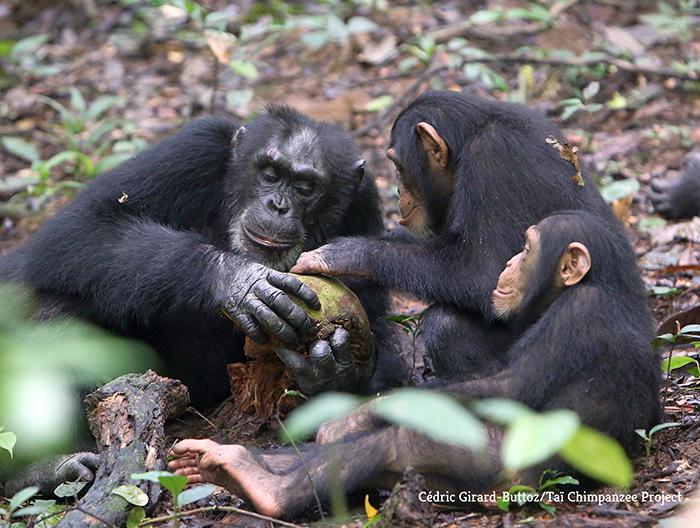
The loss of a loved one can be a defining moment, even in the animal world. In chimpanzees, for example, individuals whose mothers die when they are young are smaller than their counterparts, reproduce less and are also more likely to die at a young age. But why? To find out, an international research team* led by a CNRS researcher** studied the short- and long-term effects of maternal loss on the stress levels of orphaned chimpanzees over a 19-year period. By comparing the levels of a stress hormone marker, cortisol, between young and adult orphans and non-orphans, the scientists found that young orphans were highly stressed; however, those who had lost their mothers for more than two years or who were adults at the time of the study were no more stressed than other chimpanzees whose mothers were still alive. This means that they do not suffer from chronic stress, unlike in humans, where children whose mothers die when they are very young are subject to chronic stress throughout their lives. According to the research team, chimpanzees often adopt young orphans, which could be one of several explanations why the stress of maternal loss does not persist. Since stress alone cannot explain the differences between orphans and non-orphans, the researchers now want to look at chimpanzee mothers to see whether they contribute to these differences, for example whether mothers offer protection to offspring that is not available to orphans. The results of this work were published in eLife on 16 June 2021.

###

* – Also involved in this work were scientists from the Max Planck Institute for Evolutionary Anthropology (Germany), the Centre Suisse de recherches scientifiques Taï Chimpanzee Project (Ivory Coast Harvard University (USA), the University of Stirling (UK), Florida International University (USA), the World Wide Fund for Nature (WWF; Central African Republic), the Robert Koch Institute (Germany) and l’Université Félix Houphouët (Ivory Coast).

** – Working at l’Institut des sciences cognitives Marc Jeannerod (CNRS/Université Claude Bernard Lyon 1)

Media Contact
Francois Maginiot
[email protected]

Original Source

http://www.cnrs.fr/en/orphaned-chimpanzees-do-not-suffer-chronic-stress

Related Journal Article

http://dx.doi.org/10.7554/eLife.64134

Tags: Biologychimpanzee behaviorcortisol researchmaternal loss effectsprimate resiliencestress response
Share13Tweet8Share2ShareShareShare2

Related Posts

From Complexity to Clarity: Unraveling the “Topological Laws” Governing Cell Death — Biology

From Complexity to Clarity: Unraveling the “Topological Laws” Governing Cell Death

May 11, 2026
New Classification Framework Identifies Tumor-Associated Bacterial Effectors as Crucial Drivers of Tumor Biology and Immune Response — Biology

New Classification Framework Identifies Tumor-Associated Bacterial Effectors as Crucial Drivers of Tumor Biology and Immune Response

May 11, 2026

HIV-1 Strains Reveal Varied Paths to Antibody Escape

May 11, 2026

CRISPRi Screening Identifies Fungal-Specific Drug Targets

May 11, 2026
Please login to join discussion

POPULAR NEWS

  • Research Indicates Potential Connection Between Prenatal Medication Exposure and Elevated Autism Risk

    841 shares
    Share 336 Tweet 210
  • New Study Reveals Plants Can Detect the Sound of Rain

    728 shares
    Share 290 Tweet 182
  • Salmonella Haem Blocks Macrophages, Boosts Infection

    62 shares
    Share 25 Tweet 16
  • Breastmilk Balances E. coli and Beneficial Bacteria in Infant Gut Microbiomes

    57 shares
    Share 23 Tweet 14

About

We bring you the latest biotechnology news from best research centers and universities around the world. Check our website.

Follow us

Recent News

Humans and Zebra Finches Share Similar Speech Learning Techniques #ASA190

New Study Uncovers How Fungal Parasites Attack Strawberries and Raspberries

City of Hope Researchers to Present Groundbreaking Immunotherapy and Precision Medicine Advances Across Multiple Cancer Types at ASCO 2026

Subscribe to Blog via Email

Enter your email address to subscribe to this blog and receive notifications of new posts by email.

Join 82 other subscribers
  • Contact Us

Bioengineer.org © Copyright 2023 All Rights Reserved.

Welcome Back!

Login to your account below

Forgotten Password?

Retrieve your password

Please enter your username or email address to reset your password.

Log In
No Result
View All Result
  • Homepages
    • Home Page 1
    • Home Page 2
  • News
  • National
  • Business
  • Health
  • Lifestyle
  • Science

Bioengineer.org © Copyright 2023 All Rights Reserved.