Oral administration of the common ultraviolet filter octocrylene aggravated mucosal inflammation, barrier disruption, and tissue damage in a chemically induced mouse model of colitis, according to an experimental investigation combining in vivo testing with multiscale human transcriptomic modeling. Researchers evaluated the physiological and cellular consequences of controlled oral octocrylene exposure in male C57BL/6 mice subjected to acute intestinal injury caused by dextran sulfate sodium, while concurrently screening public human gene expression datasets to characterize potential molecular links between xenobiotic defense and ulcerative colitis. In the animal model, octocrylene administered alone at five milligrams per kilogram per day did not produce detectable clinical symptoms or histological damage. However, when co-administered alongside dextran sulfate sodium, the compound substantially intensified disease severity, marked by heightened disease activity scores, accelerated body-weight loss, deeper crypt damage, and marked increases in intestinal permeability, colonic myeloperoxidase activity, and inflammatory cytokine transcripts.
To contextualize how consumer-use chemical exposures might intersect with epithelial defense mechanisms, the study integrated chemoinformatic target nomination with bulk transcriptomic profiling from public human ulcerative colitis datasets. The investigators accessed normalized expression matrices from the Gene Expression Omnibus for datasets GSE107499 and GSE16879, adjusting for cohort-associated batch variation through empirical Bayes methods. This merged discovery dataset encompassed ninety-nine lesional ulcerative colitis specimens and fifty cohort-specific reference samples. Differential expression screening identified 2,797 differentially expressed genes meeting an adjusted false discovery rate below 0.05 and an absolute log2 fold change exceeding 0.585. In parallel, the researchers extracted octocrylene-associated target entries across three computational repositories: ChEMBL, the Similarity Ensemble Approach, and SwissTargetPrediction. Combining these nominations yielded 128 unique working identifiers, of which 118 mapped to the 17,573 genes evaluated in the transcriptomic universe.
The intersection between the nominated chemical targets and the human ulcerative colitis differentially expressed gene set identified twenty-five candidate genes for downstream modeling. A hypergeometric test comparing this observed intersection against an expected overlap of 18.78 genes yielded a p-value of 0.0780, indicating that candidate targets were not statistically significantly enriched above background expectation. Following entry harmonization that addressed nine accession discrepancies, the candidate set expanded to twenty-six genes with the inclusion of THRB, showing an expected overlap of 20.05 genes and a p-value of 0.0945. Functional annotation of the original twenty-five-gene set highlighted membrane and vesicular compartments, lipid and steroid metabolism, and drug disposition pathways, reinforcing the biological relevance of epithelial xenobiotic transport during intestinal inflammation.
The researchers applied supervised machine-learning algorithms across multiple cohorts to prioritize candidate genes according to their diagnostic discrimination between ulcerative colitis and reference tissues. The feature space of twenty-five candidates was evaluated across twelve modeling frameworks in the 149-sample training cohort and two independent assessment cohorts, GSE47908 and GSE87466. An elastic-net pipeline with an alpha parameter of 0.3 achieved the highest mean area under the receiver-operating characteristic curve of 0.9708 across all cohorts, recording values of 0.9907 in the training cohort, 0.9282 in GSE47908, and 0.9934 in GSE87466. To interpret feature importance, a separate random-forest model was trained on the eight genes retained through backward stepwise selection: ABCG2, KCNN3, APH1B, HSD11B2, CDC25B, PTAFR, LRRK2, and CTSH. Shapley additive explanations identified ATP-binding cassette subfamily G member 2, also known as breast cancer resistance protein or ABCG2, as the leading contributor, with a mean absolute SHAP value of 0.2283.
Individual predictor assessments in the primary training cohort demonstrated that ABCG2 expression robustly distinguished ulcerative colitis from cohort-specific reference tissues, yielding an area under the receiver-operating characteristic curve of 0.985 and a precision-recall area of 0.980. Immune cell deconvolution using CIBERSORT linked higher bulk ABCG2 transcript abundance to lower inferred fractions of pro-inflammatory M1 macrophages and relatively higher proportions of M2-like macrophages. Gene set enrichment analysis stratified by median candidate expression associated prioritized genes with inflammatory pathways, epithelial remodeling, complement cascades, interferon responses, and metabolic regulation. However, because feature selection and candidate nomination preceded cross-cohort evaluation and were not fully nested within resampling loops, the authors emphasized that these discrimination statistics represent exploratory screening metrics rather than fully independent diagnostic validations, and attribution cannot be transferred between the elastic-net and random-forest models.
Single-cell RNA sequencing from GSE214695, comprising six healthy control donors and six ulcerative colitis patients, resolved the cellular localization of prioritized genes within the intestinal mucosa. The analysis revealed that ABCG2 expression was concentrated predominantly within mucosal epithelial cells rather than immune or stromal compartments. Epithelial ABCG2 transcript abundance was lower in ulcerative colitis samples than in healthy controls, primarily reflecting a decrease in per-cell expression magnitude rather than a total loss of expressing cells. The epithelial expression contrast yielded a nominal p-value of 0.00434 and an adjusted p-value of 0.0564, while the proportion of ABCG2-positive epithelial cells showed a nominal p-value of 0.0143 and an adjusted p-value of 0.1424. Consequently, neither single-cell comparison satisfied the strict significance threshold of an adjusted false discovery rate below 0.05, establishing a descriptive trend rather than a definitive cellular depletion.
To investigate tissue-level architectural relationships, the authors analyzed spatial transcriptomics across seven ulcerative colitis tissue sections from dataset GSE189184, representing six distinct donor specimens. Individual capture spots were retained if they contained at least 200 transcript counts and 100 detected genes, and spatial smoothing was applied using six nearest neighbors. Within epithelial-enriched spots, smoothed ABCG2 expression exhibited weak but statistically consistent positive correlations with transcriptional signatures of epithelial injury and coagulation remodeling across all seven sections. The median Spearman rank correlation coefficient was 0.0837 for epithelial injury and 0.0543 for coagulation remodeling, yielding nominal p-values of 0.0156 and adjusted q-values of 0.0234 against zero. Conversely, ABCG2 showed no consistent spatial correlation with a composite inflammation signature, which had a median coefficient of 0.0112 and an adjusted q-value of 0.3750.
The authors urged caution when interpreting these spatial findings due to low transcript abundance and methodological sensitivity. Unsmoothed ABCG2 transcripts were detected in only 0.19 to 2.33 percent of all retained capture spots and 0.39 to 3.56 percent of epithelial-enriched spots per section. When partial rank correlations were calculated to adjust for library sequencing depth and the epithelial focus score, the median coefficients dropped to 0.0354 for epithelial injury and 0.0298 for coagulation remodeling, remaining positive in five of the seven sections. The adjusted composite inflammation correlation shifted to minus 0.0011. Because spatial autocorrelation was not formally parameterized through a constrained null model, and two sections derived from a single donor source, the observed coefficients reflect localized descriptive patterns within specific specimens rather than generalizable mechanistic coupling across the intestinal mucosa.
Further computational modeling explored epithelial states in healthy human tissue by stratifying 2,476 healthy epithelial cells into 151 ABCG2-positive and 2,325 ABCG2-negative cells. Hallmark gene set enrichment analysis showed that ABCG2-positive cells displayed significant positive enrichment for interferon-alpha response, complement activation, and coagulation signatures, alongside negative enrichment for proliferative programs including MYC targets, E2F targets, and G2M checkpoints. Additional positive scores for transforming growth factor-beta signaling, KRAS signaling, and epithelial-mesenchymal transition did not reach statistical significance after adjustment. In silico network disruption using scTenifoldNet simulated the virtual knockout of ABCG2 from an inferred healthy epithelial regulatory network. This perturbation significantly altered the expression of downstream genes such as PLCG2, FABP1, and PRDX6, yielding functional enrichment for vesicular and lysosomal gene ontology annotations at an adjusted false discovery rate below 0.05.
The experimental arms comprised a vehicle control receiving water and corn oil, an octocrylene-alone cohort, a colitis group receiving 2.5 percent dextran sulfate sodium in drinking water plus vehicle, and a co-exposure group receiving both dextran sulfate sodium and octocrylene. Octocrylene was dissolved in corn oil and administered daily by oral gavage at five milligrams per kilogram body weight, initiating three days prior to dextran sulfate sodium exposure and continuing throughout the seven-day induction period. Investigators conducting clinical scoring, histological evaluations, and molecular assays were blinded to group assignments throughout the intervention.
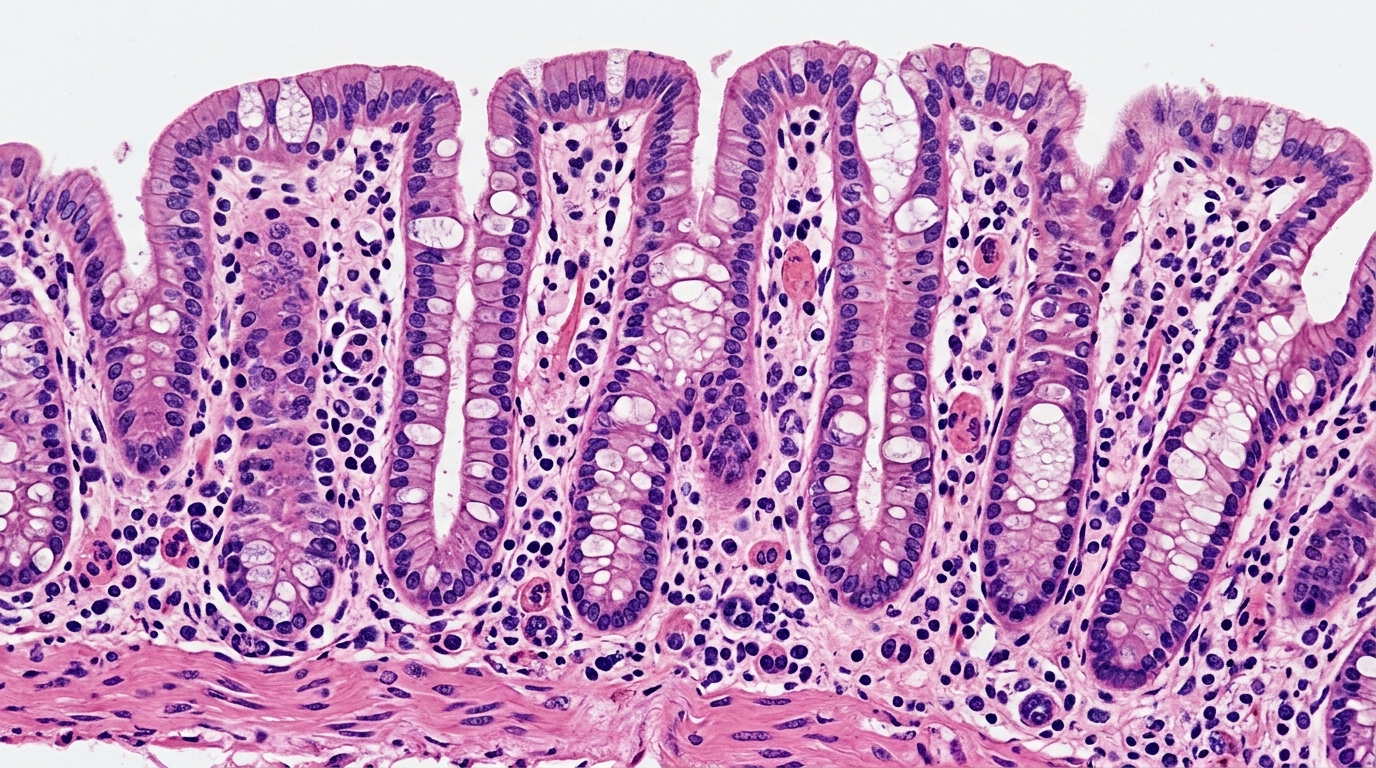
Mice receiving octocrylene alone showed no detectable divergence from vehicle-treated controls across body-weight curves, disease activity indices, colonic tissue architecture, or histopathological scores. In sharp contrast, mice in the co-exposure group experienced significantly more severe colitis than those receiving dextran sulfate sodium alone. Animals subjected to combined exposure exhibited pronounced body-weight reduction, elevated disease activity, extensive mucosal erosion, inflammatory infiltration, and marked loss of crypt architecture. Histopathological injury scores, evaluated using a modified ten-point Cooper grading system, were substantially higher in the co-exposure group. Furthermore, colonic myeloperoxidase activity, a standardized biochemical marker of neutrophil infiltration, rose significantly, while real-time quantitative PCR demonstrated heightened relative colonic mRNA expression of the inflammatory cytokines Tnf, Ifng, Il17a, and the regulatory cytokine Il10.
The exacerbated tissue injury was accompanied by severe breakdown of mucosal barrier integrity in the co-exposed animals. In vivo intestinal permeability assays utilizing oral administration of four-kilodalton fluorescein isothiocyanate-dextran demonstrated significantly higher serum fluorescence in co-exposed mice compared to animals receiving dextran sulfate sodium alone. Confocal immunofluorescence microscopy of distal colon sections revealed that background-corrected mean fluorescence intensity of the essential tight-junction proteins ZO-1 and occludin was significantly reduced within mucosal epithelial regions of interest following co-exposure. Concurrently, colonic Abcg2 mRNA abundance declined following dextran sulfate sodium administration and decreased further in mice receiving octocrylene co-exposure. Across all twenty-four mice spanning the four experimental groups, relative colonic Abcg2 transcript levels displayed a strong inverse correlation with blinded histological injury scores, recording a Spearman correlation coefficient of minus 0.895.
The researchers underscored critical scientific qualifications regarding the translational and mechanistic interpretations of their data. The strong inverse correlation between Abcg2 expression and histological injury was calculated across all treatment groups combined, meaning the statistic captures broad differences across experimental arms rather than establishing an intrinsic within-group relationship or direct mechanistic mediation. This distinction is critical because recent external genetic knockouts of Abcg2 have demonstrated paradoxical protection against experimental colitis in mice. Additionally, the experimental model evaluated acute, high-dose oral gavage in young adult male rodents during chemical colitis induction, which does not reproduce the systemic absorption dynamics, dosing schedules, or tissue distributions characteristic of routine human topical sunscreen application. The findings provide important proof-of-concept evidence that oral octocrylene can modify chemically induced mucosal injury under defined experimental regimens, while highlighting ABCG2 as a candidate target warranting controlled toxicological and barrier transport investigations.
Subject of Research: Evaluation of oral octocrylene exposure in experimental murine colitis combined with multiscale human transcriptomic candidate prioritization
Article Title: Oral octocrylene aggravates experimental colitis: multiscale transcriptomic analysis and in vivo evaluation
Article References: Dong, Y., Wang, J., Yang, T., & Li, P. (2026). Oral octocrylene aggravates experimental colitis: multiscale transcriptomic analysis and in vivo evaluation. Frontiers in Cell and Developmental Biology, 14, 2000824. https://doi.org/10.3389/fcell.2026.2000824
Image Credits: AI Generated
DOI: 10.3389/fcell.2026.2000824
Keywords: octocrylene, ulcerative colitis, dextran sulfate sodium, ABCG2, epithelial barrier, intestinal permeability, tight junctions, ZO-1, occludin, myeloperoxidase, single-cell RNA sequencing, spatial transcriptomics, chemoinformatics, machine learning, SHAP analysis, transmembrane transporters, inflammatory cytokines
News Source: Drew Townsend. (November 27, 2026). Oral Octocrylene Aggravates Experimental Colitis in Mice While Human Datasets Highlight ABCG2. Scienmag.