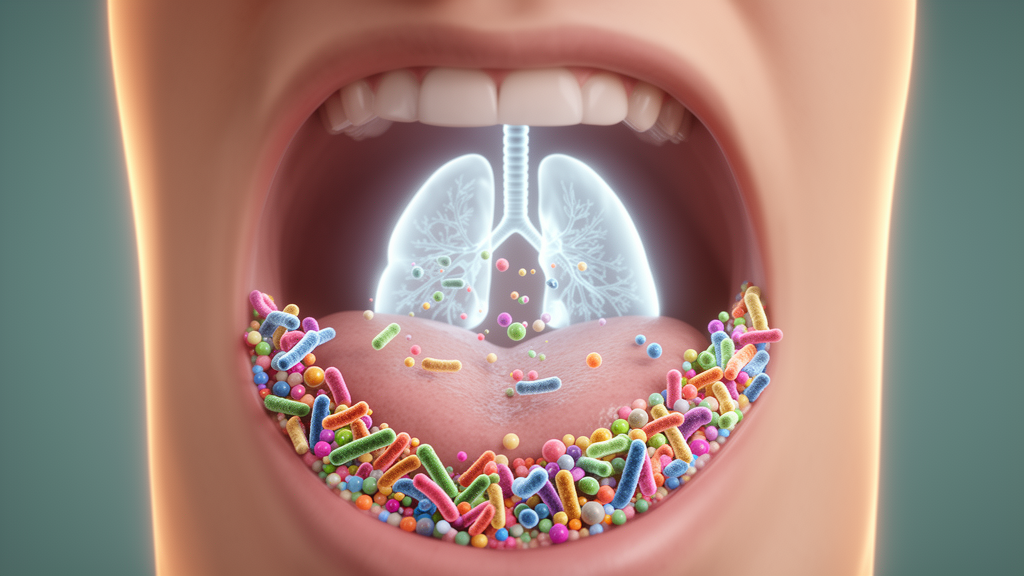
A new study published in Annals of Clinical Microbiology and Antimicrobials suggests that the community of microbes living in the mouth may be associated with which patients develop this complication after surgery.
The research team analyzed oral rinse samples from 203 OSCC patients treated at Chang Gung Memorial Hospital, using microbial sequencing combined with causal inference approaches to examine whether the oral microbiome differs between patients who developed aspiration pneumonia after surgery and those who did not. The investigators controlled for potential confounding factors, including gender, age, and clinical stage, in their assessments of microbial diversity, relative abundance, and predicted microbial functions.
Both alpha and beta diversity analyses revealed significant differences between the aspiration pneumonia and non-aspiration pneumonia groups, and these differences remained significant even after adjusting for confounders such as gender, age, and clinical stage. This indicates that the overall structure of the oral microbial community, rather than any single demographic or clinical factor alone, was associated with the outcome the researchers studied.
Differential abundance analysis, which examines whether particular groups of microbes are more or less common in one group compared with another, identified 16 genera with significant differences before adjustment and 17 genera after adjustment, out of 105 genera analyzed in total. Among the genera highlighted in the study were Parvimonas and Veillonella, which the authors report as differing between patients with and without aspiration pneumonia.
Beyond identifying which microbes were present, the researchers also used functional prediction to estimate what metabolic pathways the oral microbiome might carry out. Among 97 metabolic pathways examined, stratified analysis revealed significant differences in two of them: atrazine degradation and GPI-anchor biosynthesis. Both pathways were significantly higher in the non-aspiration pneumonia group, and this pattern held regardless of clinical stage.
The authors conclude that the composition and functional potential of the oral microbiome are significantly associated with the development of aspiration pneumonia in patients with OSCC. By integrating causal inference principles and stratified analyses, they identified specific genera, such as Parvimonas and Veillonella, and microbial pathways, such as atrazine degradation and GPI-anchor biosynthesis, that differ between patients with and without the complication.
According to the study’s conclusion, these findings suggest that certain oral microbes may be associated with susceptibility to respiratory complications, highlighting the potential for microbiome-informed strategies to reduce postoperative risks and improve patient outcomes. The researchers note that previous studies have linked the oral microbiome to pneumonia, but that its association with postoperative aspiration pneumonia specifically in patients with OSCC had remained poorly characterized, which motivated the present investigation.
It is important to interpret these results carefully. The study is an observational analysis of a single hospital cohort, and it reports associations between microbial features and the occurrence of aspiration pneumonia, not a demonstration that specific microbes cause the complication. The functional findings are based on predicted metabolic pathways rather than direct measurement of microbial activity, and the article notes that the published version is an early, peer-reviewed accepted version that may be subject to further edits before the final Version of Record. Nonetheless, the work adds to a growing body of research connecting the oral microbiome to respiratory health, and it points to specific microbial genera and pathways that could be examined in future studies of postoperative risk in head and neck cancer patients.
Subject of Research: The association between the oral microbiome and post-surgery aspiration pneumonia in oral squamous cell carcinoma patients
Article Title: Relationship between the oral microbiome and post-surgery aspiration pneumonia in oral squamous cell carcinoma patients
Article References: Hung, S. Y., Chang, K.-P., Chu, C.-L., Chen, Y.-L., Lin, S.-H., Lee, C.-Y., Yang, C. Y., & Fu, S.-C. (2026). Relationship between the oral microbiome and post-surgery aspiration pneumonia in oral squamous cell carcinoma patients. Annals of Clinical Microbiology and Antimicrobials. https://doi.org/10.1186/s12941-026-00883-2
Image Credits: AI Generated
DOI: 10.1186/s12941-026-00883-2
Keywords: oral microbiome, aspiration pneumonia, oral squamous cell carcinoma, postoperative complications, microbial sequencing, Parvimonas, Veillonella, GPI-anchor biosynthesis, atrazine degradation, causal inference, Chang Gung Memorial Hospital, differential abundance
News Source: Ophelia Keating. (October 29, 2026). Oral microbiome linked to post-surgery aspiration pneumonia in oral cancer patients. Scienmag.