• HOME
  • NEWS
  • EXPLORE
    • CAREER
      • Companies
      • Jobs
    • EVENTS
    • iGEM
      • News
      • Team
    • PHOTOS
    • VIDEO
    • WIKI
  • BLOG
  • COMMUNITY
    • FACEBOOK
    • INSTAGRAM
    • TWITTER
Monday, August 31, 2026
BIOENGINEER.ORG
No Result
View All Result
  • Login
  • HOME
  • NEWS
  • EXPLORE
    • CAREER
      • Companies
      • Jobs
        • Lecturer
        • PhD Studentship
        • Postdoc
        • Research Assistant
    • EVENTS
    • iGEM
      • News
      • Team
    • PHOTOS
    • VIDEO
    • WIKI
  • BLOG
  • COMMUNITY
    • FACEBOOK
    • INSTAGRAM
    • TWITTER
  • HOME
  • NEWS
  • EXPLORE
    • CAREER
      • Companies
      • Jobs
        • Lecturer
        • PhD Studentship
        • Postdoc
        • Research Assistant
    • EVENTS
    • iGEM
      • News
      • Team
    • PHOTOS
    • VIDEO
    • WIKI
  • BLOG
  • COMMUNITY
    • FACEBOOK
    • INSTAGRAM
    • TWITTER
No Result
View All Result
Bioengineer.org
No Result
View All Result
Home NEWS Science News Chemistry

Open sesame: Micro RNAs regulate plant pores

Bioengineer by Bioengineer
March 19, 2020
in Chemistry
Reading Time: 2 mins read
0
IMAGE
Share on FacebookShare on TwitterShare on LinkedinShare on RedditShare on Telegram

Environmental changes trigger tiny RNA segments to modify plant pores involved in photosynthesis.
IMAGE

Credit: DGIST


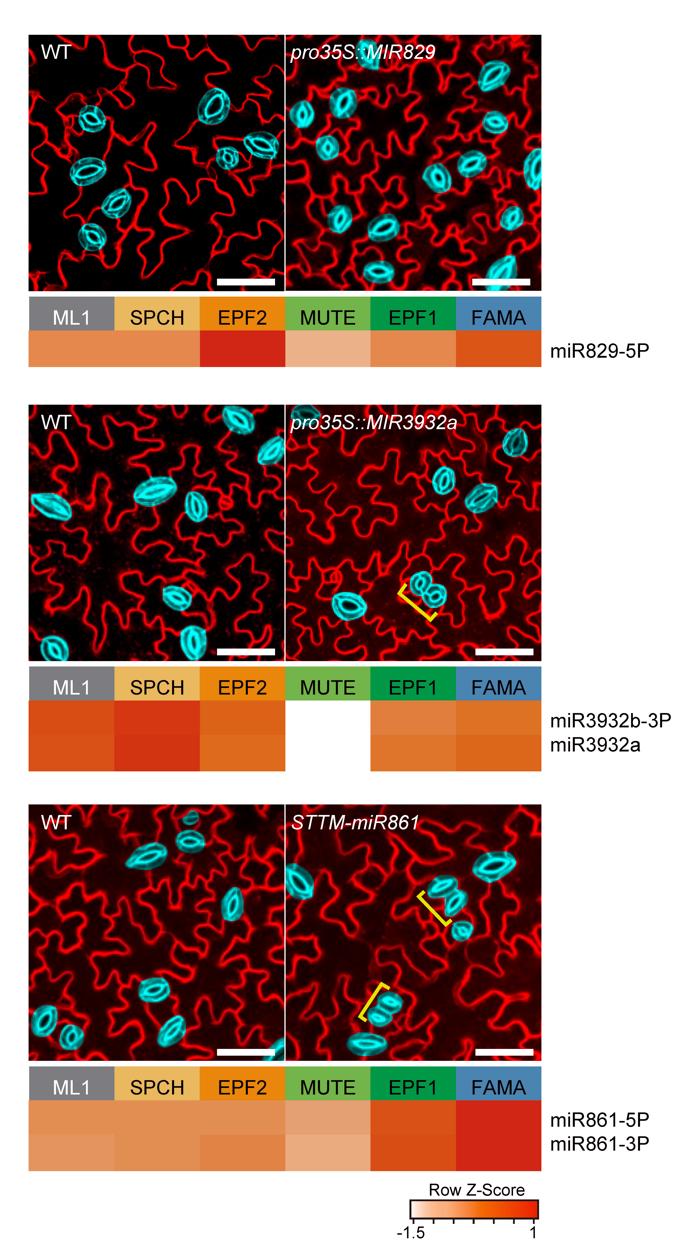
Environmental cues prompt small RNA segments to regulate the development and distribution of tiny pores involved in photosynthesis in plants. The finding by DGIST researchers in Korea was published in the Proceedings of the National Academy of Sciences (PNAS) and could further efforts to improve agricultural crop productivity.

Plant pores, called stomata, are tiny openings mainly found on the surfaces of leaves. They are bordered by two ‘guard cells’, and are involved in gas exchange and water loss between plants and the atmosphere.

Scientists already have a good idea about many molecular signals involved in turning on and off genes responsible for stem cells becoming guard cells. But, in addition to normal hereditary processes, environmental cues can also affect how stomata develop and are distributed. For example, pathogen infections, high carbon dioxide levels and high temperatures lead to reduced pore density.

Molecular cell biologist June Kwak of the Daegu Gyeongbuk Institute of Science and Technology (DGIST) and colleagues investigated if RNA segments called micro RNAs (miRNAs) were involved in stomatal formation and distribution triggered by surrounding conditions. miRNAs are gene regulators that give multi-cellular organisms a degree of flexibility to respond and adapt to environmental changes.

Kwak and his team developed an approach that allowed them to ‘see’ which miRNAs turned on throughout the transition from stem cell to guard cell. They found that slightly more than half of all known miRNAs in a plant called Arabidopsis turned on during the various stages of guard cell development. Inhibiting or increasing the expression of the miRNAs altered guard cell formation and distribution, indicating that miRNAs play a crucial role in the pore development.

Importantly, they singled out a miRNA, called miR399, for its involvement in controlling the pattern of stomatal pores. miR399 is already known for its involvement in regulating phosphate transporter proteins inside plant cells, suggesting a link between stomatal development and phosphate homeostasis in plants.

“This study reveals that miRNAs constitute a crucial component of stomatal development and control,” says Kwak. “Further research will help identify previously unknown cellular processes controlling stomatal development. We expect our findings will help provide a strategy for improving crop productivity by adjusting stomatal pore density, thereby effectively controlling photosynthesis in response to environmental changes.”

###

Media Contact
Kwanghoon Choi
[email protected]
82-537-851-133

Original Source

https://dgist.ac.kr/en/html/sub06/060202.html?mode=V&no=91d17e07f74e58159db244daeb2441c7&GotoPage=1

Related Journal Article

http://dx.doi.org/10.1073/pnas.1919722117

Tags: BiochemistryBiologyBiotechnologyCell Biology
Share12Tweet8Share2ShareShareShare2

Related Posts

β-Sitosterol from Ipomoea carnea Jacq. As a promising anti-inflammatory agent: Evidence from in silico modeling and in vitro validation

β-Sitosterol from Ipomoea carnea Jacq. As a promising anti-inflammatory agent: Evidence from in silico modeling and in vitro validation

August 31, 2026
Graded membranes point to a sustainable route for refining complex petroleum

Graded membranes point to a sustainable route for refining complex petroleum

August 31, 2026

Round-robin tests quantify catalyst activity and deactivation in CO2 hydrogenation modelling

August 30, 2026

Researchers reveal guiding principles for electrochemical synthesis of multimetallic nanocrystals

August 30, 2026
Please login to join discussion

POPULAR NEWS

  • β-Sitosterol from Ipomoea carnea Jacq. As a promising anti-inflammatory agent: Evidence from in silico modeling and in vitro validation

    29 shares
    Share 12 Tweet 7
  • Design, fabrication and characterization of a wearable Fiber Bragg grating sensor for cardiorespiratory monitoring using finger plethysmography

    29 shares
    Share 12 Tweet 7
  • KAIST opens the era of industrial-scale microbial foods, proposing growth strategies for the next-generation protein market

    29 shares
    Share 12 Tweet 7
  • Virologist awarded $2 million NIH grant to investigate how virus-infected cells live and die

    29 shares
    Share 12 Tweet 7

About

We bring you the latest biotechnology news from best research centers and universities around the world. Check our website.

Follow us

Recent News

β-Sitosterol from Ipomoea carnea Jacq. As a promising anti-inflammatory agent: Evidence from in silico modeling and in vitro validation

Design, fabrication and characterization of a wearable Fiber Bragg grating sensor for cardiorespiratory monitoring using finger plethysmography

KAIST opens the era of industrial-scale microbial foods, proposing growth strategies for the next-generation protein market

Subscribe to Blog via Email

Enter your email address to subscribe to this blog and receive notifications of new posts by email.

Join 85 other subscribers
  • Contact Us

Bioengineer.org © Copyright 2023 All Rights Reserved.

Welcome Back!

Login to your account below

Forgotten Password?

Retrieve your password

Please enter your username or email address to reset your password.

Log In
No Result
View All Result
  • Homepages
    • Home Page 1
    • Home Page 2
  • News
  • National
  • Business
  • Health
  • Lifestyle
  • Science

Bioengineer.org © Copyright 2023 All Rights Reserved.