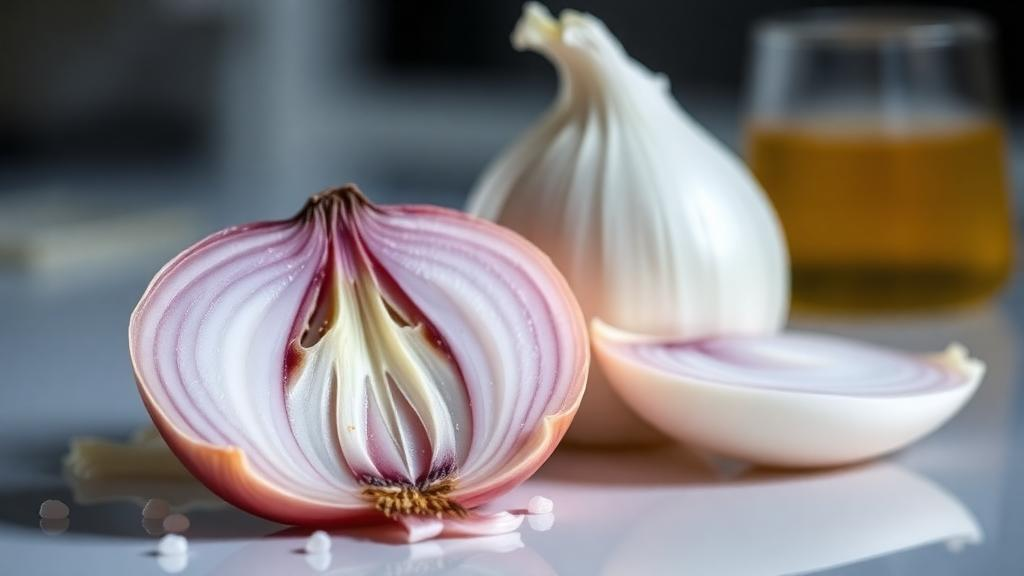
A team of researchers in Egypt has taken a close biochemical look at one of the most common intestinal parasites in the world, Blastocystis, and found that three very different agents—the standard antiparasitic drug metronidazole, the widely used diabetes medication metformin, and a simple extract of onion—can all disrupt the parasite’s growth in laboratory cultures. What makes the study notable is not just that all three treatments suppressed the organism, but that the researchers traced the effects to specific molecular targets: the parasite’s central energy-producing enzyme, glyceraldehyde-3-phosphate dehydrogenase, or GAPDH, and the levels of nitric oxide, a reactive signaling molecule that pervades the gut environment. The work, published in BMC Complementary Medicine and Therapies, offers a template for thinking about antiparasitic therapy in metabolic terms rather than simply as a kill-or-survive contest.
Blastocystis is an anaerobic single-celled protozoan that colonizes the intestines of an enormous share of the global population, and it has been increasingly linked to gastrointestinal disorders, including irritable bowel syndrome and other functional complaints. Because the organism thrives without oxygen, its survival depends heavily on glycolysis, the ancient metabolic pathway that breaks down glucose without the need for mitochondrial respiration. GAPDH sits at a critical junction in that pathway, catalyzing the conversion of glyceraldehyde-3-phosphate into 1,3-bisphosphoglycerate, a step that conserves energy in a form the cell can spend. In an anaerobic parasite, interfering with this enzyme strikes at the heart of its energy economy. At the same time, Blastocystis lives in a gut microenvironment saturated with nitric oxide, produced both by host immune defenses and by neighboring bacteria, and the interplay between the parasite’s metabolism and this nitrosative pressure has remained poorly understood.
The motivation for the study is a practical one: metronidazole, the drug most commonly deployed against Blastocystis and other anaerobic pathogens, is losing ground. Resistance to the nitroimidazole class has been documented with growing frequency, and clinicians have few well-validated alternatives. That therapeutic bottleneck has pushed researchers toward two strategies reflected in this experiment—repurposing existing drugs such as metformin, whose antiparasitic potential has attracted attention in recent years, and screening plant-derived compounds, in this case an extract of Allium cepa, the common onion, whose sulfur-containing constituents have long been suspected of antimicrobial activity. The Egyptian team, led by Gehad A. Basuony and Magda S. A. Abdeltawab of the Department of Medical Parasitology at Cairo University’s Faculty of Medicine, together with colleagues from the Egyptian Drug Authority, Umm Al Qura University in Saudi Arabia, and Cairo University’s plant physiology department, set out to test all three agents side by side under identical conditions.
The experimental design was straightforward but rigorous. The researchers obtained twenty-one stool samples that had tested positive for Blastocystis and cultured the parasites in Jones’ medium under xenic conditions, meaning the cultures retained the accompanying bacteria that normally support the parasite’s growth in the gut. That choice matters: many laboratory studies use axenic cultures stripped of other microbes, which can mask the ecological interactions that determine whether a drug works in a real biological setting. Each culture was then treated with graded concentrations of metronidazole, metformin, or onion extract. Parasite numbers were assessed by direct microscopic counting, while the biochemical readouts—GAPDH activity and nitric oxide levels—were quantified using gas chromatography–mass spectrometry, a sensitive analytical technique that allowed the team to measure metabolic changes within the complex culture medium rather than in isolated enzyme preparations.
The results were unambiguous at the population level. All three agents significantly reduced Blastocystis counts compared with untreated controls, with metronidazole demonstrating the strongest antiparasitic effect overall. More intriguing were the metabolic findings. Nitric oxide levels and GAPDH activity both dropped significantly across every treatment group, with the reductions in each case reaching a high level of statistical significance. The two readouts, however, did not respond identically to the different drugs. Metformin, at a concentration of 1000 micrograms per milliliter, proved the most powerful inhibitor of GAPDH activity, suggesting that the diabetes drug interferes directly or indirectly with the parasite’s glycolytic machinery. Metronidazole, at 500 micrograms per milliliter, produced the lowest nitric oxide levels in the cultures, indicating a distinct effect on the nitrosative chemistry of the microbial milieu.
The correlation analysis added a layer of biochemical nuance that the authors consider central to the study’s significance. In cultures treated with metronidazole, nitric oxide and GAPDH activity showed a significant negative association—as one fell, the other rose—while in metformin-treated cultures the two variables moved together in a positive correlation. These divergent patterns suggest that the two drugs perturb the parasite’s biology through different mechanisms. Metronidazole, which requires chemical reduction inside anaerobic organisms to become active, appears to reshape the relationship between nitrosative stress and glycolytic output, whereas metformin’s effect seems more tightly coupled to the energy pathway itself. Onion extract, meanwhile, achieved significant suppression of both parasite counts and the metabolic markers, lending quantitative support to the idea that plant-derived compounds can act on the same biochemical axes as conventional pharmaceuticals.
Placing these findings in context requires appreciating how unusual the gut environment is as a therapeutic battleground. Blastocystis does not live in isolation; it coexists with a dense bacterial community, and the nitric oxide measured in the cultures comes from that entire ecosystem, not solely from the parasite. A drug that lowers nitric oxide levels, as metronidazole did most dramatically, may be altering the chemistry of the whole microbial milieu, potentially with consequences for both the parasite and its bacterial partners. Conversely, an agent that cripples GAPDH, as metformin did most strongly, attacks a metabolic vulnerability that is shared, in some form, by many anaerobic organisms. The authors argue that targeting GAPDH and nitric oxide–related mechanisms represents a promising therapeutic direction precisely because these pathways sit at the intersection of parasite metabolism and host–microbiota interaction.
The repurposing angle deserves particular emphasis. Metformin is among the most prescribed medications on earth, with a decades-long safety record in millions of patients with type 2 diabetes, and its anti-inflammatory and metabolic effects have been studied in contexts far removed from blood sugar control. If its capacity to inhibit GAPDH-dependent glycolysis in anaerobic parasites can be translated into a clinically useful antiparasitic regimen, the path from bench to bedside could be considerably shorter than for a novel compound. The onion extract result, for its part, speaks to a growing interest in food-derived antimicrobials. Allium species are rich in organosulfur compounds and flavonoids, and while the present study did not isolate a single active constituent, the demonstration that a crude extract can measurably suppress both parasite proliferation and specific metabolic markers provides a quantitative foundation for further fractionation and characterization work.
Important caveats temper the enthusiasm. The experiments were conducted in vitro, in culture tubes, at concentrations—up to 1000 micrograms per milliliter—that may or may not be achievable in the human intestine through oral dosing. Xenic cultures, while more realistic than axenic ones, still cannot reproduce the full complexity of a living gut, with its immune system, mucus layer, variable oxygen gradients, and diverse microbiota. The study also measured short-term effects on parasite counts and biochemical markers rather than long-term eradication or clinical outcomes. The authors are appropriately careful in their conclusions, framing the work as evidence that these agents exhibit significant anti-Blastocystis activity accompanied by modulation of key metabolic and nitrosative pathways, rather than as proof of therapeutic efficacy in patients.
Even with those limitations, the study contributes something the field has lacked: a side-by-side biochemical comparison of a standard drug, a repurposed medication, and a plant extract, all measured against the same molecular yardsticks in the same culture system. It suggests that the fight against drug-resistant Blastocystis may not require entirely new chemical entities, but rather a smarter exploitation of the metabolic seams that anaerobic parasites cannot easily patch. As metronidazole resistance continues to spread, and as interest in microbiome-aware therapeutics accelerates, the humble GAPDH enzyme and the nitric oxide swirling through the gut may prove to be the targets on which the next generation of antiparasitic strategies is built. The Cairo team’s work, conducted with anonymous leftover diagnostic specimens under institutional ethical approval, shows how a relatively simple culture experiment, paired with modern analytical chemistry, can illuminate those seams with unusual clarity.
Subject of Research: In vitro effects of metronidazole, metformin, and onion extract on GAPDH activity and nitric oxide production in Blastocystis cultures
Article Title: Evaluating the effects of metronidazole, metformin, and onion extract on GAPDH activity and nitric oxide production in Blastocystis sp. cultures: a biochemical and therapeutic approach
Article References: Basuony, G. A., Hamed, A. M. R., Mahfoz, A. M., Mahmoud, A. W. M., Ramadan, H., & Abdeltawab, M. S. A. (2026). Evaluating the effects of metronidazole, metformin, and onion extract on GAPDH activity and nitric oxide production in Blastocystis sp. cultures: a biochemical and therapeutic approach. BMC Complementary Medicine and Therapies, 26(1), Article 295. https://doi.org/10.1186/s12906-026-05605-x
Image Credits: AI Generated
DOI: 10.1186/s12906-026-05605-x
Keywords: Blastocystis, metronidazole, metformin, onion extract, GAPDH, nitric oxide, glycolysis, drug resistance, intestinal parasite, in vitro culture, GC-MS, gut microbiota
News Source: Ophelia Keating. (October 12, 2026). Onion Extract and Diabetes Drug Show Promise Against Common Gut Parasite in Lab Study. Scienmag.