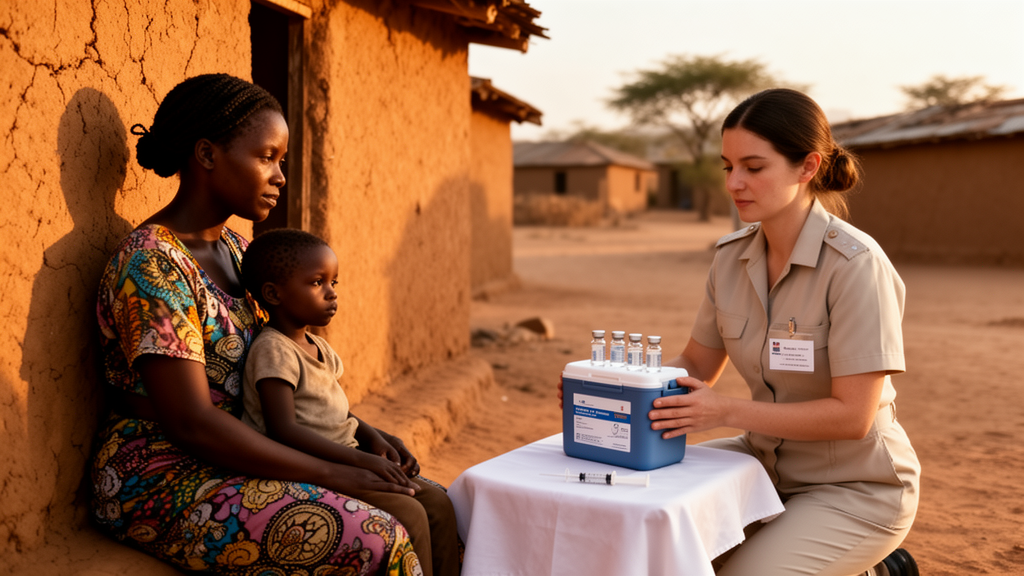
Pooling data from studies across conflict-affected African settings, the analysis found that roughly one in three children aged 12 to 59 months had never received a single dose of routine vaccine, a condition known as zero-dose status.
The review, led by Hailay Gebretnsae and colleagues, set out to estimate the pooled prevalence of zero-dose vaccination among children in conflict-affected African settings, a figure that had not previously been established despite individual country studies. The team searched six major databases, including PubMed, the Cochrane Library, Scopus, Science Direct, African Journals Online and Google Scholar, using Medical Subject Heading terms alongside relevant keywords.
From 1,087 studies initially identified, the researchers included 12 in the final analysis, covering a total of 30,423 children. Sample sizes within the included studies ranged from 355 to 9,651 children. Two reviewers independently carried out data screening and extraction using Covidence software, and study quality was assessed with the Joanna Briggs Institute critical appraisal checklist.
The reported prevalence of zero-dose vaccination varied dramatically across the included studies, from a low of 10.7 percent in Ethiopia to a high of 60.2 percent in Somalia. In the country-level subgroup analysis, Nigeria recorded the lowest pooled prevalence at 22.0 percent, with a 95 percent confidence interval of 18.0 to 26.9 percent, while Somalia had the highest at 58.0 percent, with a 95 percent confidence interval of 56.0 to 60.0 percent.
Across all included studies, the overall pooled prevalence of zero-dose vaccination in conflict-affected African settings was 36.0 percent, with a 95 percent confidence interval of 27.0 to 45.0 percent. The analysis used a random-effects model, with results presented in forest plots. The researchers assessed heterogeneity with the I² statistic and evaluated publication bias using funnel plots along with Egger’s and Begg’s tests.
The authors conclude that one in three children in conflict-affected African settings are zero-dose children, a gap they describe as striking and as highlighting an urgent imperative for targeted, context-specific interventions to strengthen routine vaccination services. They call on policymakers and partners to prioritize rebuilding immunization infrastructure and to ensure the availability and accessibility of vaccination services through mobilizing and allocating resources in conflict-affected settings.
The review also emphasizes identifying and reaching zero-dose children through catch-up vaccination campaigns, with the stated aim of ensuring that no child is left behind unvaccinated in conflict settings. Because the analysis is a systematic review of observational prevalence studies, the pooled estimate reflects the populations and settings captured by the 12 included studies rather than a direct measurement across all conflict-affected areas, and the wide confidence interval reflects substantial heterogeneity among the source studies.
The article was published open access on 21 October 2026 and is marked as an early-release version subject to further edits before the final Version of Record.
Subject of Research: Zero-dose vaccination prevalence among children in conflict-affected African settings
Article Title: Prevalence of zero-dose vaccination among children aged 12–59 months in conflict-affected settings in Africa: a systematic review and meta-analysis
Article References: Gebretnsae, H., Berhe, G., Woldemichael, A., Woldearegay, H. G., & Alemayehu, M. (2026). Prevalence of zero-dose vaccination among children aged 12–59 months in conflict-affected settings in Africa: a systematic review and meta-analysis. Conflict and Health. https://doi.org/10.1186/s13031-026-00854-6
Image Credits: AI Generated
DOI: 10.1186/s13031-026-00854-6
Keywords: zero-dose children, vaccination, conflict-affected settings, Africa, systematic review, meta-analysis, immunization coverage, public health, child health, Conflict and Health, Nigeria, Somalia
News Source: Kristina Jarvis. (October 28, 2026). One in Three Children in Conflict-Hit Africa Miss Every Vaccine, Review Finds. Scienmag.