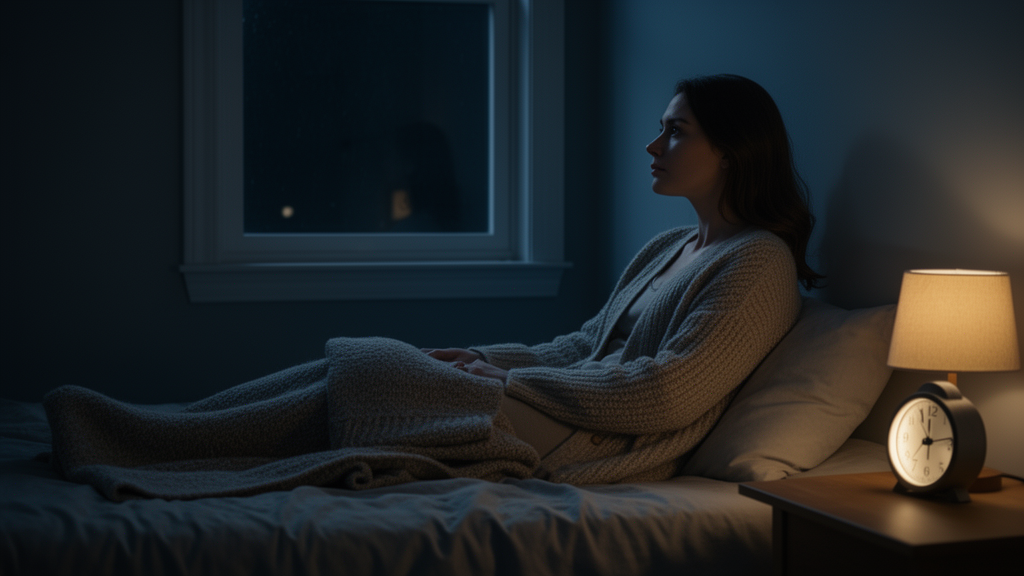
For most people, a cancer diagnosis brings sleepless nights in the weeks and months that follow, and then, gradually, rest returns. But a new long-term study of young breast cancer survivors suggests that for a substantial minority, the sleeplessness never lifts. Researchers tracking more than 800 women diagnosed with breast cancer at age 45 or younger found that roughly one in four followed a persistently high trajectory of insomnia symptoms across three full years after diagnosis, while the majority improved to varying degrees. The findings, published in Frontiers in Oncology, offer one of the most detailed pictures yet of how sleep disruption unfolds over time in a population that has often been overlooked in survivorship research.
The study drew on the Menstrual Cycle Maintenance and Quality of Life After Breast Cancer Study, a multi-center longitudinal observational cohort that recruited women from five U.S. sites between January 1998 and November 2005. To be eligible, participants had to be between 18 and 45 years old, diagnosed with stage I to III invasive breast cancer within the previous eight months, and still having regular menstrual cycles at the time of diagnosis, a requirement tied to the parent study’s focus on fertility and menopause. Women with any prior or concurrent cancer, apart from certain skin cancers and stage 0 cervical cancer, were excluded. In total, 836 women enrolled, with a mean age of 38 years at baseline.
Insomnia symptoms were measured every six months from baseline through three years of follow-up using the Women’s Health Initiative Insomnia Rating Scale, or WHIIRS, a validated five-question self-report instrument that asks about sleep during the previous four weeks. Responses are summed into a total score from 0 to 20, with higher scores indicating greater severity. A score of 9 or above was used to flag participants with a high likelihood of clinically significant insomnia. At each assessment, the researchers coded this threshold as a binary outcome and then applied group-based trajectory modeling, a statistical technique that identifies hidden subgroups of people who share similar patterns of an outcome over time, rather than simply averaging everyone together.
The modeling, conducted in STATA with the ‘traj’ plugin and selected using the Bayesian information criterion along with posterior probabilities of assignment and the interpretability of the resulting curves, revealed three distinct trajectories. A low-probability group contained 277 women, or 33.1 percent of the cohort, with an average probability of insomnia of just 5 percent. A moderate-probability group of 354 women, 42.4 percent, averaged a 43 percent probability of insomnia at any given assessment. The high-probability group of 205 women, 24.5 percent, averaged a striking 88 percent probability of insomnia, and unlike the other two groups, showed essentially no improvement over the three-year window. Average posterior probabilities of assignment ranged from 75 to 82 percent, indicating reasonably confident classification.
For the low and moderate groups, insomnia symptoms were highest at baseline, near the time of diagnosis and treatment, and then declined and stabilized at lower levels. The high-probability group, by contrast, remained flat and persistently elevated, a pattern the authors describe as a chronic problem rather than a transient reaction to diagnosis. This distinction matters clinically: average trends across a whole cohort can mask a subgroup of patients whose symptoms never resolve, and those are precisely the patients who might benefit from closer monitoring or earlier intervention. Roughly two-thirds of the young survivors in this study fell into the moderate or high trajectories, underscoring how substantial the burden of disturbed sleep is in this population.
Who ended up in the worse trajectories? In adjusted multinomial logistic regression models, several baseline factors predicted membership in the moderate or high groups compared with the low group. Older age within this young cohort mattered: women aged 40 to 45 had nearly three times the odds of belonging to the high-probability group compared with those under 30. Lower education, specifically some college versus post-graduate education, receipt of chemotherapy, and the presence of night sweats were also associated with worse trajectories. Most powerfully, lower scores on both components of the SF-12 health survey, reflecting poorer physical functioning and worse mental health, were strongly linked to the moderate and high groups, with p-values below 0.0001.
Notably, tumor biology and most treatment variables showed weaker or nonsignificant associations. In univariate analyses, severe night sweats carried an odds ratio of 6.15 for the high-probability group, and severe hot flashes an odds ratio of 3.87, but in the multivariable model the vasomotor symptom associations were attenuated, with only severe night sweats remaining significant for the high group. A sensitivity analysis that accounted for uncertainty in trajectory classification, repeating the regression across 500 pseudo-class assignments drawn from the posterior probabilities, found that the SF-12 physical and mental component scores remained robust predictors, while associations with age, education, chemotherapy, and night sweats were attenuated and no longer statistically significant. The overall picture is that psychological and physical well-being, rather than tumor characteristics, mark the women most at risk of chronic insomnia.
The results align with a growing body of longitudinal research suggesting that severe sleep trajectories in breast cancer co-occur with worse emotional health, fatigue, and pain, and may flag a broader chronic symptom phenotype in survivorship. Prior trajectory studies using the same insomnia scale found that depressive symptoms, anxiety, and chronic life stress distinguished women in more severe insomnia trajectories, while oncologic factors showed weaker links. Other work has documented that sleep disturbance often peaks mid-chemotherapy and gradually declines, yet persists at clinically meaningful levels for many women years into survivorship. A 15-year follow-up of young survivors similarly found persistent elevations in insomnia, fatigue, and pain long after treatment ended, supporting the case for supportive care programs that target sleep directly.
The stakes extend beyond feeling tired. Poor sleep health is linked to increased risks of cardiovascular disease, obesity, diabetes, impaired immune function, and depression, and it can worsen other cancer-related symptoms such as hot flashes, pain, and fatigue. There is also a bidirectional relationship between sleep and pain after surgery, and emerging evidence in breast cancer survivors connects greater insomnia complaints with poorer memory performance and perceived cognitive impairment, the phenomenon often called chemo-brain. Because consolidated sleep plays a central role in memory encoding and consolidation, persistent insomnia during and after treatment may actively exacerbate cancer-related cognitive difficulties, making sleep protection a legitimate therapeutic target rather than a cosmetic concern.
The authors caution that their study has limitations. The cohort was predominantly non-Hispanic White, well educated, and enrolled between 1998 and 2005, so changes in treatment and survivorship care may limit generalizability to contemporary patients, and women with regular menstrual cycles only were included. Insomnia was self-reported rather than measured objectively, potential predictors were treated as time-stable baseline characteristics, and attrition grew over follow-up, reaching roughly half of assessments missing at 30 months, although missingness differed across trajectory groups at only two time points. Still, the large sample, three-year duration, repeated validated measures, and extensive chart reviews give the findings considerable weight. The central message is clear: insomnia symptoms are problematic for many young breast cancer survivors, and the researchers argue that future studies should test whether early identification and intervention can bend these trajectories downward and improve broader survivorship outcomes.
Subject of Research: Long-term trajectories of insomnia symptoms in young breast cancer survivors
Article Title: Three-year trajectories of insomnia symptoms among young breast cancer survivors
Article References: Hery, C. M., Williams, K., Janse, S. A., Peng, J., Kalam, F., Van Zee, K., Naftalis, E. Z., Paskett, E. D., & Naughton, M. J. (2026). Three-year trajectories of insomnia symptoms among young breast cancer survivors. Frontiers in Oncology, 16, Article 1967396. https://doi.org/10.3389/fonc.2026.1967396
Image Credits: AI Generated
DOI: 10.3389/fonc.2026.1967396
Keywords: breast cancer, insomnia, sleep disturbance, cancer survivors, trajectory modeling, WHIIRS, quality of life, night sweats, chemotherapy, SF-12, survivorship, young women
News Source: Nathaniel Bowman. (October 19, 2026). One in Four Young Breast Cancer Survivors Faces Years of Persistent Insomnia. Scienmag.