For decades, doctors have treated dry mouth and defective tooth enamel as two separate problems with two separate explanations. Sjögren’s syndrome, a chronic autoimmune disease that strikes up to 30 percent of adults with dryness of the mouth and eyes, was understood as an immune system gone awry, with lymphocytes invading the salivary glands and autoantibodies such as anti-Ro/SSA and anti-La/SSB circulating in the blood. Amelogenesis imperfecta, a hereditary condition affecting roughly one in 700 to one in 14,000 children worldwide, was classified as a purely genetic disorder of enamel formation and mineralization. Now a study published in Experimental & Molecular Medicine has upended that tidy division, presenting evidence that a single gene, SLC4A9, can drive both conditions through a shared molecular pathway centered on ribosomal stress and the tumor suppressor p53.
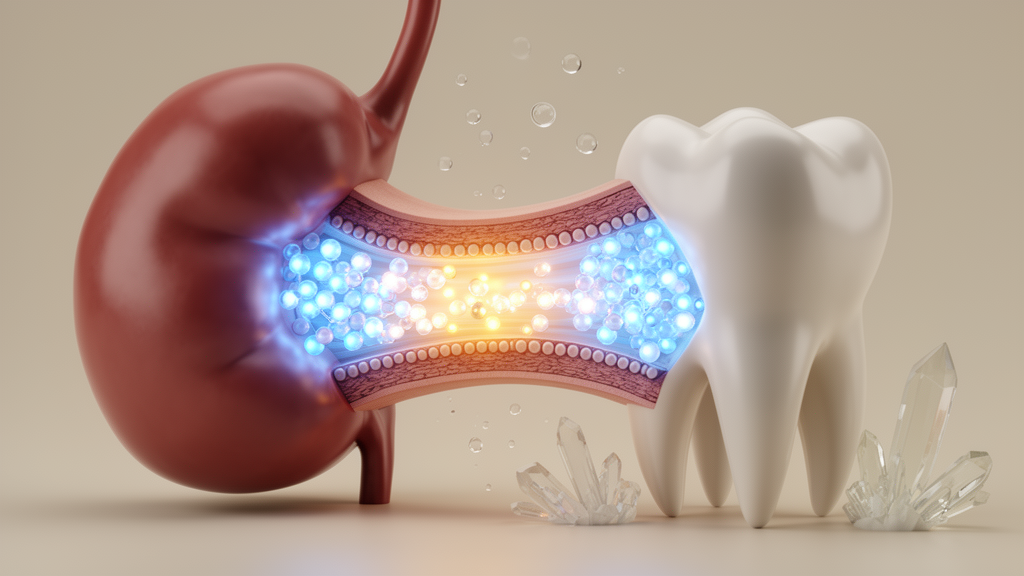
The research team, led by Wenyan Ruan, Jing Dong, Yali Xu and senior author Xiaohong Duan of the Fourth Military Medical University in Xi’an, China, began with a deceptively simple observation. Salivary glands and teeth share a common ectodermal origin, and both depend on chloride and bicarbonate transport to do their jobs. Saliva secretion is driven primarily by transepithelial chloride transport, which generates the high intracellular chloride concentration that acinar cells need to produce fluid. Enamel maturation, meanwhile, requires precise pH regulation mediated by bicarbonate exchange. SLC4A9, a sodium-dependent chloride/bicarbonate exchanger belonging to the solute carrier family 4, is highly expressed in both the submandibular gland and in amelobasts, the enamel-forming cells. That dual expression raised an intriguing possibility: could dysfunction of this one transporter simultaneously disrupt salivary secretion and enamel mineralization?
The genetic evidence came first. Immunohistochemical analysis of minor salivary gland specimens from five women with primary Sjögren’s syndrome and six control subjects with non-Sjögren’s dry mouth revealed robust SLC4A9 immunoreactivity in the ductal and acinar epithelial compartments of the controls. In the Sjögren’s patients, however, SLC4A9 expression was markedly reduced in both glandular epithelium and infiltrating mononuclear cells, with only residual staining detectable. Whole-genome sequencing of one patient uncovered a heterozygous copy number variant, a deletion within an intronic region of SLC4A9 on chromosome 5. Bioinformatic analysis of ENCODE chromatin data showed that this deleted region contains two constitutively occupied binding sites for CTCF, an insulator protein that organizes three-dimensional chromatin structure. The loss of these CTCF anchoring sites, the authors propose, likely disrupts the native chromatin configuration of SLC4A9 and reduces its expression, suggesting that the transporter’s deficiency may be a primary driver of disease rather than a secondary consequence of inflammation.
To test causality, the team generated Slc4a9 knockout mice using CRISPR/Cas9 targeting that removed exons 3 through 14 of the gene. The results were striking. When salivary flow was stimulated with pilocarpine, the knockout mice secreted approximately 78.6 percent less saliva than wild-type controls in females and about 50 percent less in males. Histology revealed degenerative changes throughout the submandibular gland: ductal epithelial cells showed irregular nuclear contours, aberrant chromatin distribution and partial nuclear pyknosis, while acinar cells displayed vacuolation and atrophy. Transmission electron microscopy exposed a secretory apparatus in collapse, with secretory granules that were fewer in number, enlarged in size and scattered away from their normal apical clustering toward basal and perinuclear regions. Periodic acid-Schiff staining showed excessive mucin retention, and transcriptomic analysis confirmed upregulation of multiple mucin genes, including the gel-forming mucins Muc6, Muc10 and Muc19 and the membrane-associated mucins Muc1, Muc3a and Muc24, alongside dysregulated glycoconjugate metabolism.
With age, the knockout mice developed something even more telling: a Sjögren’s-like autoimmune phenotype. Focal lymphocytic infiltration appeared in the salivary glands of female knockout mice as early as six months of age and expanded by ten months, while males showed a delayed and milder onset. Serological profiling revealed age-progressive autoantibody production. Female knockouts exhibited significantly elevated titres of anti-nuclear antibodies, anti-SSA/Ro and anti-SSB/La from six months onward, mirroring the diagnostic hallmarks of human Sjögren’s syndrome. O-glycomic profiling of salivary proteins further revealed profound remodeling of glycosylation sites on immunoregulatory molecules such as ASM3A, HYOU1 and DYHC1, changes that gene ontology analysis linked to innate and adaptive immune pathways. Because patients with Sjögren’s syndrome also show aberrant glycosylation of salivary mucins like MUC5B and MUC7, which affects saliva viscosity and mucosal clearance, the mouse model captured features of the human disease that extend well beyond simple fluid secretion.
The teeth told the other half of the story. Adult knockout mice displayed chalky, fracture-prone incisors with irregular wear, cuspal delamination and attrition in molars, and disrupted dentin-enamel boundaries. Micro-computed tomography confirmed significantly reduced enamel thickness, and scanning electron microscopy revealed disorganized hydroxyapatite crystallites with porous, loosely packed enamel rods that had lost their normal interwoven architecture. Crucially, the defect was developmental, not merely the consequence of a dry mouth. At postnatal day 1, knockout molars lacked discernible enamel matrix entirely, with ameloblasts arrested in a pre-secretory state and devoid of Tomes’ processes, the specialized extensions that secretory-stage ameloblasts use to deposit enamel. Single-cell RNA sequencing of first molar tooth germs reconstructed the ameloblast differentiation trajectory and showed a blockade: pre-ameloblasts accumulated while secretory-stage ameloblasts dwindled. Enamel matrix genes such as Amelx, Ambn, Enam, Mmp20 and Klk4 were downregulated, whereas dentin markers DSPP and DMP1 were unaffected, indicating a selective failure of the enamel biomineralization program. Primary tooth germ cells from knockouts also formed fewer mineralized nodules under calcification-inducing conditions.
The mechanistic thread connecting these two tissues proved to be ion transport itself. Functional assays using the fluorescent chloride indicator MQAE showed that primary salivary gland cells from knockout mice completely lost the time-dependent chloride uptake response seen in wild-type cells under high-chloride conditions. In tooth germ cells, chloride transport activity was similarly blunted, and measurements with the pH-sensitive dye BCECF revealed that knockout cells could no longer alkalinize their cytosol in response to chloride withdrawal. Transport activity dropped by roughly 45 percent in heterozygous and 55 percent in homozygous knockout cells. Importantly, the related exchanger SLC4A2 showed no compensatory upregulation, underscoring the non-redundant role of SLC4A9 in maintaining the chloride and pH homeostasis that both saliva secretion and enamel mineralization demand.
What happens next inside the cell is where the study makes its most unexpected leap. Prior work had hinted that chloride levels can influence ribosomal genes, and the team’s transcriptomic data showed that RPS27, a component of the 40S ribosomal small subunit, was among the ribosome-related molecules differentially expressed in knockout tissues. In wild-type mice, RPS27 displayed a polarized, punctate apical distribution with minimal nuclear signal. In knockout salivary glands and tooth germs, that organization collapsed: RPS27 accumulated diffusely in the cytoplasm and increased in the nucleus, as confirmed by western blotting of fractionated proteins. The number of B23-positive nucleoli, a readout of ribosome biogenesis, dropped significantly in both tissues, indicating nucleolar stress. Cell-cycle analysis of single-cell sequencing data showed an accumulation of pre-ameloblasts in S phase, a signature of p53-dependent arrest, and the p53-MDM2 axis was visibly perturbed, with p53 and MDM2 increasing in the cytoplasm while decreasing in the nucleus.
The therapeutic payoff came from Nutlin-3a, a selective MDM2 antagonist. The researchers treated knockout mice beginning at four and six months of age, the window before overt Sjögren’s-like pathology, administering 20 milligrams per kilogram every 48 hours for one month. Histological examination at seven months showed that lymphocytic infiltration was dramatically reduced in treated animals compared with saline controls, and the excessive accumulation of PAS-reactive material, which diastase digestion confirmed was largely glycogen, returned to near-control levels. Serum anti-SSA antibody levels also fell, particularly in females. The result validates the RPS27-MDM2-p53 axis as a druggable node and suggests that spatially targeted MDM2 inhibitors could one day complement the immunosuppressive approaches that have so far failed to restore exocrine function in Sjögren’s patients.
Human genetics closed the loop. Whole-exome sequencing of three patients with amelogenesis imperfecta from two Chinese families identified two missense variants in SLC4A9, c.899G>T (p.Arg300Leu) in the two siblings and c.344G>A (p.Arg115Gln) in the sporadic case, both predicted damaging and both affecting arginine residues that are 100 percent conserved from human to rat. Structural modeling showed that these substitutions abolish key hydrogen bonds that stabilize the protein’s cytoplasmic region. When the mutants were expressed in LS8 ameloblast-like cells, chloride uptake fell significantly below control levels, the ribosomal marker RPL7A shifted into the nucleus, and RPS27 upregulation with p53-MDM2 activation recapitulated the mouse findings. Notably, the three patients showed no significant reduction in salivary secretion, while the Sjögren’s patient with the SLC4A9 deletion had normal enamel, indicating that the two phenotypes arise independently through the same gene. The authors propose that SLC4A9 acts as a monogenic cause of amelogenesis imperfecta, likely through dominant-negative effects, while contributing to Sjögren’s syndrome through more complex mechanisms including haploinsufficiency. Together, the work establishes a unified diagnostic target for two seemingly unrelated diseases and points toward interventions, from MDM2 inhibitors to potential chloride supplementation or gene delivery, that could restore both salivary function and enamel integrity.
Subject of Research: The role of SLC4A9 chloride/bicarbonate exchanger deficiency in Sjögren's syndrome and amelogenesis imperfecta via ribosomal stress
Article Title: SLC4A9 deficiency is involved in Sjögren’s syndrome and enamel defects through RPS27-triggered ribosomal stress
Article References: Ruan, W., Dong, J., Xu, Y., Zhang, Y., Zhu, Y., Mao, S., Liu, Y., & Duan, X. (2026). SLC4A9 deficiency is involved in Sjögren’s syndrome and enamel defects through RPS27-triggered ribosomal stress. Experimental & Molecular Medicine. https://doi.org/10.1038/s12276-026-01867-0
Image Credits: AI Generated
DOI: 10.1038/s12276-026-01867-0
Keywords: SLC4A9, Sjögren's syndrome, amelogenesis imperfecta, RPS27, ribosomal stress, p53, MDM2, Nutlin-3a, salivary gland, enamel mineralization, chloride transport, autoantibodies
News Source: Juliet Wilcox. (October 9, 2026). One Gene, Two Diseases: How a Faulty Ion Transporter Links Dry Mouth and Defective Enamel. Scienmag.