“The current and previous findings provide a rationale for further investigations into the potential utility of leucine, valine, and tryptophan as diagnostic and prognostic biomarkers for HCC.”
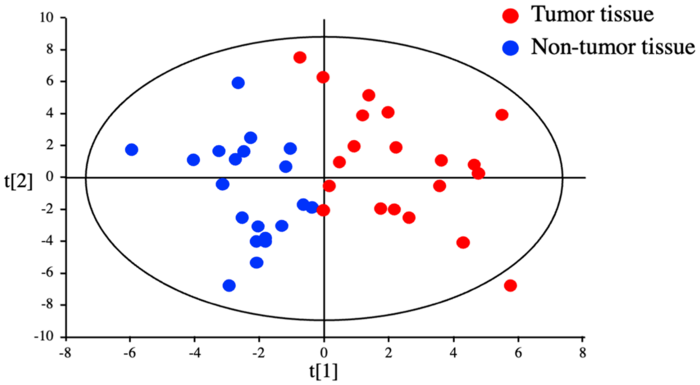
Credit: 2022 Morine et al.
“The current and previous findings provide a rationale for further investigations into the potential utility of leucine, valine, and tryptophan as diagnostic and prognostic biomarkers for HCC.”
BUFFALO, NY- December 1, 2022 – A new research paper was published in Oncotarget’s Volume 13 on November 22, 2022, entitled, “Essential amino acids as diagnostic biomarkers of hepatocellular carcinoma based on metabolic analysis.”
Metabolomics, defined as the comprehensive identification of all small metabolites in a biological sample, has the power to shed light on phenotypic changes associated with various diseases, including cancer.
In the current study, researchers Yuji Morine, Tohru Utsunomiya, Hisami Yamanaka-Okumura, Yu Saito, Shinichiro Yamada, Tetsuya Ikemoto, Satoru Imura, Shohei Kinoshita, Akiyoshi Hirayama, Yasuhito Tanaka, and Mitsuo Shimada from Tokushima University Graduate School, Keio University and Kumamoto University used metabolomics to discover potential biomarkers of hepatocellular carcinoma (HCC). The team investigated the metabolomes of tumor and non-tumor tissue in 20 patients with primary HCC using capillary electrophoresis–time-of-flight mass spectrometry. They also analyzed blood samples taken immediately before and 14 days after hepatectomy to identify associated changes in the serum metabolome.
“In the present study, we sought to discover reliable metabolomic biomarkers for HCC diagnosis by elucidating metabolic alterations in primary HCC tumor tissue compared with non-tumor tissue, and additionally by investigating the serum metabolomic profiles before and after curative hepatectomy.”
Marked changes were detected in the different quantity of 61 metabolites that could discriminate between HCC tumor and paired non-tumor tissue and additionally between HCC primary tumors and colorectal liver metastases. Among the 30 metabolites significantly upregulated in HCC tumors compared with non-tumor tissues, 10 were amino acids, and 7 were essential amino acids (EAA) (leucine, valine, tryptophan, isoleucine, methionine, lysine, and phenylalanine).
Similarly, the serum metabolomes of HCC patients before hepatectomy revealed a significant increase in 16 metabolites, including leucine, valine, and tryptophan. The results of this study revealed striking differences in the metabolomes of HCC tumor tissue compared with non-tumor tissue, and identified the essential amino acids leucine, valine, and tryptophan as potential metabolic biomarkers for HCC.
“In this study, the major findings were (i) the metabolomic profile of HCC tumors differs not only compared with matched non-tumor liver tissue but also with CRLM tissue, (ii) the serum metabolome of HCC patients is altered by hepatectomy, and (iii) the three EAAs leucine, valine, and tryptophan are candidate metabolomic biomarkers for hepatocarcinogenesis. Notably, however, we found that the metabolic profiles of HCC tumor tissues of differing etiologies (HBV/HCV infection) could not be distinguished, nor could the profiles of non-tumor liver tissue from any of the patient subgroups.”
DOI: https://doi.org/10.18632/oncotarget.28306
Correspondence to: Yuji Morine
Email: [email protected]
Keywords: metabolomics, essential amino acid, hepatocellular carcinoma, diagnostic biomarker
About Oncotarget: Oncotarget (a primarily oncology-focused, peer-reviewed, open access journal) aims to maximize research impact through insightful peer-review; eliminate borders between specialties by linking different fields of oncology, cancer research and biomedical sciences; and foster application of basic and clinical science.
To learn more about Oncotarget, visit Oncotarget.com and connect with us on social media:
- Twitter – https://twitter.com/Oncotarget
- Facebook – https://www.facebook.com/Oncotarget
- YouTube – www.youtube.com/c/OncotargetYouTube
- Instagram – https://www.instagram.com/oncotargetjrnl/
- LinkedIn – https://www.linkedin.com/company/oncotarget/
- Pinterest – https://www.pinterest.com/oncotarget/
- LabTube – https://www.labtube.tv/channel/MTY5OA
- SoundCloud – https://soundcloud.com/oncotarget
For media inquiries, please contact: [email protected].
Oncotarget Journal Office
6666 East Quaker Str., Suite 1A
Orchard Park, NY 14127
Phone: 1-800-922-0957 (option 2)
###
Journal
Oncotarget
DOI
10.18632/oncotarget.28306
Method of Research
Experimental study
Subject of Research
Human tissue samples
Article Title
Essential amino acids as diagnostic biomarkers of hepatocellular carcinoma based on metabolic analysis
Article Publication Date
22-Nov-2022