

• HOME
  • NEWS
  • EXPLORE
    • CAREER
      • Companies
      • Jobs
    • EVENTS
    • iGEM
      • News
      • Team
    • PHOTOS
    • VIDEO
    • WIKI
  • BLOG
  • COMMUNITY
    • FACEBOOK
    • INSTAGRAM
    • TWITTER
Monday, July 27, 2026
BIOENGINEER.ORG
No Result
View All Result
  • Login
  • HOME
  • NEWS
  • EXPLORE
    • CAREER
      • Companies
      • Jobs
        • Lecturer
        • PhD Studentship
        • Postdoc
        • Research Assistant
    • EVENTS
    • iGEM
      • News
      • Team
    • PHOTOS
    • VIDEO
    • WIKI
  • BLOG
  • COMMUNITY
    • FACEBOOK
    • INSTAGRAM
    • TWITTER
  • HOME
  • NEWS
  • EXPLORE
    • CAREER
      • Companies
      • Jobs
        • Lecturer
        • PhD Studentship
        • Postdoc
        • Research Assistant
    • EVENTS
    • iGEM
      • News
      • Team
    • PHOTOS
    • VIDEO
    • WIKI
  • BLOG
  • COMMUNITY
    • FACEBOOK
    • INSTAGRAM
    • TWITTER
No Result
View All Result
Bioengineer.org
No Result
View All Result
Home NEWS Science News Health

ONC201 kills breast cancer cells in vitro by targeting mitochondria

Bioengineer by Bioengineer
May 8, 2018
in Health
Reading Time: 2 mins read
0
Share on FacebookShare on TwitterShare on LinkedinShare on RedditShare on Telegram
IMAGE

Credit: Stanley Lipkowitz

TRAIL, a member of the TNF family of ligands, causes caspase-dependent apoptosis through activation of its receptors, death receptor 4 and DR5.

ONC201 was originally identified as a small molecule that inhibits both Akt and ERK, resulting in dephosphorylation of Foxo3a and thereby induces TRAIL transcription.

Recently, two independent groups, Wafik El Deiry at Fox Chase and Michael Andreeff at MD Anderson,reported that ONC201 induces cell death via cell stress mechanisms, independent of TRAIL transcription. Gene expression profiling analysis revealed that ONC201 induces endoplasmic reticulum (ER) stress or integrated stress response -related genes, such as Activating Transcription Factor 4 (ATF4) and C/EBP-homologous protein (CHOP).

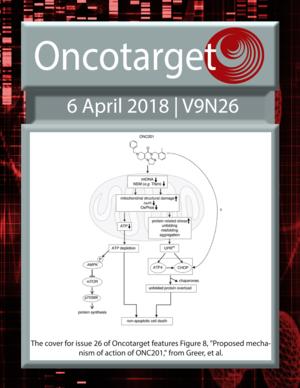
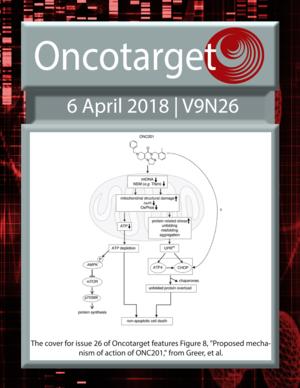
The researchers in Dr. Lipkowitz's group at the Center for Cancer Research in the National Cancer Institute observed that ONC201 kills breast cancer cells via a TRAIL-independent mechanism. Time-lapse live cell imaging revealed that ONC201 induces cell membrane ballooning followed by rupture, distinct from the morphology of cells undergoing apoptosis. They found that ONC201 inhibits mitochondrial respiration and induces mitochondrial structural damage. Moreover, they found ONC201 reduces mitochondrial DNA copy number. Importantly, cells dependent on glycolysis, such as fumarate hydratase deficient cancer cells and multiple cancer cell lines with reduced amounts of mitochondrial DNA were resistant to ONC201. ONC201 induced ATF4 and CHOP in breast cancer cells, and the stress response it was partially dependent on the mitochondrial effects of ONC201.

"Our work identifies a novel mechanism of ONC201 cytotoxicity that is based on the disruption of mitochondrial function, leading to ATP depletion and cell death in cancer cells that are dependent on mitochondrial respiration. Our study also suggests that cancer cells that are dependent on glycolysis will be resistant to ONC201" Dr. Stanley Lipkowitz, Chief, Women's Malignancies Branch, NCI.

###

Full text – http://www.oncotarget.com/index.php?journal=oncotarget&page=article&op=view&path%5B%5D=24862&path%5B%5D=77959

About Oncotarget

Oncotarget is twice-weekly, peer-reviewed, open access biomedical journal covering research on all aspects of oncology and publishing sub-sections on topics beyond oncology such as Aging, Immunology and Microbiology, Autophagy, Pathology and Chromosomes and more. Oncotarget is published by Rapamycin Press, the publishing division of Impact Journals LLC.

Media Contact

Ryan James Jessup
[email protected]
202-638-9720

Original Source

http://www.oncotarget.com/news/pr/onc201-kills-breast-cancer-cells-in-vitro-by-targeting-mitochondria


Share12Tweet8Share2ShareShareShare2

Related Posts

Macrophage Adenylyl Cyclase 7 Shields Male Mice From Ischemia-Reperfusion Injury

July 27, 2026

Low Humidification Temperature During Noninvasive Ventilation in Preterm and Term Neonates

July 27, 2026

Rehabilitation Therapy Start Timing and All-Cause Mortality in Parkinson’s Patients

July 27, 2026

Survey Finds Native Americans Open to Indigenous Plant-Based Diets for Type 2 Diabetes

July 27, 2026
Please login to join discussion

POPULAR NEWS

  • AI app identifies birds offline by recording animal sounds on your phone

    29 shares
    Share 12 Tweet 7
  • Pyridoxal Photoenzymes Enable Asymmetric Radical–Radical Cross-Coupling Reactions

    29 shares
    Share 12 Tweet 7
  • Macrophage Adenylyl Cyclase 7 Shields Male Mice From Ischemia-Reperfusion Injury

    29 shares
    Share 12 Tweet 7
  • Hospital Padrino Program Linked to Lower Perinatal Mortality in Colombia’s Pacific

    29 shares
    Share 12 Tweet 7

About

We bring you the latest biotechnology news from best research centers and universities around the world. Check our website.

Follow us

Recent News

AI app identifies birds offline by recording animal sounds on your phone

Pyridoxal Photoenzymes Enable Asymmetric Radical–Radical Cross-Coupling Reactions

Macrophage Adenylyl Cyclase 7 Shields Male Mice From Ischemia-Reperfusion Injury

Subscribe to Blog via Email

Enter your email address to subscribe to this blog and receive notifications of new posts by email.

Join 85 other subscribers
  • Contact Us

Bioengineer.org © Copyright 2023 All Rights Reserved.

Welcome Back!

Login to your account below

Forgotten Password?

Retrieve your password

Please enter your username or email address to reset your password.

Log In
No Result
View All Result
  • Homepages
    • Home Page 1
    • Home Page 2
  • News
  • National
  • Business
  • Health
  • Lifestyle
  • Science

Bioengineer.org © Copyright 2023 All Rights Reserved.