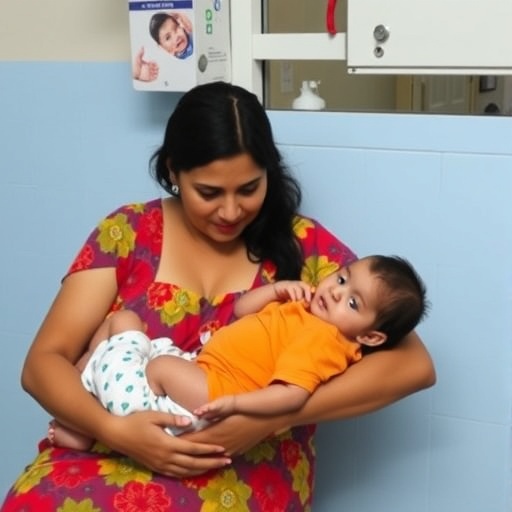
Colombia’s Pacific coast has long struggled with stubborn perinatal health gaps, including elevated rates of stillbirth and neonatal complications. In a new study, researchers report that a targeted, hospital-centered program—known as the Hospital Padrino Strategy—was linked to meaningful reductions in perinatal mortality across the region. The work, published in Pediatric Research, highlights how structured support can translate into measurable outcomes when resources and clinical coordination are uneven.
At the core of the strategy is a mentoring and capacity-building model between designated partner institutions. Instead of relying solely on one-time interventions, the program emphasizes ongoing clinical guidance, standardized care processes, and continuous performance monitoring. This is particularly relevant in settings where staffing variability, referral delays, and inconsistent adherence to evidence-based obstetric and newborn protocols can amplify risk.
The team analyzed outcomes in relation to the roll-out of the program in Pacific-region health facilities. By focusing on perinatal endpoints, the study connects system-level changes to the earliest—and most vulnerable—periods of life. Such an approach is designed to capture not only improvements in survival, but also downstream effects from earlier steps in maternal and newborn management.
Mechanistically, the authors point to improvements in intrapartum and postpartum pathways, including the timely escalation of high-risk cases, better coordination of maternity-to-neonatal handoffs, and enhanced adherence to clinical standards. These changes matter because delays during labor, problems with fetal monitoring, and suboptimal newborn stabilization can collectively drive mortality.
The results suggest that strengthening hospital ecosystems—rather than treating hospitals as isolated units—can reduce preventable deaths. Importantly, the study frames the strategy as an answer to public health constraints common to geographically remote regions, where logistical barriers often undermine continuity of care.
Beyond the numerical outcomes, the findings underscore that viral-like “newsworthy” momentum in public health must be earned through implementation: training, accountability, and workflow redesign. In practice, the Hospital Padrino model functions as a replicable template for scaling quality improvements where baseline capacity is limited.
For clinicians and policy makers, the takeaway is straightforward: perinatal survival is not only a biomedical outcome, but also a systems-performance signal. Programs that align clinical practice, referral timing, and real-time quality feedback can shift survival trajectories even under challenging conditions.
If adopted broadly, the Hospital Padrino Strategy could offer a pragmatic pathway to reduce perinatal mortality in other resource-constrained settings. The study’s emphasis on measurable hospital performance makes it especially compelling for regions seeking scalable interventions that go beyond awareness campaigns.
Subject of Research: Perinatal mortality reduction in Colombia’s Pacific region via the Hospital Padrino Strategy
Article Title: Hospital Padrino Strategy associated with reductions in perinatal mortality in Colombia’s Pacific region: addressing public health challenges.
Article References: Escobar, M.F., Jaramillo Salazar, M.L., Mancera Martínez, B.M. et al. Pediatr Res (2026). https://doi.org/10.1038/s41390-026-05045-w
Image Credits: AI Generated
DOI: 10.1038/s41390-026-05045-w
Keywords:
Tags: capacity building in hospitalsclinical mentorship programshealth system strengtheninghealthcare quality improvement in Colombiahospital-centered health interventionmaternal and newborn care improvementneonatal mortality prevention strategiesPacific coast neonatal healthperinatal health outcomesperinatal mortality reduction in Colombiastandardized obstetric protocolssystem-level changes in maternal-child health