• HOME
  • NEWS
  • EXPLORE
    • CAREER
      • Companies
      • Jobs
    • EVENTS
    • iGEM
      • News
      • Team
    • PHOTOS
    • VIDEO
    • WIKI
  • BLOG
  • COMMUNITY
    • FACEBOOK
    • INSTAGRAM
    • TWITTER
Monday, May 18, 2026
BIOENGINEER.ORG
No Result
View All Result
  • Login
  • HOME
  • NEWS
  • EXPLORE
    • CAREER
      • Companies
      • Jobs
        • Lecturer
        • PhD Studentship
        • Postdoc
        • Research Assistant
    • EVENTS
    • iGEM
      • News
      • Team
    • PHOTOS
    • VIDEO
    • WIKI
  • BLOG
  • COMMUNITY
    • FACEBOOK
    • INSTAGRAM
    • TWITTER
  • HOME
  • NEWS
  • EXPLORE
    • CAREER
      • Companies
      • Jobs
        • Lecturer
        • PhD Studentship
        • Postdoc
        • Research Assistant
    • EVENTS
    • iGEM
      • News
      • Team
    • PHOTOS
    • VIDEO
    • WIKI
  • BLOG
  • COMMUNITY
    • FACEBOOK
    • INSTAGRAM
    • TWITTER
No Result
View All Result
Bioengineer.org
No Result
View All Result
Home NEWS Science News Biology

Oil spill impacts in coastal wetland

Bioengineer by Bioengineer
February 13, 2018
in Biology
Reading Time: 1 min read
0
Share on FacebookShare on TwitterShare on LinkedinShare on RedditShare on Telegram
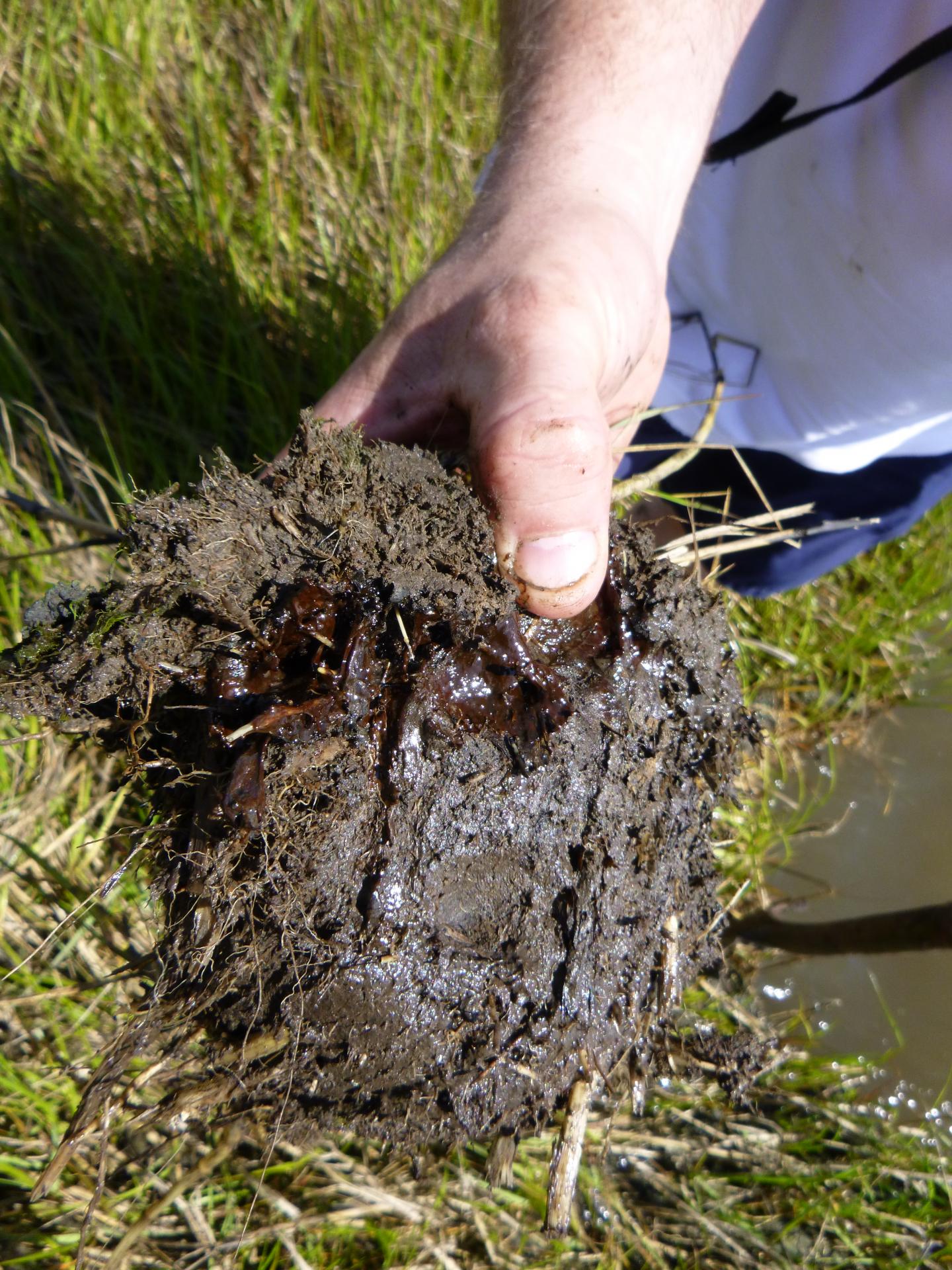
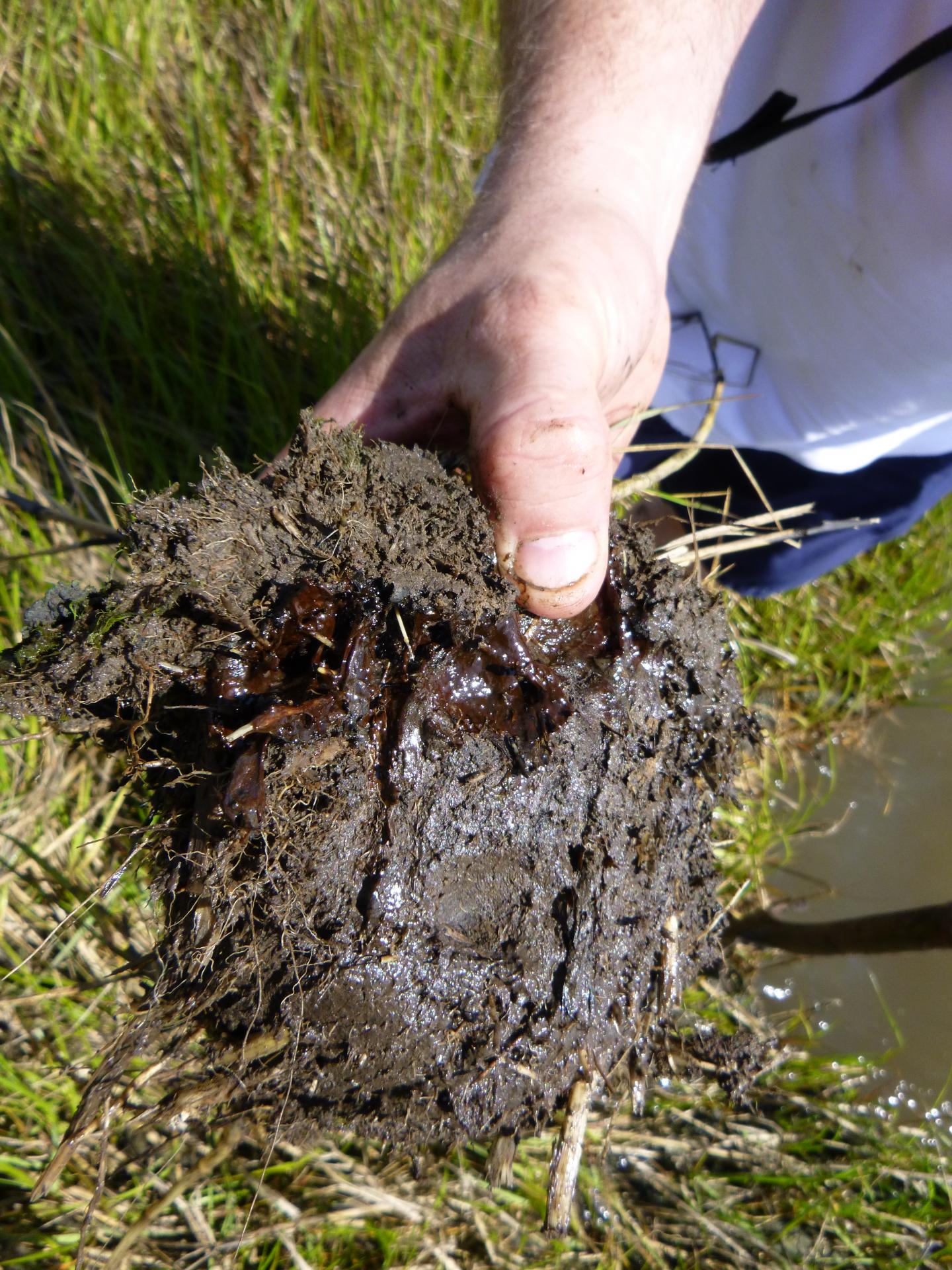
IMAGE

Credit: J. Levine

July 10, 2017 – Although evidence of the 2010 Deepwater Horizon oil spill may not be visually obvious today, crude oil can still be found in Louisiana coastal marshes. Oil not initially degraded has become buried under the yearly pile of dead plant material, which is deposited after each growing season. The oil has potential to cause stress to plants, as it is buried and in close proximity with the roots.

A paper recently published in the Soil Science Society of America Journal investigates how the presence of surface and buried crude oil under flooded and drained conditions affects the redox of wetland soils, an important control of wetland soil functions.

Researchers reported that reduction potential of the wetland soil was not significantly different under flooded conditions, mimicking high tide conditions. However, under drained conditions, similar to low tide, oil slowed the transport of oxygen into the root zone. This delay in oxygen availability caused by oil can increase stress on wetland plants, unable to supply enough oxygen to their root system. This stress can contribute to accelerated loss of marsh area through erosion in a region where marshes are already rapidly disappearing, due to high relative sea level rise.

###

Media Contact

Susan Fisk
[email protected]
608-273-8080
@ASA_CSSA_SSSA

http://www.agronomy.org

Related Journal Article

http://dx.doi.org/10.2136/sssaj2016.12.0398

Share12Tweet8Share2ShareShareShare2

Related Posts

In-Depth Analysis Reveals Advances in Multiple Sclerosis Research Models — Biology

In-Depth Analysis Reveals Advances in Multiple Sclerosis Research Models

May 18, 2026
Uncovering C. elegans Immunity via Genetic Screens — Biology

Uncovering C. elegans Immunity via Genetic Screens

May 16, 2026

Single mother must adapt swiftly — the survival of her colony depends on it

May 15, 2026

Why Are Nearly Everyone Right-Handed? It Might Be Linked to How We Learned to Walk

May 15, 2026
Please login to join discussion

POPULAR NEWS

  • Research Indicates Potential Connection Between Prenatal Medication Exposure and Elevated Autism Risk

    844 shares
    Share 338 Tweet 211
  • New Study Reveals Plants Can Detect the Sound of Rain

    731 shares
    Share 292 Tweet 182
  • Salmonella Haem Blocks Macrophages, Boosts Infection

    62 shares
    Share 25 Tweet 16
  • Breastmilk Balances E. coli and Beneficial Bacteria in Infant Gut Microbiomes

    58 shares
    Share 23 Tweet 15

About

We bring you the latest biotechnology news from best research centers and universities around the world. Check our website.

Follow us

Recent News

Magnetic Graphene Catalyst Enables Green Naphthopyrimidine Synthesis

Spatial Proteomics Reveals Alzheimer’s Microglial States

Super-Resolution Imaging with Extended Depth via Diffractive Decoder

Subscribe to Blog via Email

Enter your email address to subscribe to this blog and receive notifications of new posts by email.

Join 82 other subscribers
  • Contact Us

Bioengineer.org © Copyright 2023 All Rights Reserved.

Welcome Back!

Login to your account below

Forgotten Password?

Retrieve your password

Please enter your username or email address to reset your password.

Log In
No Result
View All Result
  • Homepages
    • Home Page 1
    • Home Page 2
  • News
  • National
  • Business
  • Health
  • Lifestyle
  • Science

Bioengineer.org © Copyright 2023 All Rights Reserved.