• HOME
  • NEWS
  • EXPLORE
    • CAREER
      • Companies
      • Jobs
    • EVENTS
    • iGEM
      • News
      • Team
    • PHOTOS
    • VIDEO
    • WIKI
  • BLOG
  • COMMUNITY
    • FACEBOOK
    • INSTAGRAM
    • TWITTER
Tuesday, October 20, 2026
BIOENGINEER.ORG
No Result
View All Result
  • Login
  • HOME
  • NEWS
  • EXPLORE
    • CAREER
      • Companies
      • Jobs
        • Lecturer
        • PhD Studentship
        • Postdoc
        • Research Assistant
    • EVENTS
    • iGEM
      • News
      • Team
    • PHOTOS
    • VIDEO
    • WIKI
  • BLOG
  • COMMUNITY
    • FACEBOOK
    • INSTAGRAM
    • TWITTER
No Result
View All Result
Bioengineer.org
No Result
View All Result
Home NEWS Science News Health

Observational cohort finds uncertain fetal risk after first-trimester JAK inhibitor exposure

by
October 20, 2026
in Health
Reading Time: 2 mins read
0
Observational cohort finds uncertain fetal risk after first-trimester JAK inhibitor exposure

Observational cohort finds uncertain fetal risk after first-trimester JAK inhibitor exposure

Share on FacebookShare on TwitterShare on LinkedinShare on RedditShare on Telegram

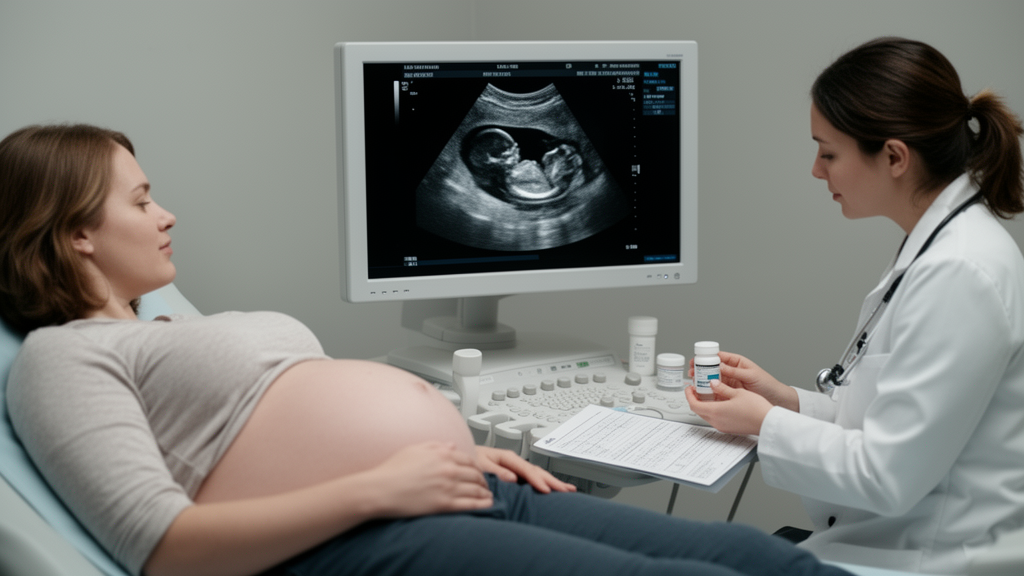
An observational analysis of 44 pregnancies with first-trimester exposure to Janus kinase inhibitors found two major congenital anomalies among 32 live births, alongside five spontaneous abortions and seven elective terminations. The pregnancies were prospectively enrolled in the German Embryotox database between January 1, 2017, and November 15, 2025, and then analyzed as observational data. Exposure involved baricitinib in 17 pregnancies, filgotinib in three, tofacitinib in eight and upadacitinib in 16.

Of the 44 exposed pregnancies, 32 resulted in live births. Two babies were born with major congenital anomalies: one ventricular septal defect and one hypospadias. This amounts to 2 of 32 live births, or 6.3%.

Five pregnancies ended in spontaneous abortion, including one case of fetal anencephaly, and seven pregnancies were terminated electively. These small numbers document observed outcomes but cannot determine whether JAK inhibitor exposure caused the anomalies or pregnancy losses. Neonatal assessments among the live births identified two preterm births at 36 weeks’ gestation, three infants small for gestational age and two newborns large for gestational age.

The authors concluded that current evidence is insufficient to establish or exclude an association between JAK inhibitor exposure and adverse fetal outcomes. They stated that potentially harmful effects cannot yet be ruled out, that routine use during pregnancy is not recommended, and that treatment should be approached with caution and a critical risk-benefit assessment until more data are available.

Subject of Research: Pregnancy outcomes following first-trimester exposure to JAK inhibitors

Article Title: Pregnancy outcome after first-trimester exposure to JAK inhibitors – an evaluation of the German Embryotox cohort

Article References: Habbel, A.-S., Beck, E., Mueller, A., & Dathe, K. (2026). Pregnancy outcome after first-trimester exposure to JAK inhibitors – an evaluation of the German Embryotox cohort. BMC Pharmacology and Toxicology. https://doi.org/10.1186/s40360-026-01263-4

Image Credits: AI Generated

DOI: 10.1186/s40360-026-01263-4

Keywords: JAK inhibitors, pregnancy safety, first-trimester exposure, congenital anomalies, fetal risk, baricitinib, upadacitinib, tofacitinib, filgotinib, German Embryotox, Pregnancy, outcome

News Source: Harold Sullivan. (October 20, 2026). Observational cohort finds uncertain fetal risk after first-trimester JAK inhibitor exposure. Scienmag.


Tags: baricitinibcongenital anomaliesfetal riskfilgotinibfirst-trimester exposureGerman EmbryotoxJAK inhibitorsOutcomePregnancypregnancy safetytofacitinibupadacitinib
Share12Tweet7Share2ShareShareShare1

Related Posts

Automated CT body composition markers show limited survival-prediction gains

Automated CT body composition markers show limited survival-prediction gains

October 20, 2026
MEG brain connectivity distinguishes recent suicidal crisis from historical risk

MEG brain connectivity distinguishes recent suicidal crisis from historical risk

October 20, 2026

Survey finds gaps in Jakarta diabetic retinopathy screening

October 20, 2026

Trial finds broad poliovirus-neutralizing responses in infants

October 20, 2026

POPULAR NEWS

  • NiCo–TiO2 catalyst lowers hydrogen-evolution overpotential in alkaline testing

    NiCo–TiO2 catalyst lowers hydrogen-evolution overpotential in alkaline testing

    29 shares
    Share 12 Tweet 7
  • Review maps antioxidant biohybrid matrices for organ repair

    29 shares
    Share 12 Tweet 7
  • Half of head and neck cancer survivors report clinically relevant fatigue

    29 shares
    Share 12 Tweet 7
  • Free-electron laser demonstrates attosecond hard X-ray pulses

    29 shares
    Share 12 Tweet 7

About

We bring you the latest biotechnology news from best research centers and universities around the world. Check our website.

Follow us

Recent News

NiCo–TiO2 catalyst lowers hydrogen-evolution overpotential in alkaline testing

Review maps antioxidant biohybrid matrices for organ repair

Half of head and neck cancer survivors report clinically relevant fatigue

Subscribe to Blog via Email

Enter your email address to subscribe to this blog and receive notifications of new posts by email.

Join 85 other subscribers
  • Contact Us

Bioengineer.org © Copyright 2023 All Rights Reserved.

Welcome Back!

Login to your account below

Forgotten Password?

Retrieve your password

Please enter your username or email address to reset your password.

Log In
No Result
View All Result
  • Homepages
    • Home Page 1
    • Home Page 2
  • News
  • National
  • Business
  • Health
  • Lifestyle
  • Science

Bioengineer.org © Copyright 2023 All Rights Reserved.