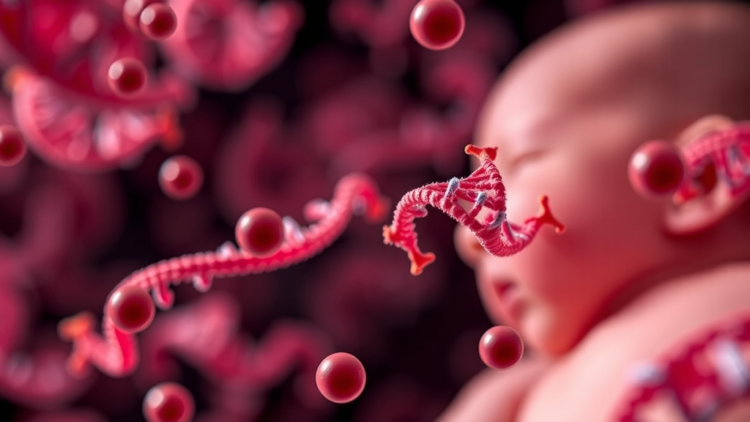
The Herringbone Microfluidic Probe more effectively isolates cancerous cells to track metastasis utilizing a non-invasive liquid biopsy
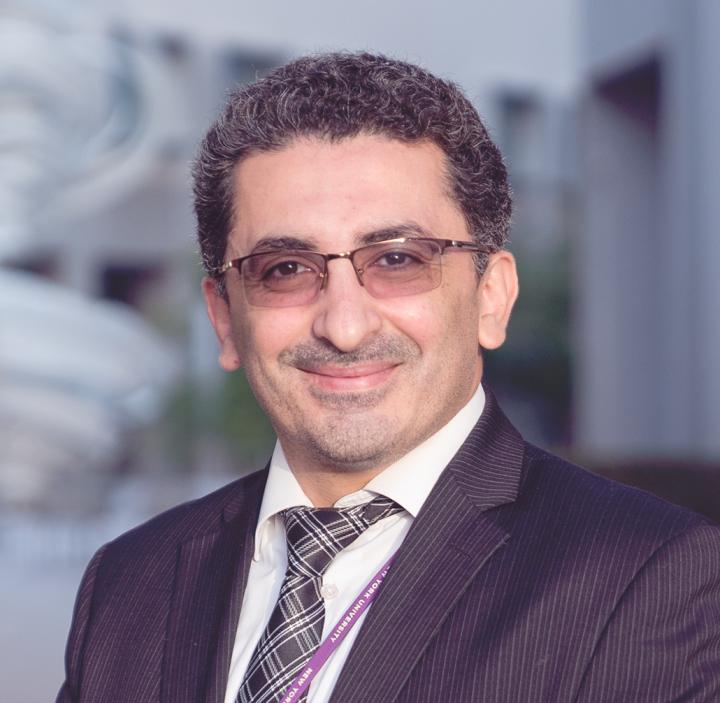
Credit: NYU Abu Dhabi
Abu Dhabi, UAE, April 19: The survival rate of cancer patients can drop to ten percent or less during metastasis, the spread of cancerous cells to create secondary tumors. Therefore, it is crucial that cancer is detected and treated before metastasis occurs, or at least at its early stages. To spread the cancer, messenger cells known as Circulating Tumor Cells, or CTCs, break off of the original tumor and flow through the bloodstream to create a secondary growth. A team of researchers led by Assistant Professor of Mechanical and Biomedical Engineering and Principal Investigator at the NYU Abu Dhabi Mohammad A. Qasaimeh, have developed a new microfluidic system, called the Herringbone Microfluidic Probe (HB-MFP), that effectively isolates both CTCs and clusters of CTCs from blood samples of cancer patients for easier and more insightful analysis.
In a new study titled Herringbone Microfluidic Probe for Multiplexed Affinity-Capture of Prostate Circulating Tumor Cells, Qasaimeh and his team present the process of creating the HB-MFP tool, which utilizes different types of biorecognition molecules to identify and isolate cells from blood samples. The HB-MFP works in an open configuration without involving the concept of closed-channels, which eliminates several technical challenges with classical microfluidics. As a result, the HB-MFP is mobile and scans over the capture substrate that is decorated with different biorecognition receptors. For analogy, the HB-MFP works like a pen writing on a board under water and with no contact, where the ink is the patient’s blood sample and the board is the biofunctionalized substrate for CTCs capture.
In one milliliter of a patient’s blood sample, only a few CTCs exist within billions of healthy red and white blood cells. Using prostate cancer blood samples, the HB-MFP efficiently isolated CTCs with counts ranging from as low as 6 CTCs/mL (localized cancer patients) to as high as 280 CTCs/mL (metastatic cancer patients). In addition, clusters of CTCs as large as a group of 50 cells were successfully arrested. These new findings are published in the journal Advanced Materials Technologies.
“The analysis of the number, antigen expression levels, and sizes of captured CTCs potentially holds great promise to serve as a diagnostic and prognostic tool for prostate cancer,” commented Ayoub Glia, the first author and a PhD candidate at Qasaimeh Group.
Physical examinations and measuring prostate specific antigen (PSA) serum levels are the two standards for early prostate cancer detection. However, these procedures have shown to be inaccurate and invasive. Liquid biopsy approaches, a diagnosis tool using blood samples, requires small sample volumes and offers high precision, thus achieving higher sensitivity at a lower cost.
“The HB-MFP leads the way for more efficient liquid biopsies and can be adapted to other types of cancers, such as breast cancer and lung cancer, by slight customizations,” said Qasaimeh. “It is our hope that our work will help make early diagnostic tools more effective and accurate.”
###
About NYU Abu Dhabi
NYU Abu Dhabi is the first comprehensive liberal arts and science campus in the Middle East to be operated abroad by a major American research university. NYU Abu Dhabi has integrated a highly-selective liberal arts, engineering and science curriculum with a world center for advanced research and scholarship enabling its students to succeed in an increasingly interdependent world and advance cooperation and progress on humanity’s shared challenges. NYU Abu Dhabi’s high-achieving students have come from more than 115 nations and speak over 115 languages. Together, NYU’s campuses in New York, Abu Dhabi, and Shanghai form the backbone of a unique global university, giving faculty and students opportunities to experience varied learning environments and immersion in other cultures at one or more of the numerous study-abroad sites NYU maintains on six continents.
Media Contact
Adam Pockriss
[email protected]