


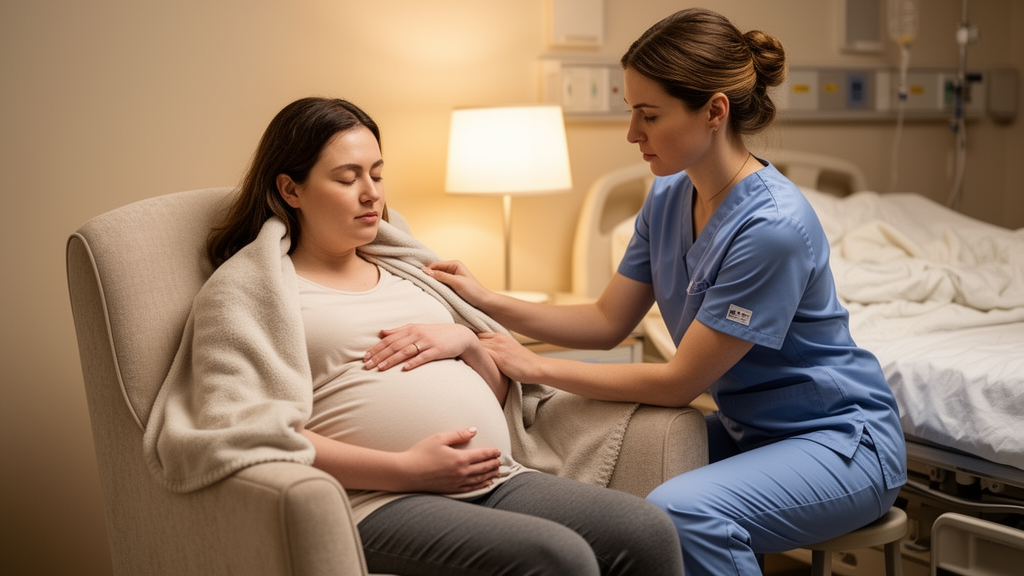
First-time mothers in Iran who took part in a randomized controlled trial reported markedly less anxiety and better sleep after receiving a counseling intervention built around the Neuman Systems Model, a nursing framework that organizes care around prevention at three levels. The trial, published in BMC Pregnancy and Childbirth, enrolled eighty nulliparous pregnant women who attended comprehensive health service centers in Khoy city.
Anxiety and sleep disturbances are common during pregnancy, and the study’s authors note that they are especially frequent among women pregnant for the first time. Left unaddressed, these problems can lead to adverse outcomes for both the mother and the fetus.
In the trial, participants were randomly assigned to one of two groups of forty women each. The intervention group received a Neuman Systems Model-based program consisting of four counseling sessions with an emphasis on primary, secondary, and tertiary prevention. The control group received regular prenatal care only. Data were collected at baseline and again two weeks after the intervention using the Pittsburgh Sleep Quality Index (PSQI) and the Spielberger State-Trait Anxiety Inventory, and the researchers analyzed the results with independent and paired t-tests.
In this trial, those principles were translated into counseling sessions delivered to pregnant women who had no previous childbirth experience.
At baseline, the two groups were comparable, with no significant differences in demographic variables, anxiety levels, or sleep quality (p > 0.05).
Two weeks after the intervention, the mean state anxiety score was 34.15 (standard deviation 8.82) in the intervention group compared with 48.88 (9.26) in the control group, a difference the authors report as statistically significant (p < 0.001). Trait anxiety also favored the intervention group, with a mean of 40.80 (7.57) versus 45.83 (7.53) in the control group (p = 0.004).
The intervention group recorded a mean PSQI score of 4.83 (2.85), while the control group’s mean was 11.43 (2.68), a difference that was statistically significant (p < 0.001).
The authors conclude that for nulliparous pregnant women, the Neuman Systems Model-based intervention is highly effective in reducing state and trait anxiety and enhancing sleep quality. They recommend incorporating this framework into standard prenatal care to empower women, improve their coping skills, and promote maternal mental health, describing it as a thorough and feasible addition to existing services.
Several caveats are worth keeping in mind when interpreting these findings. The published version is an early-release, peer-reviewed article that the journal notes is subject to further edits before the final Version of Record. The trial was registered in the Iranian Registry of Clinical Trials (IRCT20250723066609N4) on 16 February 2026.
Subject of Research: A randomized controlled trial of a Neuman Systems Model-based nursing intervention on anxiety and sleep quality in nulliparous pregnant women.
Article Title: The effect of a Neuman Systems Model-based intervention on anxiety and sleep quality among nulliparous pregnant women: a randomized controlled trial
Article References: Dorosti, A. M., Hajihosseinlou, F., Zareipour, M., Abasgholizadeh, L., & Seyednazari, M. A. (2026). The effect of a Neuman Systems Model-based intervention on anxiety and sleep quality among nulliparous pregnant women: a randomized controlled trial. BMC Pregnancy and Childbirth. https://doi.org/10.1186/s12884-026-10124-1
Image Credits: AI Generated
DOI: 10.1186/s12884-026-10124-1
Keywords: pregnancy, anxiety, sleep quality, Neuman Systems Model, randomized controlled trial, nulliparous women, prenatal care, nursing intervention, maternal mental health, PSQI, Spielberger State-Trait Anxiety Inventory, counseling
News Source: Harold Sullivan. (October 29, 2026). Nursing Intervention Based on Neuman Systems Model Eases Anxiety and Improves Sleep in First-Time Pregnant Women. Scienmag.



