


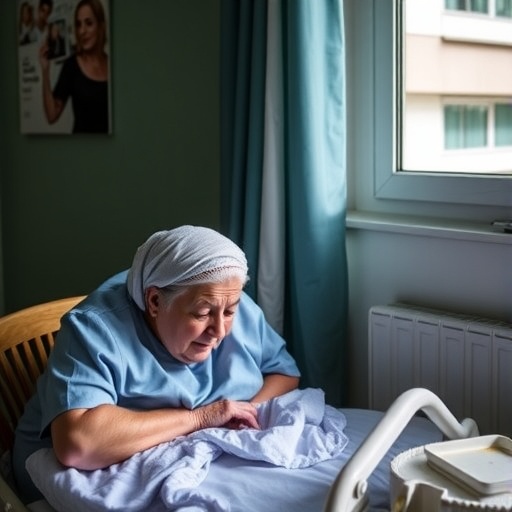
In a groundbreaking new study set to reshape how healthcare professionals understand care quality in elder facilities, researchers have unveiled stark evidence of implicit rationing of nursing care in Turkish public nursing homes and rehabilitation centers. This phenomenon—where essential nursing tasks are omitted or delayed due to resource constraints—is casting a shadow over the future sustainability and ethical foundations of elder care institutions. The study, recently published in the esteemed journal BMC Geriatrics, provides the first comprehensive cross-sectional analysis of implicit rationing practices in Turkey’s public elder care sector, offering a critical window into systemic challenges and their implications on patient well-being.
Implicit rationing of nursing care refers to situations where nurses, often overwhelmed by workloads, are forced to prioritize certain clinical activities over others, sometimes unintentionally neglecting necessary tasks. Unlike explicit rationing, where decisions are consciously made to limit care due to policy or budget restrictions, implicit rationing happens on the ground level, frequently invisible to policymakers but profoundly impactful on patient outcomes. The latest research highlights that Turkish public nursing homes and rehabilitation centers experience this form of care deficit, a reality indicative of broader issues regarding workforce capacity, institutional management, and healthcare financing.
What makes this study especially important is its robust empirical approach. Utilizing a cross-sectional design, researchers surveyed a wide sample of nursing staff across multiple public institutions, allowing for nuanced insights into how implicit rationing manifests in the daily operations of nursing care. The data revealed significant patterns suggesting that fundamental nursing activities—ranging from patient mobilization and hygiene support to timely medication administration—are routinely compromised due to time scarcity and insufficient staffing levels. The findings underscore the disconnect between care needs and available resources, a critical concern for elder patient populations requiring meticulous and continuous attention.
This exploration into Turkish public elder care environments gains added urgency when contextualized against demographic trends. Turkey, like many countries worldwide, is undergoing rapid population aging, with the proportion of elderly citizens steadily increasing. This shift creates mounting pressure on public nursing homes and rehabilitation centers, which must provide complex, comprehensive care often with limited infrastructure enhancements or budget scaling to match demand. As a result, the study exposes systemic vulnerabilities that, if unaddressed, may precipitate widespread deterioration in the quality of life for one of society’s most vulnerable groups.
The technical rigor of the research extends beyond mere descriptive statistics. Advanced analytical methodologies were employed to examine correlations between nursing staffing ratios, workload intensity, and the prevalence of care rationing. This quantitative framework enabled the researchers to quantify care deficits precisely, differentiating scenarios in which rationing was more likely to occur and identifying critical thresholds of staffing and resources beneath which care quality substantially diminishes. These metrics provide invaluable tools for health administrators and policymakers seeking to design evidence-informed interventions.
On the molecular level of patient care, neglect in routine nursing functions can trigger a cascade of deleterious effects. Delays in repositioning immobile patients can lead to pressure ulcers, compromised hygiene increases infection risks, and irregular medication schedules may diminish therapeutic efficacy or precipitate adverse drug reactions. The study highlights these clinical risks as causal pathways linking implicit rationing with deteriorated patient outcomes. By mapping this territory, the researchers emphasize the imperative for systemic vigilance, continuous monitoring, and adaptive resource allocation.
Beyond clinical consequences, the research also sheds light on psychological dynamics affecting nursing professionals. Implicit rationing is not merely an operational challenge but also an emotional and ethical burden. Nurses often experience moral distress when unable to fulfill their professional duties due to external constraints, leading to burnout, reduced job satisfaction, and higher turnover rates. This human factor compounds the technical difficulties of maintaining care standards and accentuates the need for supportive workplace environments and adequate staffing policies.
In addition to shedding light on the internal dynamics of Turkish elder care, the study’s findings resonate globally. Implicit rationing of nursing care has been documented in various healthcare settings around the world, often linked to systemic healthcare resource imbalances. Turkish public nursing homes offer a microcosm in which these universal challenges can be examined in detail, with lessons applicable to other aging societies grappling with demographic shifts and healthcare financing dilemmas.
The study also critiques institutional management strategies that inadvertently contribute to implicit rationing. Inadequate investment in continuous staff training, insufficient use of technology to streamline care processes, and fragmented communication channels were identified as contributory factors. Such findings urge a rethinking of managerial priorities towards more holistic frameworks that align operational efficiency with frontline care realities.
Importantly, the research does not leave readers entrenched solely in critique. By delineating specific care tasks most affected by rationing—such as patient repositioning, early detection of deteriorating conditions, and psycho-social engagement—the study offers a roadmap for targeted quality improvement initiatives. Interventions tailored to these critical domains may yield substantial benefits in patient outcomes even amid constrained resources.
A notable technical contribution of the study is its call for integrating implicit rationing indicators into existing quality assurance mechanisms. Current healthcare metrics often focus on overt measures such as mortality and readmission rates but may overlook subtler dimensions of nursing care quality. Systematic tracking of rationing behaviors could enable proactive identification of emerging care gaps and enhance responsiveness.
Furthermore, the work raises profound ethical questions about equity in healthcare access within public systems. The observed implicit rationing disproportionately affects vulnerable elderly patients, potentially exacerbating health disparities. This dimension elevates the study beyond a technical report to a clarion call for social justice in healthcare provision.
In summary, the cross-sectional analysis of implicit rationing in Turkish public nursing homes and rehabilitation centers provides an unprecedented lens on the challenges of elder care in resource-constrained environments. The study’s blend of rigorous data analysis, clinical insight, and ethical reflection offers a seminal contribution to global healthcare dialogues. It not only documents a critical problem but also illuminates pathways forward—through improved staffing, better management, technological innovation, and policy reforms grounded in empirical evidence.
As societies worldwide confront aging populations amidst finite healthcare resources, implicit rationing of nursing care emerges as a pressing issue requiring urgent attention. The Turkish experience serves as both a cautionary tale and a beacon, underscoring the necessity of sustained commitment to nurturing the caregivers and protecting the care recipients who depend on them most. This landmark research pushes the frontiers of geriatric care science and sparks vital conversations about how we allocate dignity, time, and expertise in the service of our elders.
Subject of Research: Implicit Rationing of Nursing Care in Turkish Public Nursing Homes and Rehabilitation Centres
Article Title: Implicit rationing of nursing care in Turkish public nursing homes and rehabilitation centres: a cross-sectional analysis
Article References: Özkan, Ş., Acar, Z., Özkaya, G. et al. Implicit rationing of nursing care in Turkish public nursing homes and rehabilitation centres: a cross-sectional analysis. BMC Geriatr (2026). https://doi.org/10.1186/s12877-026-07576-7
Image Credits: AI Generated
Tags: elder care institutional managementelder care quality in Turkeyethical issues in elder carehealthcare financing in elder careimpact of resource constraints on nursingimplicit rationing of nursing carenursing care deficits in elder carenursing care prioritization issuespatient outcomes in Turkish nursing homesrehabilitation center nursing care gapsTurkish public nursing homes challengesworkforce shortages in nursing homes


