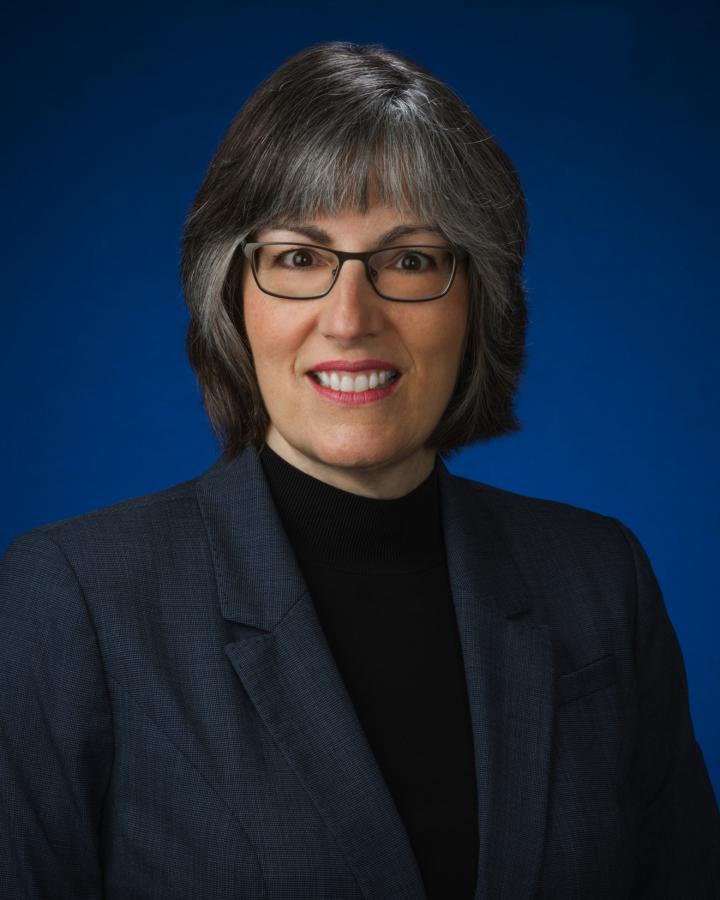
Dr. Janet Leasher
professor and optometrist
Nova Southeastern University
view more
FORT LAUDERDALE/DAVIE, Fla. – More than 1 billion people worldwide are living with vision impairment because they do not get the care they need for conditions like short and far sightedness, glaucoma, diabetes, and cataracts, according to the first-ever World Report on Vision issued by the World Health Organization.
Dr. Janet Leasher, optometrist and professor of health policy, economics and public health at Nova Southeastern University’s (NSU) College of Optometry was the only optometrist from the United States who is part of the core Vision Loss Expert Group which provided the estimates on the numbers of persons affected around the world with blindness and vision impairment. She also served on the Council of Members of the International Agency to Prevent Blindness and was the North American Coordinator for the United Nations Education Science and Culture Organization’s Chair of Visual Health and Development.
The report, launched ahead of World Sight Day on October 10, found that aging populations, changing lifestyles and limited access to eye care, particularly in low- and middle-income countries, are among the main drivers of the rising numbers of people living with vision impairment.
Globally, at least 2.2 billion people have a vision impairment or blindness, of whom at least 1 billion have a vision impairment that could have been prevented or has yet to be addressed. Other main findings of the report include:
- Vision impairment is often far greater in people living in rural areas, those with low incomes, women, older people, people with disabilities, ethnic minorities and indigenous populations.
- The unmet need of distance vision impairment in low- and middle-income regions is estimated to be four times higher than in high-income regions.
- Low- and middle-income regions of western and eastern sub-Saharan Africa and South Asia have rates of blindness that are eight times higher than in all high-income countries. Rates of cataract and trachomatous trichiasis are higher among women, particularly in low- and middle-income countries.
- $14.3 billion is needed to address the backlog of 1 billion people living with vision impairment or blindness due to short and far sightedness, and cataracts.
“This report reminds us not only how our vision impacts every aspect of our daily lives, but also how important it is for nations to develop policies to provide quality eye care for everyone, especially the most vulnerable among us,” said Dr. Leasher. “NSU has been active in the development of eye care around the world, with partners in Latin America, Europe and China. Not only do we provide eye care at our five Eye Care Institutes across South Florida, but we train future optometrists from 11 different countries.”
###
For the full report, visit https:/
Be sure to sign up for NSU’s RSS feed so you don’t miss any of our news releases, guest editorials and other announcements. Please sign up HERE. You can also follow us on Twitter @NSUNews.
About Nova Southeastern University (NSU):
At NSU, students don’t just get an education, they get the competitive edge they need for real careers, real contributions and real life. A dynamic, private research university, NSU is providing high-quality educational and research programs at the undergraduate, graduate, and professional degree levels. Established in 1964, the university includes 16 colleges, the 215,000-square-foot Center for Collaborative Research, a private JK-12 grade school, the Mailman Segal Center (early childhood education) with specialists in Autism, the world-class NSU Art Museum Fort Lauderdale, and the Alvin Sherman Library, Research and Information Technology Center, one of Florida’s largest public libraries. NSU students learn at our campuses in Fort Lauderdale, Fort Myers, Jacksonville, Miami, Miramar, Orlando, Palm Beach, and Tampa, Florida, as well as San Juan, Puerto Rico, and online globally. Classified as having “high research activity” by the Carnegie Foundation for the Advancement of Teaching, NSU is one of only 50 universities nationwide to also be awarded Carnegie’s Community Engagement Classification, and is also the largest private institution in the United States that meets the U.S. Department of Education’s criteria as a Hispanic-serving Institution. Please visit http://www.
Media Contact
Joe Donzelli
[email protected]
954-262-2159
Original Source
https:/