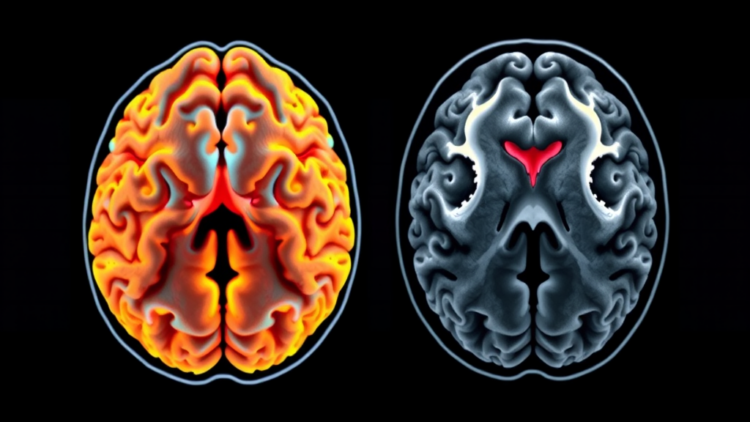
What makes an everyday activity feel worthwhile? For most people, the answer is invisible, woven into routines like cooking a favorite meal, tending a garden, or losing oneself in a cherished hobby. After a stroke, however, that sense of value can quietly erode, even among patients who appear physically capable of doing everything they did before. A new study published in the Scandinavian Journal of Occupational Therapy now offers encouraging evidence that a Swedish questionnaire designed to capture precisely this elusive quality—the Occupational Value with pre-defined items, or OVal-pd—performs reliably and validly in stroke survivors, opening a fresh window onto a dimension of recovery that conventional outcome measures often miss.
The research, led by Mona Eklund of Lund University together with colleagues at the Swedish University of Agricultural Sciences, Skåne University Hospital, and Universidad San Jorge in Spain, was a secondary analysis of the Nature Stroke Study (NASTRU), a randomized controlled trial conducted in 2013 and 2014 that tested whether nature-based rehabilitation could ease post-stroke fatigue. From the trial’s 101 recruits, 95 participants with sub-acute or chronic stroke formed the psychometric sample. All were community-dwelling adults aged 50 to 80, independent in personal activities of daily living, cognitively intact, and troubled by post-stroke fatigue. Nine in ten had experienced an ischemic stroke, and for most it was their first. Disability levels were generally mild to moderate, and the group’s average score on the Montreal Cognitive Assessment was 26 out of 30, indicating preserved thinking abilities.
The OVal-pd is grounded in the Value and Meaning in Occupations (ValMO) model, which proposes that a sense of meaning in life emerges when people repeatedly experience three distinct kinds of reward from what they do. Concrete value refers to tangible payoffs, such as the satisfaction of a cleaned house or a salary earned. Socio-symbolic value arises from activities that reinforce identity and social bonds, like cooking and sharing a traditional meal with others. Self-rewarding value captures the sheer pleasure of joyful, creative pursuits—a beloved hobby, for instance. The questionnaire asks respondents how often, over the past month, they felt they had done things for each of these reasons, using a four-point scale from ‘very rarely or never’ to ‘very often.’ Originally developed for people with mental illness, the instrument has since been validated in several languages, with versions ranging from 18 to 26 items depending on the population.
Because stroke patients differ from the psychiatric populations in which the Swedish version was first tested, the team evaluated both the original 26-item form and the streamlined 18-item Swedish version. Participants also completed a battery of comparison instruments: the Mental Fatigue Scale, which probes general fatigue, stress sensitivity, sleep problems, concentration difficulties, and sensory sensitivity; the EuroQoL-5D quality-of-life questionnaire covering mobility, self-care, usual activities, pain, and mood; and the Hospital Anxiety and Depression Scale, a 14-item self-rating of emotional distress. Statistical analyses followed internationally recognized COSMIN guidelines, with floor and ceiling effects, internal consistency, construct validity, responsiveness, long-term stability, and measurement error each assessed against predefined criteria.
The results were largely reassuring. Neither version of the questionnaire showed floor or ceiling effects—almost no one scored at the very bottom or top of the scale, meaning the instrument can distinguish among patients across the full range of experience. Internal consistency, measured by Cronbach’s alpha, was acceptable for the total scores of both versions, at 0.88 for the 26-item form and 0.86 for the 18-item form, with subscale values also clearing the 0.70 threshold for the longer version. The two versions correlated with each other at an extraordinarily high level, above 0.97, indicating they capture essentially the same construct. Domain subscores correlated strongly with their respective totals, while correlations with the quality-of-life index were weak to negligible—exactly the pattern expected if the questionnaire is measuring something distinct from general health status.
Known-groups validity provided one of the study’s most intriguing findings. Participants whose Hospital Anxiety and Depression Scale scores suggested possible depression scored significantly lower on the OVal-pd than those without depression, with effect sizes exceeding 0.74 for total scores—a moderate to large difference. Yet the questionnaire failed to distinguish between groups defined by anxiety symptoms. The authors suggest this asymmetry makes sense: prior research indicates that post-stroke depression is more strongly tied to activity-related factors than anxiety is, so an activity-centered measure would be expected to track depression more closely. The finding underscores that occupational value and mood are related but not identical constructs, and it hints that the questionnaire may be particularly sensitive to the motivational and meaning-related dimensions of post-stroke depression.
Not every property came out favorably. Responsiveness—the instrument’s ability to detect clinically meaningful change over time—proved poor. Using an anchor-based method with the Mental Fatigue Scale as the reference, the researchers constructed receiver operating characteristic curves for participants who had improved minimally or substantially over eight months. The area under the curve hovered near 0.55 for both versions, statistically indistinguishable from chance, and no minimal clinically important difference could be established. The authors caution that only 13 of 95 participants showed large improvements in mental fatigue during follow-up, so the sparse spread of real change may have hampered the analysis rather than the instrument itself. Still, the practical message is clear: the OVal-pd should not be used to quantify individual or group-level change in stroke populations.
Long-term stability told a different story. Among the 43 participants who were clinically stable between the 8-month and 14-month follow-ups, test-retest reliability was good for the total scores of both versions, with intraclass correlation coefficients of 0.75 and 0.76, and ranged from moderate to excellent for the subscale scores. The team also calculated the standard error of measurement and the smallest detectable change at 90 and 95 percent confidence levels, giving clinicians and researchers concrete thresholds for judging whether observed score differences reflect genuine change or mere measurement noise. Because short-term reliability over one to two weeks could not be assessed within the trial design, the authors note that future studies should fill that gap in a Swedish stroke population.
The clinical implications are nuanced. Rather than serving as an outcome tracker, the researchers argue, the OVal-pd’s strength lies in structured assessment and dialogue. At initial evaluation, it can give occupational therapists a rapid overview of how a patient perceives everyday occupations, spotlight areas where activities have lost their value, clarify what the patient wants to prioritize, and anchor person-centered goal setting. In research, its robust cross-sectional properties make it suitable for characterizing groups, comparing subgroups, and probing links with well-being—connections already demonstrated in other populations, where occupational value has been tied to life satisfaction after acquired brain injury, to self-mastery and self-esteem in severe mental illness, and to perceived meaningfulness in healthy adults.
The authors are careful about generalizability. Their sample was a selected group: largely independent, cognitively preserved, and motivated enough to volunteer for nature-based rehabilitation, so the findings may not extend to people with more severe strokes or different occupational interests. Convergent validity, moreover, was tested only internally, by correlating subscores with the total score, leaving open the need to compare the OVal-pd against an independent measure of a similar construct. Even so, the bottom line is pragmatic and positive. Both versions performed comparably, and since the 18-item form saves time without sacrificing quality, the researchers recommend it for clinical and research use with stroke patients—while urging further trials, particularly of known-groups and convergent validity, and qualitative studies of how the instrument works as a framework for assessment and goal setting in real therapy rooms.
Subject of Research: Psychometric validation of the OVal-pd questionnaire for assessing occupational value in stroke patients
Article Title: Psychometric properties of the occupational value with pre-defined items in stroke patients
Article References: Eklund, M., Pálsdóttir, A. M., Pessah-Rasmussen, H., & Bellosta-López, P. (2025). Psychometric properties of the occupational value with pre-defined items in stroke patients. Scandinavian Journal of Occupational Therapy, 32(1), Article 2597214. https://doi.org/10.1080/11038128.2025.2597214
Image Credits: AI Generated
DOI: 10.1080/11038128.2025.2597214
Keywords: stroke, occupational therapy, psychometrics, OVal-pd, questionnaire validation, rehabilitation, occupational value, mental fatigue, depression, reliability, validity, quality of life
Cite Scienmag News
APA MLA Chicago
Cassandra Pierce. (September 25, 2026). Stroke Recovery Questionnaire Proves Reliable in Measuring Meaning of Daily Activities. Scienmag. https://scienmag.com/stroke-recovery-questionnaire-proves-reliable-in-measuring-meaning-of-daily-activities/
Cassandra Pierce. “Stroke Recovery Questionnaire Proves Reliable in Measuring Meaning of Daily Activities.” Scienmag, 25 September 2026, https://scienmag.com/stroke-recovery-questionnaire-proves-reliable-in-measuring-meaning-of-daily-activities/. Accessed 25 September 2026.
Cassandra Pierce. “Stroke Recovery Questionnaire Proves Reliable in Measuring Meaning of Daily Activities.” Scienmag. September 25, 2026. https://scienmag.com/stroke-recovery-questionnaire-proves-reliable-in-measuring-meaning-of-daily-activities/
Copy citation Download RIS
Tags: activity engagement after strokedaily activity importanceDepressionmeasuring meaningfulness in daily routinesmental fatiguenature-based stroke rehabilitationoccupational therapyoccupational therapy outcome measuresoccupational valueoccupational value measurementOVal-pdpost-stroke rehabilitationpsychometric evaluation in stroke researchpsychometricsQuality of Lifequestionnaire validationrehabilitationreliabilityreliable assessment toolsstrokestroke recoverystroke survivor quality of lifevalidityvalidity of recovery questionnaires